



[ESG Management ①] The Green Wave of Industry, RE100: Effectiveness Questioned
 Published2022.10.14 15:34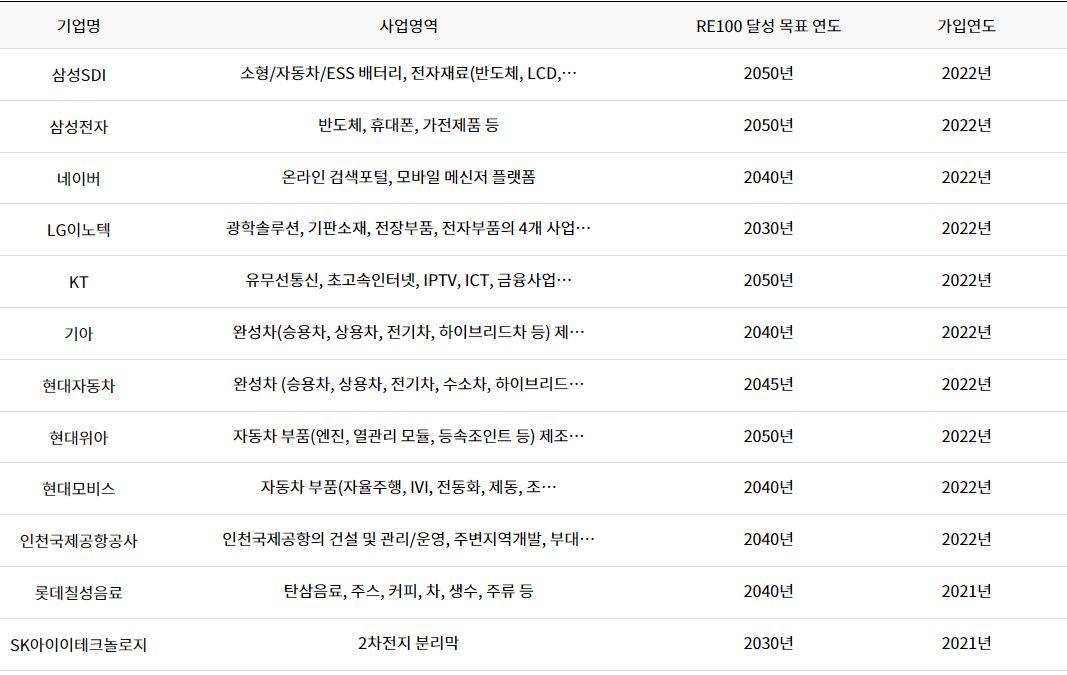
▲ Partial status of domestic RE100 membership (Source: Korea RE100 Council)
Cases of global companies demanding renewable energy use from domestic companies ↑
Problems such as costs , systems, infrastructure, and insufficient domestic renewable energy generation
While the number of companies declaring RE100 as a campaign to practice sustainable management is increasing, concerns are being raised regarding the practical effectiveness of achieving RE100 for Korean companies.
'RE100' is an abbreviation for 'Renewable Energy 100' and is a global agreement among companies launched in 2014 with the aim of replacing 100% of their electricity consumption with renewable energy by 2050.
Global big tech companies such as Google and Apple have already joined RE100 and are focusing on replacing the energy required for industrial activities with renewable energy. There are 24 domestic subscriber companies (as of 2022), including 7 SK affiliates (SK Hynix, SK Telecom, SK Corp., SK Materials, SK Siltron, SKC, SK IE Technology), Amorepacific, LG Energy Solution, Korea Water Resources Corporation, Korea Zinc, Mirae Asset Securities, Lotte Chilsung Beverage, Incheon International Airport Corporation, Hyundai Mobis, Hyundai Wia, Hyundai Motor, Kia, and KT.
Samsung Electronics and Samsung Display have unveiled an 'Environmental Management Strategy' centered on the goal of achieving carbon neutrality across all business sites by 2050.
SK Telecom announced that it would devise a fundamental net-zero implementation plan to offset increased power consumption, as a rapid increase in base station equipment is expected to meet faster data speeds such as 5G.
■ RE100 Participation: Involuntary vs. Voluntary?
While it is undeniable that leading global companies can influence domestic companies, RE100 is ultimately a voluntary agreement for companies, and joining is not mandatory. However, controversy has arisen as leading companies have recently been gradually increasing their use of renewable energy, while at the same time, there has been a growing number of cases demanding that large domestic corporations also use renewable energy.
According to a recent survey by the Korea Chamber of Commerce and Industry, three out of ten large domestic manufacturing companies were found to have been asked by global demand companies to use renewable energy in their product manufacturing processes, and this is gradually emerging as a global supply chain issue not only for large companies but also for small and medium-sized enterprises and middle-sized enterprises.
Recently, there has been an increase in cases where global companies explicitly require their partners to participate in RE100 through contracts and other means to make their participation mandatory; consequently, contrary to the essence of RE100, some large corporations participating in the initiative are pressuring other companies to join.
As a manufacturing-based, export-driven nation, Korea faces a high risk of being hit by supply chain issues.
An official from a domestic manufacturing company predicted, “There are likely a significant number of companies that are reluctant to officially disclose their use of renewable energy, even if they are actually requested by overseas firms,” adding, “In the future, failure to properly respond to RE100 could face significant setbacks in export competitiveness.”
■ Reason RE100 Implementation Is Difficult: 'Cost Burden'
According to a previous survey, cost burden was cited by companies as the reason why implementing RE100 is difficult, accounting for 35% of the total.
To achieve RE100, you must use only electricity produced from renewable energy, purchase renewable energy electricity through the Green Premium system, or purchase RECs (Renewable Energy Certificates) equivalent to the electricity consumed.
Meanwhile, in Korea, all three of these procurement methods are EuropeanIt reaches 1.5 to 2 times the level.
SKT stated that while it is implementing greenhouse gas reduction using various ICT technologies, the current implementation of net-zero relies heavily on procurement through renewable energy certificates or renewable energy purchase agreements.
An official from a mid-sized company explained, "Purchases such as the Green Premium and RECs must be made as one-time transactions over several decades, which is a significant burden for small and medium-sized enterprises."
In addition, according to data from the recent Chamber of Commerce, a shortage of domestic renewable energy generation has emerged as a fundamental problem.
Looking at KEPCO's electricity sales performance for the top 30 domestic electricity-intensive companies in 2021, the top 5 domestic electricity consumers consumed 47.7 TWh and the top 30 companies consumed 102.9 TWh of electricity, whereas the total domestic renewable energy generation in 2021 was only 43.1 TWh.
According to the Korea Energy Agency's 'Survey on the Supply Performance of New and Renewable Energy,' the share of new and renewable energy generation in Korea in 2020 was 7.43%, the lowest level among OECD countries and falling short of the OECD average.
An industry official stated, "Currently, the electricity consumption of domestic RE100 member companies is less than the total renewable energy generation, but it is urgent for the government to establish policies to expand renewable energy in preparation for the future increase in renewable energy usage by power-intensive companies, such as large corporations and the telecommunications industry."
With the rise of sustainable management, achieving net zero along with the implementation of RE100 seems inevitable for our future. Now that achieving carbon neutrality remains a task for everyone, it appears most important to work together to find practical solutions.
In the next installment, we will cover the current status of the Korean-style RE100, created for domestic RE100 implementation, and the government's policy support.
Comments
Related news
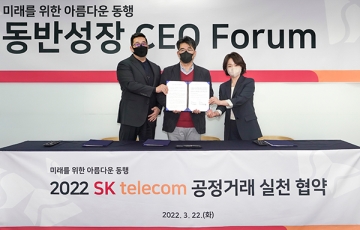
SKT Hosts Partner Shared Growth Forum
SK Telecom (CEO Yoo Young-sang) shares its ESG management policies and growth vision to foster mutual growth with business partners' executives and employees.
2022.03.24by 김예지 기자
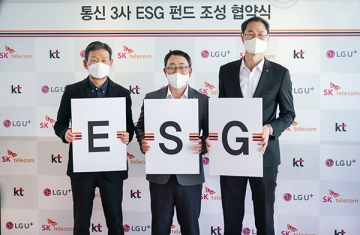
The three major mobile carriers jointly created a fund for ESG management.
SK Telecom, KT, and LG Uplus announced on the 29th that they will proceed with establishing an 'ESG Fund' at the 'Telecommunications Three Companies ESG Fund Formation Agreement Ceremony'.
2022.03.30by 김예지 기자
.jpg)
Demand for 30% Renewable Energy Use by Large Corporations: "Preemptive Policy Required"
According to a survey conducted by the Korea Chamber of Commerce and Industry targeting 300 domestic manufacturing enterprises, as RE100 has recently emerged as a key global supply chain issue, three out of every ten large domestic manufacturers in the manufacturing sector have been directly or indirectly required by global demand companies to use renewable energy in their product manufacturing processes. In response to the increasing demands for renewable energy use from global demand companies, it appears necessary to proactively address this matter in order to secure the supply chain.
2022.09.07by 김예지 기자

“Electronic Paper, Future Smart Logistics and Distribution Food”
The global e-paper industry is experiencing growth driven by digitalization trends and ESG-oriented sustainable development initiatives. Currently, the e-paper market is predominantly occupied by foreign companies, indicating a need for domestic companies to enter the relevant market and localize core technologies.
2022.09.20by 명세환 기자

The Ministry of SMEs and Startups (MSS) stated, "SMEs must raise awareness and implement ESG management."
The Ministry of SMEs and Startups will hold "ESG Implementation Briefings for SMEs" from September 30 through early November in five regions—Gyeonggi, Busan, Daegu, Gwangju, and Cheongju—to raise awareness of ESG among small and medium-sized enterprises and support their management adoption.
2022.09.21by 김예지 기자











