


"Gangwon Province Advantaged by Autonomous Driving-Derived Specialized Technologies"
 Published2022.12.12 16:05
.jpg)
Gangwon Province's Regional Characteristics, Specialized Autonomous Driving Technology More Advantageous Than Manufacturing
Gangwon Province's Aging Population and Declining Population, Responding to Autonomous Public Transportation Services
Gangwon Province and the Future Mobility Forum held the "2022 Future Mobility Forum Conference" on the 8th with the theme "Development Direction of Future Mobility for Gangwon Special Autonomous Province."
Son Joon-woo, Chairman of Sonet, who presented as a speaker for the autonomous vehicle group, suggested that Gangwon Province, which has diverse environments such as ports and mines, would benefit from a strategy focusing on specialized technologies derived from autonomous driving such as autonomous tractors and DRT (Demand Responsive Transit) rather than manufacturing.
Earlier, Dr. Lee Sang-pal from the Urban Disaster Prevention Research Institute at Seoul City University, who delivered the keynote address, presented on social acceptance of autonomous driving and stated, "It should be noted that while autonomous driving innovation technology benefits consumers, if the public opposes the technology, the commercialization of the technology can fall into a pattern of repeated postponement," and added, "the public, which is the subject of social acceptance, must be segmented and customized knowledge about the technology must be delivered."
Gangwon Province announced on the 12th that the "Sokcho Station Area Development Project" was finally selected in the 2022 Hub Development Type Investment Leading District Competition from the Ministry of Land, Infrastructure and Transport.
This project is a large-scale undertaking with approximately 500 billion won in investment through 2030 and is expected to serve as a center of future transportation linking railways, ports, and aviation.
The autonomous driving service at this project and mining cities and tourist cities such as Gangneung aligns with Chairman Son's opinion that it would be more advantageous for Gangwon Province than manufacturing, and it appears that autonomous driving social acceptance can be increased as a service that residents and tourists can directly experience.
Furthermore, Chairman Son conveyed that Gangwon Province, where aging is rapidly progressing due to population decline and concentration in the metropolitan area, should establish a virtuous cycle system through Gangwon-type autonomous driving mobility services such as autonomous village bus services to guarantee the mobility rights of local residents.
In addition, he stated that autonomous driving startups should be attracted and sustainable business models should be provided to generate continuous revenue.
As an example, he presented a method to discover sustainable autonomous public transportation service models such as operating pilot routes at tourist destinations and generate revenue outside of government-supported budgets.
According to Statistics Korea, Gangwon Province has an elderly population ratio of 21.3% and an aging index of 197%, which represents the elderly population per 100 young people, both ranking within the top five in the nation as a representative aging region and is projected to become a region at risk of extinction 100 years from now.
Lee Seul-a, co-author of Post-Mobility, also projected that population decline would lead to decreased tax revenue, making it difficult to maintain the current transportation system.
This researcher suggested the need to establish small-city mobility specialized cities and diversify mobility through autonomous driving and DRT to guarantee mobility rights, and predicted that the introduction of such smart mobility could help with budget issues.
In particular, since DRT operates flexibly according to demand, it is expected to resolve transportation blind spots and improve accessibility to medical and cultural services for the elderly, and he emphasized that it could contribute to the safety of not only DRT passengers but also elderly pedestrians.
Meanwhile, Gangwon Province has successfully attracted the ITS World Congress, which is called the Transportation Olympics.
The 32nd ITS World Congress, to be held in October 2026, is the third congress to be held in Korea following Seoul in 1998 and Busan in 2010, and it is on par with Japan (3 times).
Prior to this, Gangwon Province concluded an agreement with Tesla Korea to establish charging stations with Tesla-exclusive charging facilities and universal charging facilities at 34 locations across 11 cities and counties in the province, and announced that it will actively pursue Tesla factory attraction, continuing to show interest in mobility.
Additionally, the Wonju Buron General Industrial Complex is expected to house electric semiconductor material, parts and equipment companies and key infrastructure for manned and unmanned drone industries, demonstrating ambitions for airway development as well.
Gangwon Province passed the Gangwon Special Autonomous Province Act in May and will newly launch as Gangwon Special Autonomous Province starting June 11, 2023.
Gangwon Special Autonomous Province is recorded as the second autonomous province following Jeju Special Autonomous Province.
Comments
Related news
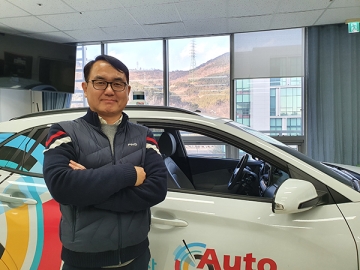
[Interview] Son Jun-woo, Chairman of Sonnet - “Level 4 autonomous vehicles to be commercialized in 2025”
We met with Sonet's Chairman Son Jun-woo, a specialized company in autonomous vehicles and software, to discuss the latest development trends in autonomous vehicles and learn about Sonet's autonomous robotic taxi service and technology.
2022.02.22by 김예지 기자
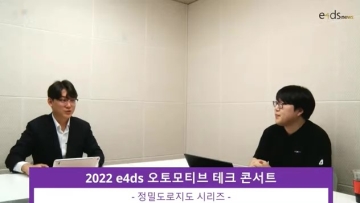
Autonomous driving requires proof of integrity through precision map-based simulations.
e4ds held a session to share precision map technology and its applications among domestic companies, and conducted a webinar with Park Hyun-jin, Group Lead of the Software Module Group at Morai, which possesses automatic digital twin construction technology based on precision maps.
2022.10.11by 성유창 기자
“Autonomous Driving Profits Possible After 2027”
While efforts and investments from government agencies such as the Ministry of Science and ICT and the Ministry of Land, Infrastructure and Transport are backing the preemption and deployment of autonomous driving technology, and companies are conducting R&D and demonstration projects, the point at which revenue can be generated appears to be feasible only after 2027. Industry voices have emphasized the importance of creating conditions that enable the autonomous vehicle sector to sustain itself until commercialization is achieved.
2022.12.05by 성유창 기자
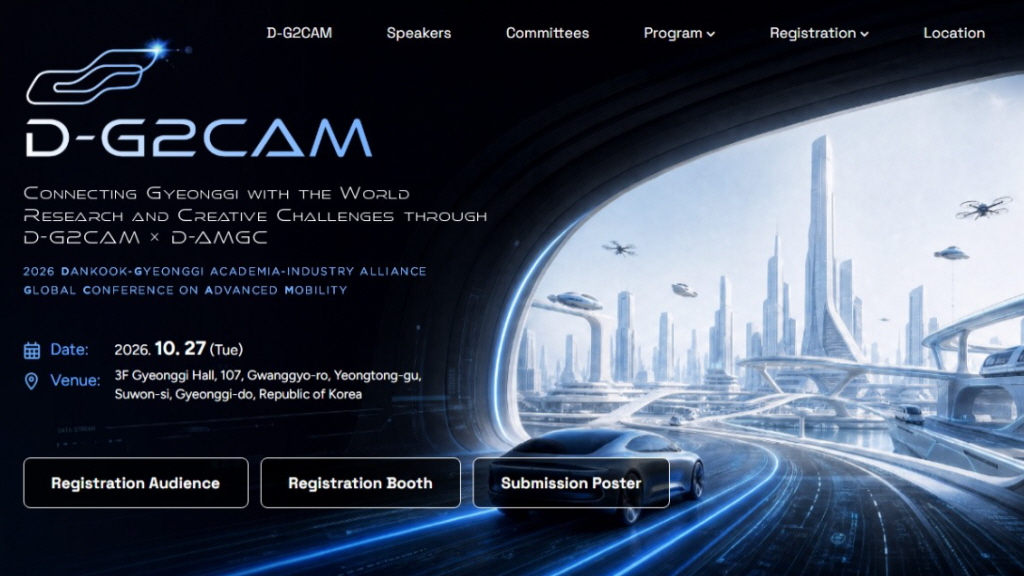
GAIA-Festa 2026, Autonomous Driving, AI, and Aerospace Experts Gather…Discussing Global Cooperation in the 'Silicon Intelligence Era'
GAIA-Festa 2026, which will be held in Suwon on October 27, is an industry-academia-research exchange event that explores the present and future of future mobility and AI technology through the global conference D-G2CAM 2026 and the international contest D-AMGC 2026. Domestic and international experts will share the latest research in autonomous driving, 5G/6G mobility, space technology, and data protection fields, while university students will showcase robots and physical AI prototypes that they have independently developed. Additionally, through poster presentations, corporate exhibitions, international cooperation meetings, and signing ceremonies, a platform will be established to connect the research capabilities and industrial needs of the Gyeonggi region with a global cooperation network.
2026.10.13by 배종인 기자
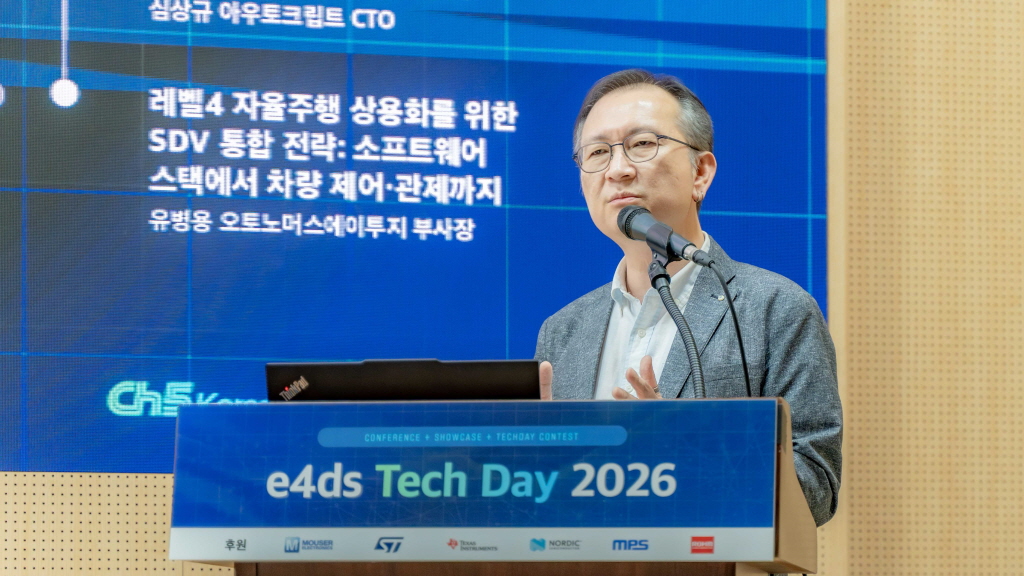
[e4ds Tech Day 2026 ⑨] Sim Sang-gyu, Autocrypt CTO: "In the Physical AI Era, Automotive Security Must Extend Beyond the Vehicle"
At e4ds Tech Day 2026, Sim Sang-gyu, CTO of Autocrypt, explained automotive cybersecurity strategies in the era of Physical AI and SDV (Software-Defined Vehicle). Automobiles are evolving as part of an ecosystem connected to AI, cloud, chargers, IoT, and robots, and he emphasized that the scope of security must expand beyond the vehicle interior to the entire connected environment. In particular, AI model tampering, adversarial attacks, OTA updates, and EV charger hacking were identified as major threats. He explained that response measures require zero trust, AI model integrity protection, intrusion detection, Security by Design and Default, and full lifecycle security management, and that proactive security system establishment beyond regulatory compliance is critical for securing future mobility competitiveness.
2026.10.12by 배종인 기자











