



Minister Won Hee-ryong, “Look forward to ‘transportation innovation’ in 2023”
 Published2023.01.02 15:40
▲ Minister of Land, Infrastructure and Transport Won Hee-ryong (Photo source: Screenshot from YouTube channel Won Hee-ryong TV)
Regulatory Overhaul for Autonomous Driving and UAM Announced
Accelerating the digital transformation of traffic data
Minister Won Hee-ryong held a joint New Year's kick-off ceremony with LH and the Housing and Urban Guarantee Corporation (HUG) on the YouTube channel Won Hee-ryong TV and announced the Ministry of Land, Infrastructure and Transport's goals for 2023.
Minister Won cited transportation innovation as the third goal for 2023.
He said that he would boldly eliminate regulations that hinder creativity and innovation in order to lead the world in future modes of transportation such as fully autonomous vehicles and urban air mobility (UAM).
Furthermore, it was announced that transportation data would be integrated and linked to suit the data era, and the digital transformation of the Ministry of Land, Infrastructure and Transport would be accelerated.
Last September, the Ministry of Land, Infrastructure and Transport announced the 'Mobility Innovation Roadmap,' a strategy to leap forward as a global leader in the mobility era and to realize innovative services in daily life.
The Ministry of Land, Infrastructure and Transport has set a goal to realize autonomous mobility in the daily lives of the people by commercializing the world's highest level of fully autonomous driving (Level 4) by 2027.
To this end, the current passenger transportation system will be reviewed by 2024 to align with autonomous driving, and a plan to reform the passenger transportation system will be proactively...Prepare as.
Support for the private sector will also be expanded to develop and spread new services utilizing autonomous driving, such as mobility support for the transportation vulnerable and priority passage for emergency vehicles.
Regarding regulatory innovation, it was announced that a system for Lv4 would be established by 2024 to proactively resolve uncertainty in the private sector.
Automotive safety standards (manufacturing standards) such as Level 4 vehicle systems (response to defects, etc.) and driving safety (ensuring safety in the event of a collision, etc.) are established, and a separate performance certification system is operated even before standards are established to support the unrestricted operation of autonomous vehicles.
In the first half of 2023, the first Mobility Innovation Expressway will be selected to enable the demonstration of various autonomous driving services, such as autonomous platooning of cargo trucks, through the designation and operation of dedicated autonomous driving lanes on existing expressways.
With the goal of the first commercialization of UAM services in 2025, the Ministry of Land, Infrastructure and Transport will drastically reduce travel time without traffic congestion through various services, while fostering new high-value-added industries by promoting lifestyle-oriented drone services.
To launch the first UAM service in 2025, the safety of the aircraft and communication system will be verified in Goheung, Jeonnam starting next year, and in 2024, a demonstration project will be conducted in an environment similar to actual service conditions, such as operation between urban areas and airports*.
In particular, new industries are actively supported by applying bold special provisions that exclude the application of existing regulations, such as aviation safety, business, and security, as much as possible during demonstration and pilot projects.
In order to prepare for commercialization in 2025 without any setbacks, requirements for operators, allocation of transportation rights, and insurance systems will be proactively established for various service types, including urban, tourism, and metropolitan types.
Exemption from prior flight regulations to allow business operators to fly drones without burdenWe plan to designate additional simplified drone special liberalization zones (currently 33 zones) and also ease flight approval requirements and safety certification procedures.
Investment will also be expanded for the early establishment of dedicated infrastructure essential for UAM services, such as vertiports (landing and takeoff pads) and communication networks.
First, vertiports will be established at major hub airports such as Gimpo and Incheon, and subsequently expanded in stages to other key locations including railway stations and integrated transfer centers.
In addition, 5G communication infrastructure will be gradually expanded and built, focusing on the first commercialized routes, to support autonomous flight, flight information communication, and in-flight infotainment.
A dedicated airspace system for UAM (UATM, medium altitude) will be established to enable multiple aircraft to fly safely without the risk of collision, and subsequently, UAM, drones, and existing aircraft will be integrated into a single three-dimensional airspace system.
By integrating advanced technology into airports to support the automatic take-off and landing of approaching aircraft and establishing an automated flight management platform that forcibly captures unauthorized aircraft, the safety of air mobility is also ensured.
The Ministry of Land, Infrastructure and Transport has prepared two phases of demonstration projects for the commercialization of UAM in 2025.
Phase 1 involves conducting integrated operational tests in Goheung, South Jeolla Province, targeting all six consortia, including verification of the safety of UAM airframes and communication systems, infrastructure such as vertiports, and operational scenarios (normal and abnormal).
Phase 2 is scheduled to be conducted from July 2024 to June 2025 with pilots on board in actual semi-urban and urban environments (metropolitan area) for consortia that passed Phase 1.
The Ministry of Land, Infrastructure and Transport [discussed] the progress of legislation to apply regulatory exceptions to demonstration and pilot projects to support UAM commercialization, as well as plans to establish UAM operational concepts for initial pilot projects (tourism and public use) and prepare planning guidelines for UAM-specialized smart cities.It is planned to be done.
Comments
Related news
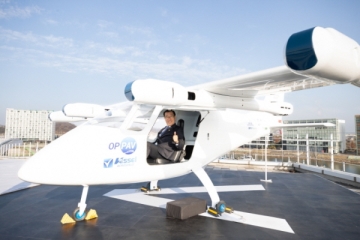
Ministry of Land, Infrastructure and Transport, Demonstration of Actual UAM Flight
The Ministry of Land, Infrastructure and Transport held an urban air mobility (UAM) flight demonstration event on the 23rd at Gimpo Aramarina, which has been in progress since 2020.
2022.11.24by 김예지 기자
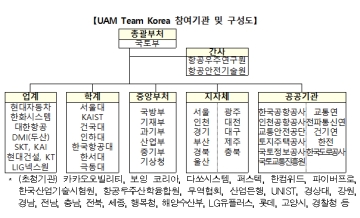
K-UAM to begin full-scale demonstration next year… "Flights in the metropolitan area in 2024"
The Ministry of Land, Infrastructure and Transport held the 5th plenary session of 'UAM Team Korea (UTK)' on the 21st at the Korea Aerospace Research Institute, chaired by Kang Hee-eop, standing member of the Metropolitan Area Broad Transit Committee. The session brought together 47 public, private, academic and research institutions in the UAM sector. The Ministry of Land, Infrastructure and Transport is now in full swing with the Korean-style Urban Air Mobility (K-UAM) demonstration project (Grand Challenge) to realize commercial operation of Urban Air Mobility (UAM) in 2025.
2022.12.22by 김예지 기자

Sejong and Chungbuk to operate first BRT autonomous driving bus
The Ministry of Land, Infrastructure and Transport, the Metropolitan Area Wide Transit Committee, Sejong City, and North Chungcheong Province announced that they will launch the nation's first "dedicated BRT autonomous bus" service operating on a 22.4 km section between Osong Station and Sejong City Intercity Bus Terminal starting December 27.
2022.12.27by 성유창 기자

Ministry of Land, Infrastructure and Transport, “Will Strive for Institutional Improvements to Accelerate Autonomous Vehicle Commercialization”
The Ministry of Land, Infrastructure and Transport announced that it will transform uniform and rigid regulations into flexible regulations to promote the mobility industry.
2022.12.29by 성유창 기자

[e4ds Tech Day 2026 ⑨] Sim Sang-gyu, Autocrypt CTO: "In the Physical AI Era, Automotive Security Must Extend Beyond the Vehicle"
At e4ds Tech Day 2026, Sim Sang-gyu, CTO of Autocrypt, explained automotive cybersecurity strategies in the era of Physical AI and SDV (Software-Defined Vehicle). Automobiles are evolving as part of an ecosystem connected to AI, cloud, chargers, IoT, and robots, and he emphasized that the scope of security must expand beyond the vehicle interior to the entire connected environment. In particular, AI model tampering, adversarial attacks, OTA updates, and EV charger hacking were identified as major threats. He explained that response measures require zero trust, AI model integrity protection, intrusion detection, Security by Design and Default, and full lifecycle security management, and that proactive security system establishment beyond regulatory compliance is critical for securing future mobility competitiveness.
2026.10.12by 배종인 기자











