


LG Uplus and Seoul Metro join hands to build UAM vertiports centered on subway stations
 Published2023.01.18 11:05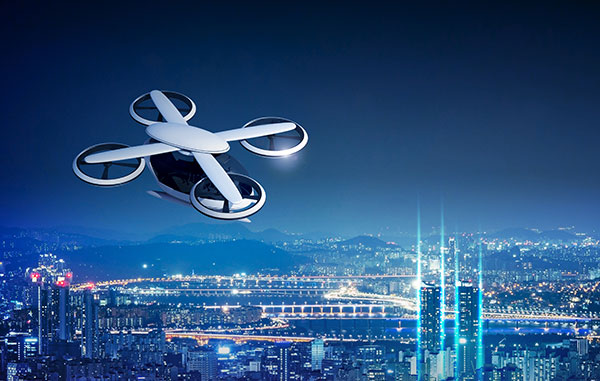
Cooperation to develop areas with high traffic volume
UAM is a futuristic air taxi that carries passengers or cargo by combining electric vertical take-off and landing (eVTOL) personal aircraft (PAVs). Morgan Stanley, an American investment bank, forecasts that the global UAM market will grow to $1.5 trillion (approximately 1,816 trillion won) by 2040.
LG Uplus and Seoul Metro are joining forces to construct vertiports to be used as platforms for UAM (Urban Air Mobility).
LG Uplus and Seoul Metro announced on the 15th that they have signed a business agreement to cooperate on the establishment of UAM transfer centers and the early commercialization of UAM. The signing ceremony, held at the Seoul Metro headquarters, was attended by LG Uplus CEO Hwang Hyun-sik and CTO Lee Sang-yup, as well as Seoul Metro CEO Kim Sang-beom and Technology Division Head Kim Seong-ryeol.
Both companies announced that through this business agreement, they will build a UAM complex transfer center utilizing subway transportation infrastructure and cooperate for the early commercialization of UAM.
Seoul Metro will support administrative matters, such as regulations for the introduction of complex transfer centers, and vertiport infrastructure, while LG Uplus will develop a traffic management system for route operations and demonstrate UAM-related communication technologies.
Both companies are devising plans to introduce the system primarily at subway stations with high passenger traffic, such as Samsung Station, Suseo Station, and Guro Digital Complex, which handle subways, GTX, and buses. Currently, Seoul Metropolitan Transit Corporation operates 275 stations on subway lines 1 through 8.
We investigate the flight environment, including demonstrations, UAM feasibility, technological safety, and local resident acceptance, and simultaneously conduct preliminary research on environmental factors such as weather conditions along flight paths and flight obstacles.
Meanwhile, LG Uplus formed a consortium with Kakao Mobility and GS E&C in May last year and is participating in the 'K-UAM Grand Challenge' demonstration project hosted by the Ministry of Land, Infrastructure and Transport. In July, it also signed an MOU with Busan City to establish a UAM ecosystem.
LG Uplus plans to develop a UAM traffic management system and apply it to government demonstration projects, and will explore ways to further enhance the system to accelerate the commercialization of UAM.
Jeon Young-seo, Head of the Enterprise Service Development Lab at LG Uplus, stated, “We expect cooperation with the Seoul Metropolitan Transit Corporation to play a crucial role in successfully carrying out government-led UAM demonstration projects and establishing an initial market,” adding, “We will continue to cooperate with consortium participants to build safe and easy-to-use future transportation infrastructure.”
Comments
Related news
Ministry of Land, Infrastructure and Transport, Demonstration of Actual UAM Flight
The Ministry of Land, Infrastructure and Transport held an urban air mobility (UAM) flight demonstration event on the 23rd at Gimpo Aramarina, which has been in progress since 2020.
2022.11.24by 김예지 기자
SKT's 'UAM Linkage Technology' Approved as Global Standard Project
SK Telecom has had its proposed 'UAM Service Interworking Structure and Method for Stable UAM Service Environment' approved as a standard project in ITU-T's Study Group 11 (SG11).
2022.12.08by 김예지 기자
Hanwha Systems-Jeju National University, Join Hands in Space and UAM Industry
Hanwha Systems and Jeju National University announced that they have signed a Memorandum of Understanding to foster talent for advancing the space industry in the Jeju region and to commercialize UAM.
2022.12.26by 김예지 기자
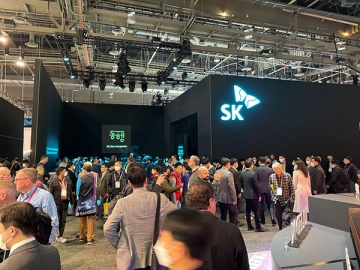
[CES 2023] SKT to Showcase Next-Generation Green ICT
SK Telecom will jointly operate an exhibition space of approximately 1,200㎡ with SK Group affiliates at the Central Hall of the International Consumer Electronics Show (CES) 2023, held in Las Vegas from the 5th to the 8th (local time), showcasing Urban Air Mobility (UAM), AI semiconductor 'SAPEON', and Renewable Energy Virtual Power Plant under the theme of 'Action for 2030 Net Zero'.
2023.01.05by 김예지 기자
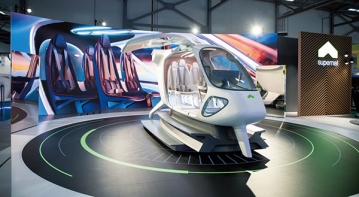
[Feature] UAM Industry Trends, 2023 Outlook
With the government's target for commercialization in 2025, the global competition to secure a foothold in the urban air mobility (UAM) market is expected to intensify in the new year. <br><br>Urban air mobility (UAM) is an aerial mobility service based on electric-powered aircraft. It is drawing attention as an eco-friendly transportation mode capable of vertical takeoff and landing without runways in urban areas and capable of connecting with various ground transportation means. It will become a concentrated embodiment of cutting-edge technologies from diverse industry sectors including aviation, automotive, and energy. <br><br>#UAM #AAM #K-UAM #SKT #KT #Hyundai Motor #Supernal
2023.01.06by 김예지 기자











