


“Introduction of smart factories, currently in progress”
 Published2023.01.20 12:02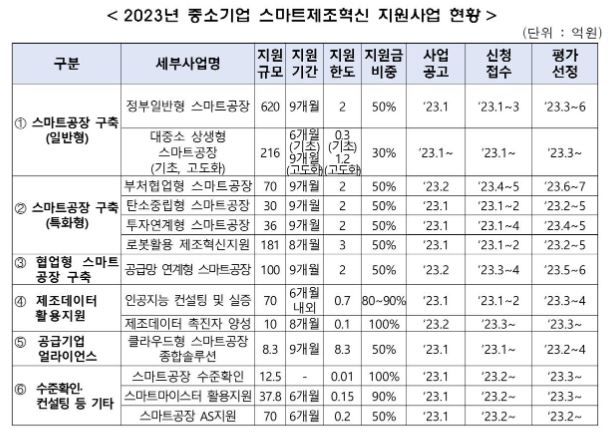
▲2023년 중소기업 스마트제조혁신 지원사업 현황
산교연, 스마트팩토리 전망 세미나 개최
디지털 트윈·메타 팩토리 기술 개발 촉구
AI·IoT·빅데이터·5G 등의 발달로 주요 공정이 자동화된 것에 그치지 않고, 모든 것을 스스로 생각하는 스마트팩토리 시장이 거듭 성장하고 있다. 특히 우리나라는 작년 스마트 공장 3만 개를 달성한 고무적인 성과를 비롯해 스마트팩토리 핵심 기술 연구가 활발히 진행되고 있다.
국가 차원의 노력으로 순항 중인 국내 스마트팩토리 산업 현주소를 돌아보고, 현업 전문가들과 핵심 기술 개발 현황을 조망하는 장이 마련됐다.
스마트 공장 구축은 제조업 강국인 우리나라의 핵심 과제로, 디지털 트윈·메타 팩토리 등 주요 기술 개발에 대한 지속적인 노력이 필요하다는 의견이 모아졌다.
KIEI 산업교육연구소는 19일 ‘스마트팩토리 및 디지털 트윈/메타팩토리 신기술 현재와 미래전망 세미나’를 개최했다. 세미나에서는 △스마트팩토리 핵심기술 및 시험인증 △스마트팩토리 구현 요소 기술 △스마트팩토리 국내외 적용 및 실증 사례 △국내 스마트팩토리 보안 정책 △디지털 트윈 기술 동향 △메타팩토리 기술 및 전망 등 다각도에서 스마트팩토리 성장 방안을 모색했다.
■ 스마트팩토리 시장 현황과 시험인증 및 보안
슈나이더일렉트릭 손장익 이사는 전반적인 글로벌 스마트팩토리 산업 현황과 슈나이더의 주요 솔루션 구성요소에 대해 발표했다.
손 이사는 “전 세계적으로 ESG 경영에 대한 투자가 고려되는 가운데, RE-100 이행을 위해 자체 공장 뿐만 아니라 공급망에 있는 업체들이 모두 탄소 중립을 달성하는 게 중요하다”며, “스마트팩토리 구축은 결국 글로벌 공급망을 효율적으로 하기 위함”이라고 주장했다.
최근 스마트팩토리 요구사항을 충족하기 위해 SW의 중요성이 커지고 있으며, 슈나이더는 개방형을 지향해 에코스트럭처라는 통합 플랫폼으로 비용을 줄였다. 손 이사는 “글로벌 등대공장* 5곳을 보유한 슈나이더는 스마트팩토리 솔루션을 기반으로 2025년까지 탄소중립을 달성할 계획”임을 전했다.
*디지털 전환을 실행하는 롤 모델 공장을 뜻하는 말로 우리나라는 포항 포스코, LS일렉트릭, 창원 LG 공장이 꼽힌 바 있다. 올해 기준 글로벌 누계 132개, 지속가능성 등대공장은 13개다.
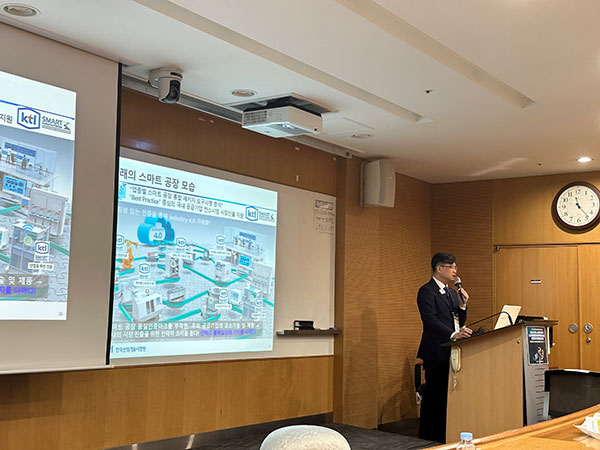
▲한국산업기술시험원 송태승 본부장
한국산업기술시험원 송태승 본부장은 스마트팩토리 핵심기술과 시험인증에 대해 발표했다.
송 본부장은 “애플리케이션, 플랫폼, 디바이스 및 네트워크가 유기적으로 통합돼 작동하는 스마트팩토리는 상호운용성 및 보안성에 대한 논의가 필수”라고 말하며, “스마트공장 보급 시 외산 대비 국내산 장비의 우수성을 보여주기 위해 시험평가 및 인증을 도입하게 됐다”고 전했다.
스마트팩토리는 내부 효율성을 위해 모듈화가 필수적이며, 이에 따른 시험 평가 인증 모델의 개발이 중요하다. 제시된 주요 테스트 및 품질인증 서비스로는 △산업용 이더넷 통신 △산업용 무선 통신 △컴포넌트 신뢰성 △협동로봇 안전 적합성 △산업용 사이버 보안 등이 있다. 최근에는 ESS 화재 관련 예지보전 툴이 각광받고 있다.
송 본부장은 “신뢰성 있는 인증을 통해 인더스트리 4.0을 가속화할 수 있다”며, “스마트 공장 품질인증마크를 부착한 우리 공급기업의 기술 및 제품이 국내외 시장 진출의 초석이 될 것”이라 전했다.
이어 한국인터넷진흥원 배병환 책임은 스마트 공장 보안 정책에 대해 발표했다.
배 책임은 “제조분야 대상 신규 보안위협이 지속 발견됨에도 불구하고, 즉시 대응이 어렵다”며, 그 이유로 다수의 공격 경로 및 동기 등을 꼽았다. 특히 OT 영역은 보안 이해도 낮아 주로 공격의 타겟이 되고 있다.
또한 “국가 차원의 OT 영역 보안 관심이 늘어나며, 스마트 공장 제어설비 대상 보안테스트가 가능한 보안리빙랩을 구축해 보안이 내재화된 스마트 공장 장비 확산을 유도했다”고 전했다.
한국전자기술연구원(KETI) 강정훈 센터장은 스마트팩토리 구현 요소기술과 응용사례를 다뤘다.
강 센터장은 “SW 시장은 생각보다 발달하지 못했으며, Auzure, AWS 등 클라우드도 공장에 대해서는 아직 부족하다”고 우려하며 “그만큼 제조 데이터가 그만큼 데이터가 민감하고 클라우드에 공유하는 것 자체가 어렵기 때문”이라고 말했다.
스마트팩토리의 클라우드 데이터 플랫폼은 수요자에게 데이터 가공 처리 기능을 제공하고, 제조 데이터는 규격화 돼있다. 가상 컨테이너는 데이터 중심으로, 현장 엔지니어의 작업 효율 증대를 위해 분리해서 블록형으로 사용하는 기술이다.
발표에서 강 센터장은 “엣지 단에서는 이상을 감지할 수 있는 수준까지 왔다. 결국 엣지와 클라우드는 동반 성장해 고속 데이터를 처리할 수 있어야 한다”고 말했다.
■ 스마트팩토리 핵심 ‘디지털 트윈’
 ▲디지털 트윈
디지털 트윈은 말 그대로 가상공간에 디지털화 하는 기술로, 효율적인 시뮬레이션, 예측 작업 등을 위해 개발됐다. 이를 통해 최적의 공정 조건, 배치, 핵심 설비 장비 모니터링 등을 가상 공간에서 찾을 수 있다.
한국전자통신연구원 손지연 팀장은 디지털 트윈 기술 R&D 현황에 대해 다뤘다.
손 팀장은 “전체 공장을 디지털 트윈화 하려면 인프라 구축 비용이 너무 많이 들어 현재 시점에서는 주요 핵심 설비 중심으로 하는 전략을 하는 게 투자 대비 효과가 좋다”고 주장했다.
또한 위험부담이 현재 너무 커서 주저하는 공장들을 위해 선제적인 투자 필요, 인프라 플랫폼 구축, 특화 솔루션 역량 확보 등 방안을 제시했다.
이에이트 류수영 상무는 디지털 트윈 기술 사례에 대해 발표했다.
이에이트는 액체·기체·혈류 등 다양한 시뮬레이션, 디지털 트윈 기술 보유한 회사로, 최근 고양시 화정역 신호 최적화 알고리즘 실증을 비롯해 스마트팩토리 기술 성과를 내고 있다.
류 상무는 스마트팩토리 기술 테스트베드가 구축된 △현대차 혁신센터 △2024년 2단계 완공을 목표로 하고 있는 창원시 LG스마트파크 △해외 사례 BMW를 소개했다. 특히 한국에서 아일랜드 ESS 시스템의 데이터 기반 ML 디지털 트윈을 구축해 생산 최적화를 달성했다고 전했다.
■ 메타 팩토리는 진화 중
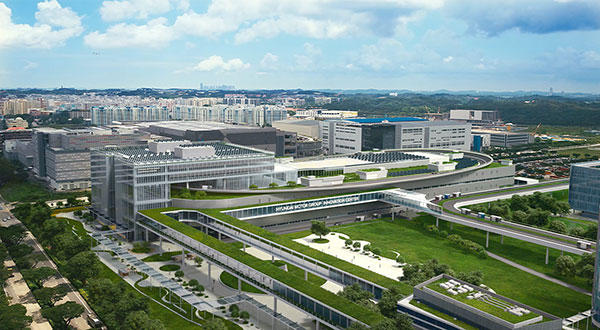
▲싱가포르에 위치한 현대차그룹 혁신센터(HMGICs)
최근 연구되고 있는 메타 팩토리에 대한 개념도 제시됐다. 메타 팩토리는 현대자동차그룹이 처음 사용한 용어로, 디지털 트윈 개념에서 확장된 메타버스 공장을 의미한다.
국내에서는 메타버스에 접속해 해외 공장을 운영하고 관리하는 방식으로 현장에 인력을 둘 필요 없이 최적의 운영 여건 조성을 위해 시나리오를 가상으로 테스트하고 있다.
현대차그룹 혁신센터(HMGICs)는 싱가포르에 위치한 AI·IoT·로보틱스 등을 접목한 스마트 모빌리티 및 지능형 제조 플랫폼을 실증할 테스트 베드다. 총넓이 9만㎡, 지상 7층 규모로 전 밸류체인 데이터를 통합 관리함으로써 운영비를 기존 대비 30% 이상을 절감했다.
현대차는 이곳에서 2025년까지 연간 최대 3만대를 생산한다는 목표를 두고 있으며, 오는 4월 아이오닉5를 시작으로 아이오닉6와 코나 일렉트릭 등을 이곳에서 생산할 예정이라고 밝힌 바 있다.
4차산업혁명연구소 한석희 소장과 SK주식회사 김상연 부장은 메타버스로 구현될 현재와 미래에 대해 다루며, “가상현실(VR), 증강현실(AR), 혼합현실(MR) 개념으로 작동할 메타 팩토리는 고급 시뮬레이션 기능이 추가된 제품, 제조 의사 결정 프로세스를 지원하는 플랫폼 지향이 극대화된 개념”이라 말했다.
또한 “현대차의 ‘메타 팩토리’의 기술은 이미 개별적으로 가용 수준이며, 융합과 통합이 앞으로의 주요 도전 과제”라고 제시했다. “실용적 관점에서 메타팩토리는 기술 융합을 활용한 시뮬레이션 수준 업그레이드 측면으로 접근할 것”이라 전망했다.
SK 김상연 부장은 기존 비즈니스의 확장선상의 형태인 메타 팩토리는 새로운 미래 먹거리가 될 것”이라 주장하며, “메타버스의 장점을 제조 영역에서의 부족한 부분과 상호 보완 관계”여야 한다고 주장했다
또한 “메타버스 미래에 대비해 기술 재구상이 필요한 시점이며, 짧은 기간으로 인한 부작용을 대비해 고려해야 한다”고 주장했다.
작년 우리나라는 스마트 공장 3만 개 달성을 기록했지만, 사실상 이는 전체의 5%에 불과하고, 이중 70%는 아직 초기화 수준에 그쳤다. 중소벤처부는 지난 9일 올해 스마트공장 지원사업에 총 1,462억원을 지원할 계획을 밝히고, 스마트공장 고도화를 본격 추진한다. 또한 K-스마트 등대공장 지원사업을 통해 2025년까지 100개사를 육성할 계획을 공고히 하고 있다.
우리나라는 제조 경쟁력 확보를 위해 스마트팩토리 핵심 기술 개발에 직면한 과제를 지속해서 풀어나가고 있다. 새로운 성장 동력이 될 것으로 기대되는 메타 팩토리를 비롯해 무한한 성장 가능성을 가진 우리나라가 앞으로 스마트팩토리 산업에서 활보할 수 있기를 기대한다.
Comments
Related news
[Planning] Connectivity Solutions for the Industry 5.0 Era - Maximizing Human-Device Connectivity in the 5th Industrial Revolution
Recently, centered on the European Union, the concept of the Fifth Industrial Revolution (Industry 5.0) has emerged, led by the concepts of "human-centered," "sustainability," and "resilience." This is an era of collaboration between humans and machines (robots), and as interactions in a connected world become increasingly important, connectivity for smart homes, electronic devices, automobiles, and other applications is expected to become a critical factor. We examined the connectivity solutions of major semiconductor companies achieved through integration of various technologies.
2022.12.08by 김예지 기자
Korea Airports Corporation Successfully Implements '5G Specialized Network' in Airport Environment
According to the "5G Specialized Network Small Cell Network Technology Verification (PoC) Implementation Result Report" disclosed by the Korea Airports Corporation's Smart Airport Promotion Division, a 5G-grade wireless communication network can now be established even at aeronautical radiobeacons not serviced by the three telecom carriers, enabling a communication system for emergency response.
2022.12.22by 김예지 기자
.jpg)
Korea Electrotechnology Research Institute Opens Smart Innovation Center
A 28.6 billion won-scale manufacturing innovation hub set to lead manufacturing innovation in the Gyeongnam and Changwon regions is now opening its doors and making a full commitment to the success of smart industrial complexes.
2022.12.22by 배종인 기자
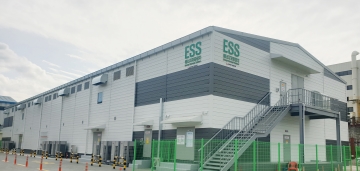
LG Electronics Builds 'ESS for Peak Shaving' at Changwon Plant
LG Electronics is reducing electricity costs by installing a 'peak-shaving ESS' at the Changwon LG Smart Park with Korea East-West Power. A completion ceremony for the 'Changwon LG Smart Park Peak-Shaving ESS' was held on the 27th at the LG Smart Park located in Changwon, Gyeongnam Province.
2022.12.27by 김예지 기자
.jpg)
Sangyoyeon presents future outlook for smart factories
The Industrial Education Research Institute will simultaneously hold an online and offline seminar on January 19th titled "2023 Smart Factory and Digital Twin/Meta-Factory New Technology: Current Status and Future Prospects." The seminar will run from 9:50 AM to 5:10 PM.
2023.01.04by 김예지 기자











