



[Interview] Park Dong-joo, Chair of the 5G Forum Ecosystem Strategy Committee: "5G-specific networks represent a new opportunity, and awareness must be improved."
 Published2023.02.07 14:42
5G's ultra-low latency and high reliability boost smart factory productivity.
5G specialized network achieves manufacturing-optimized network implementation
[Editor's Note] 5G, characterized by ultra-low latency, ultra-high speeds, and hyper-connectivity, is a key element for application across diverse industries through network slicing. A 5G-specific network allows businesses to obtain a mobile communications business license to utilize the network for specific purposes in specific regions. This network offers the advantage of configuring optimized solutions tailored to specific requirements. A case study of a 5G-specific network in the manufacturing sector suggests a tenfold ROI increase compared to existing networks. However, compared to other countries, Korea's 5G-specific network has a relatively short history, and challenges remain for widespread adoption. The 28GHz frequency, in particular, offers superior performance across a wide range of industries and can be a key enabler for the 6G era, drawing keen attention to its future applications. We met with Dong-Joo Park, Chairman of the Ecosystem Strategy Committee of the 5G Forum, to discuss the characteristics of 5G for building smart factories and the importance of 5G-specific networks.
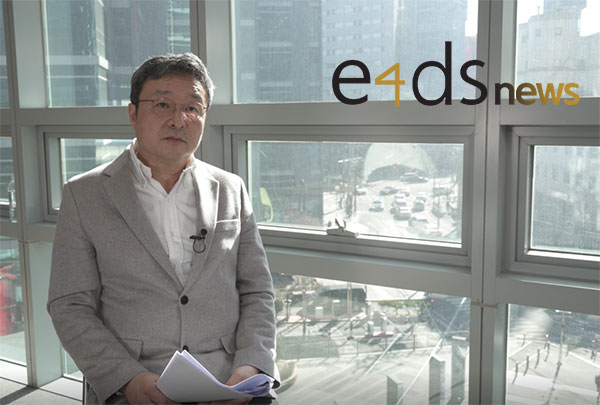
The 5G Forum was established in May 2013, six years before 5G commercialization in Korea, to define the concept of 5G and promote 5G service technology. Launched by the private sector, government, research institutes, and academia, the forum has engaged in a variety of activities, including international cooperation, white paper publications, and hosting seminars, workshops, and events.
The Ecosystem Strategy Committee has been engaged in various activities to revitalize the 5G ecosystem and industry. In particular, it has recently been introducing 5G-specific networks, both domestically and internationally, which are expected to provide new business opportunities for small and medium-sized enterprises (SMEs).
The committee operates three working groups, including the Small Cell Working Group, the Open RAN Working Group, and the Testing and Certification Working Group, to promote and support the ecosystem.
■ 5G features for building smart factories
Initially, 5G was developed not only to support wireless communications but also for industrial applications. The most common application area is smart factories, but it is also being applied to diverse fields such as logistics, automobiles, and energy.
5G has many unique features that make it different from existing user-to-user communications. Simply put, it is 'eMBB (faster), URLLC (more immersive), mMTC (more connections).'
eMBB stands for extremely high transmission speeds. This promising feature is being utilized in user-to-user communications, and its applications are expanding to include AR/VR, drones, and robots. mMTC is a technology that enables the operation of numerous IoT devices, such as sensors, on 5G networks at low cost, optimizing both network construction and device manufacturing costs. Energy efficiency is maximized, allowing the installed battery to operate for over 10 years without replacement.
URLLC is used in a wide range of applications worldwide, including automobiles and collaborative robots, and its low latency and high reliability make it ideal for a wide range of applications. Current standards have achieved transmission delays from terminals to servers of approximately 5 ms at 28 GHz and 10 ms at 4.7 GHz or 3.5 GHz.
Other 5G technologies include edge computing (MEC), network slicing, and network exposure (a technology that monitors and controls the status of 5G networks through APIs in factory production automation systems).
The 5G specialized network is not a 5G service provided by the three existing mobile carriers, but rather a system that allows companies to build and operate 5G networks directly within their own factories. This system allows companies to build 5G networks tailored to the services they want to implement within their factories and select and utilize appropriate technologies, enabling the implementation of an optimized 5G network.
■ Global 5G-based IIoT application cases applicable to Korea
5G is already being applied in many manufacturing sectors around the world. Most industrial sites have adopted WiFi, but recently it is being largely replaced by 5G.
The most significant advantage of 5G over Wi-Fi is its ability to guarantee quality. Many people experience difficulties with connectivity in densely populated areas like Gwanghwamun and Gangnam Station, despite the abundance of Wi-Fi access points. On the other hand, 5G can meet the communication quality requirements for each service through quality management. Furthermore, it can transmit data faster and with greater reliability than Wi-Fi over the same area.
In a report published by Ericsson specifically on IIoT applications in the manufacturing industry, the company analyzed the application of 5G-based AR/VR, sensors, digital twins, and robots in a sample automotive parts factory in Europe.
After analyzing the ROI (return on investment) by aggregating various costs, it was found that 11 million USD was spent over 5 years, and the benefits from applying the technology amounted to 23 million USD, achieving an ROI of 116% over 5 years.
Ultimately, by finding and applying the optimal use case for 5G, it can help improve productivity in factories.
What are the challenges facing Korea's manufacturing industry in activating a specialized 5G network?
It's been about a year since Korea launched its 5G-specific network. While investment from large corporations has generated significant interest in the project, it's still about two years behind Germany and Japan.
As mentioned earlier, the 5G specialized network has different characteristics from the mobile carrier 5G ecosystem. While mobile carrier services are readily available for users simply by paying a usage fee, specialized networks require optimization to meet the unique requirements and business environments of each industry, requiring significant knowledge.
The need to provide terminals optimized for industrial sites, such as robot and drone terminals, is also different from the past. Specialized network terminals for industrial applications require small-volume production and development of a wide variety of products.
To promote 5G-specific networks that reflect their unique characteristics, South Korea's 5G Forum Ecosystem Strategy Committee and other companies are working to solidify the 5G-specific network ecosystem. In Japan and elsewhere, system integration (SI) companies are stepping up to integrate solutions and make them easily accessible to customers. South Korea's CJ, SK, and LG CNS are also stepping up to play this role.
In particular, given the lack of a central player in ecosystem development and the need for mass deployment on a large scale, specialized networks are leveraging the characteristics of these networks to facilitate access for industrial customers. We are introducing current solutions and sharing success stories. We anticipate that the Ecosystem Strategy Committee will provide practical assistance in addressing challenges faced by industrial sites.
■ SKT has been restricted from allocating 5G 28GHz band frequencies, while KT and LGU+ have had their allocations canceled. In this regard, what is your outlook for the 5G specialized network business in 2023?
While it is regrettable that sanctions such as allocation cancellation have been imposed due to the business's sluggish performance, I am more concerned that this incident may spread negative perceptions about the usability of the 28 GHz frequency.
28GHz is a useful frequency resource that is expanding significantly in the US, Europe, Japan, and China around the world. In other countries, 28GHz services have provided extremely high user satisfaction in streets, squares, and densely populated areas, and especially in the US, in football stadiums.
The use of 28GHz, or mmWave, frequencies is expanding globally, and there are domestic examples in industrial applications. In particular, 28GHz offers a wide bandwidth of 800MHz or 600MHz, enabling high transmission speeds and relatively unrestricted UL/DL ratios. This makes it advantageous for securing uplink data transmission speeds in industrial settings, such as transmitting captured video data from terminals to servers and sharing sensor data.
Additionally, due to its ability to secure a wide range of resources for data transmission, it can easily achieve its goals by maximizing data redundancy when high reliability is required. Lastly, it is advantageous in securing low transmission delay, and can secure low transmission delay that is improved by about 40% compared to mid-band frequencies of 4.7 GHz or 3.5 GHz.
It is true that it has disadvantages such as a short frequency range and vulnerability to obstacles, but it has been verified that it shows high performance in situations where many equipment in factories cause reflections at 28 GHz and do not secure line of sight.
Ultimately, it's crucial to understand the pros and cons of 28GHz and devise ways to leverage the technology to maximize its benefits. Given the high expectations surrounding higher frequencies like 28GHz and the evolution to 6G, Korea's successful utilization of 28GHz is expected to be crucial for securing a lead in 6G.
Although the three major mobile carriers have not yet fully recovered the 2GHz frequency, it is expected that 28GHz will only be utilized for 5G-specific networks for now. Therefore, it is hoped that the use cases will expand further so that Korea can advance beyond 5G to 6G technology.
■ Please briefly introduce the content to be covered at 'IIoT Innovation Day'
As the chairman of the 5G Forum Ecosystem Strategy Committee, I have been introducing the characteristics of 5G, its advantages, and how to apply them to those seeking to apply 5G to their industries for the past several years.
At this event, we will introduce the technical features and current development levels of eMBB, URLLC, and mMTC, and provide information on various application methods, including APIs. Additionally, we will explain various methods for building and operating networks using 5G specialized networks, thereby helping to apply specialized networks to industrial settings.
※ e4ds News will host the ' 2023 IIoT Innovation Day ' on Friday, March 10th in Grand Ballroom 103, 1st floor, COEX Conference Room (North). This event will provide an opportunity to examine the latest smart factory and smart manufacturing industry trends and prospects, industrial application development cases using 5G in manufacturing sites, and the 5G specialized network ecosystem and construction plans.
Comments
Related news
[Interview] Park Han-gu, Head of the Smart Manufacturing Innovation Promotion Team: "Smart manufacturing innovation requires building a digital economy system centered on mid-sized companies." (Part 1)
We arranged an interview session to hear from Park Han-gu, Director of the Smart Manufacturing Innovation Promotion Team, who oversees the domestic smart factory dissemination and expansion project, regarding future smart factory support project policies.
2022.03.29by 김예지 기자
[Interview] Park Han-gu, Head of Smart Manufacturing Innovation Promotion Team - “Smart manufacturing innovation, medium-term-centered digital economic system must be established” (2)
We arranged a meeting to hear from Park Han-gu, Director of the Smart Manufacturing Innovation Promotion Group, who oversees the domestic smart factory promotion and diffusion project, and to discuss future smart factory support business policies.
2022.03.29by 김예지 기자

Three Mobile Carriers 'Confirm' Limits on 5G 28GHz Allocation
The Ministry of Science and ICT finalized the disposition details and announced the results on the 23rd, following the completion of compliance inspections regarding the allocation conditions imposed during the 2018 5G 28GHz band frequency allocation and the opinion hearing procedures under the Administrative Procedure Act.
2022.12.26by 김예지 기자

[Planning] 2023 Telecommunications Market Outlook "5G, Still a Hot Potato"
In 2022, the telecommunications market was dominated by the issue of 5G frequency band allocation. With the government taking active steps to secure a leading position in 6G services, controversies surrounding 5G are expected to continue. Continuous calls are being made for additional frequency band allocation in the 3.7~3.72GHz range for the three telecom operators. Meanwhile, discussions between the Ministry of Science and ICT and telecom operators regarding 5G mid-tier pricing plans are expected to continue. The long-standing issue of "network usage fee surcharges" between domestic Internet Service Providers (ISPs) and Content Providers (CPs) is intensifying, drawing attention to the direction of related legislation.
2023.01.02by 김예지 기자

[Planning] '5G MEC' Leads to a World Without Loading
Edge computing, a core technology implementing the Fourth Industrial Revolution, is experiencing rapid growth due to the pandemic and transforming the paradigm of existing industries. <br><br>Thanks to its advantages of enabling fast, reliable, and cost-effective service delivery, edge computing technology is expanding its scope beyond security, healthcare, autonomous vehicles, and smart factories to widespread applications, establishing itself as critical digital infrastructure. <br><br>Domestically, the three telecom carriers have entered full-fledged competition to secure 5G MEC technology leadership. <br><br>#EdgeComputing #MobileEdgeComputing #5G #MEC #IDC #SKT #KT #LGU+
2023.01.12by 김예지 기자











