



ETRI Develops Factory Energy Diet Technology
 Published2023.02.10 15:29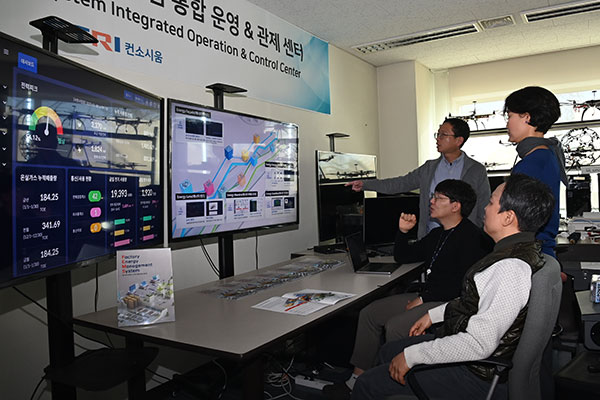
Development of a Standard Platform for Factory Energy Management Systems (FEMS)
Expectations for the distribution and expansion of 5 types of diffusion models, FEMS
With the government aiming to reduce greenhouse gas emissions by 40% by 2030, domestic researchers have developed a leading technology for factory energy reduction in industrial sites to achieve carbon neutrality by 2050.
The Electronics and Telecommunications Research Institute (ETRI) announced on the 2nd that it has developed an open and expandable standard platform capable of supporting the entire lifecycle of a Factory Energy Management System (FEMS) based on platform business.
FEMS is a system that aims to improve energy efficiency and save energy by utilizing information and communication technology (ICT) to monitor, analyze, and control energy usage in factories in real time.
The adoption of PEMS by domestic manufacturing companies is still insufficient. This is because small and medium-sized enterprises feel burdened by the cost of implementing PMS, while large corporations face limitations in adopting customized PMS.
ETRI researchers stated that the newly developed PEMS standard platform can be easily applied and utilized by domestic manufacturing companies, and can also provide the most functions in the country.
■ 5 FEMS Platforms… Supports Various Energy Management Models
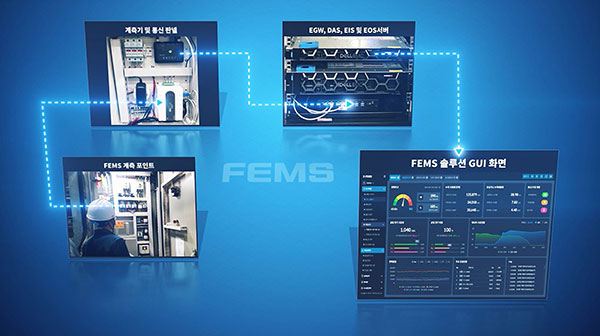
The newly developed PEMS platform provides services in five categories: Energy Facade for monitoring and managing energy information from an enterprise-wide perspective; Energy Lens for optimizing detailed processes and equipment; Energy Maestro for connecting with other systems within the factory and external markets; Energy Guardian for detecting anomalies, faults, and integrated management of the PEMS system; and Energy Fairground, where anyone can participate to purchase PEMS products and create new services.
The research team also developed five PEMS diffusion models—distributed, basic, advanced, specialized, and integrated—to support various forms of energy management for each workplace. This implements the functions of PEMS in a modular way, allowing companies wishing to utilize ETRI's PEMS standard platform to select and use a diffusion model according to the scope of energy management.
ETRI has established about 10 demonstration sites at major factories ranging from electronic component manufacturers to health food manufacturers for each of the five diffusion models and has been conducting technical verification of the developed platform.
In addition, the research team received approval as a new standardization item from the International Telecommunication Union Telecommunication Standardization Sector (ITU-T) International Environment and Climate Change Standardization Study Group (SG5) for the domestic and international standardization of PEMS.
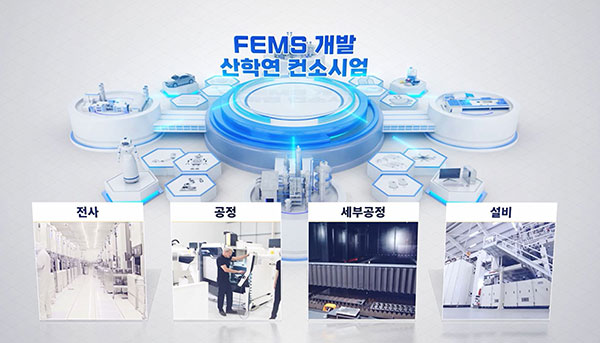
ETRI researchers and joint research institutions announced that they have succeeded in developing a PEMS standard platform based on wireless networking technology, edge gateway technology, real-time time-series database construction and data linkage technology, thermal energy management technology, and technology for analyzing correlations of various energy data and energy waste factors through AI and big data technology.
Lee Il-woo, Head of the Industrial Energy Convergence Research Division at ETRI, stated, “This FEMS standard platform is a representative industrial platform technology that integrates various technologies such as energy, ICT, and engineering.” "We will contribute to the energy efficiency business by focusing more on the advancement of the commercial PEMS standard platform and the development of linkage models that encompass the entire ecosystem and commercialization," he said.
Kim Hyun-chul, Head of the Energy Efficiency Division at the Ministry of Trade, Industry and Energy, stated, “Expanding the adoption of energy management systems utilizing ICT technology is crucial for the transition of small and medium-sized enterprises (SMEs) and middle-sized enterprises to an industrial structure characterized by low energy consumption and high efficiency. The government will continue its efforts to implement energy efficiency innovation measures to secure sustainable competitiveness for the entire industry.”
ETRI has produced results related to this technology, including 5 SCI-level papers, 3 domestic and international standard proposals, and 27 domestic and international patent applications and registrations, and has also contributed to achieving commercialization sales of approximately 5 billion won by joint research institutions.
The research team plans to continue its efforts in research and development of digital energy infrastructure and commercialization to promote and expand the platform in the future, considering the difficulties of domestic manufacturing companies regarding the cost of adopting PEMS and the continuous improvement and operation after adoption.
Comments
Related news
ETRI to Release Expanding Displays
Domestic researchers have developed elastic inorganic semiconductor device technology for implementing stretchable displays that can be stretched like rubber bands, and it is expected to lead the next-generation display semiconductor field in the future.
2022.12.08by 배종인 기자
Bang Seung-chan, New ETRI President, “Will Play a Pioneer Role in Technology Creating a Happy Future World”
The Electronics and Telecommunications Research Institute (ETRI) held its inaugural ceremony with Pang Seung-chan as its tenth president, officially commencing his duties.
2022.12.14by 배종인 기자
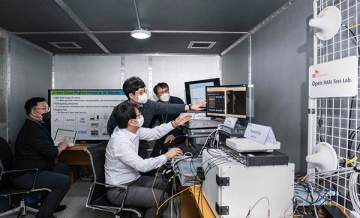
SKT Announces Results of OpenLAN Equipment and Technology Demonstration
SK Telecom announced on the 15th that it participated as a co-host in the 'PlugFest' event hosted by the O-RAN Alliance and presented various verification results for base station equipment complying with O-RAN standards together with the Electronics and Telecommunications Research Institute (ETRI), HFR, Hewlett Packard Enterprise (HPE), Intel, and Keysight Technologies.
2022.12.15by 김예지 기자
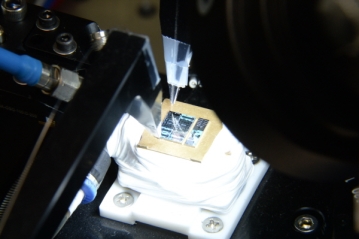
ETRI Develops Ultra-High-Speed Optical Input/Output Semiconductor Using Light
The Electronics and Telecommunications Research Institute (ETRI) has developed a silicon photonics optical semiconductor chip and related modules capable of transmitting data at 100 gigabits per second (100Gbps) in next-generation data centers and high-performance computing networks.
2022.12.22by 배종인 기자

ETRI Announces New Year's Plan: "Securing Core Technologies and Accelerating ICT Convergence"
The Electronics and Telecommunications Research Institute (ETRI) has revealed its ambition to lead global digital innovation through the acquisition of core strategies and fundamental technologies in 2023. On the 2nd, ETRI announced its research and management plans for 2023. The main framework centers on securing strategic and fundamental technologies in the information and communications field, and pursuing technological leadership through the discovery of international standard technologies and expanded support for industrialization, thereby achieving technological innovation that serves as a driver of national growth.
2023.01.04by 김예지 기자











