


[Interview] Shin Jae-seung, Principal Researcher at ETRI – “5G Enables Remote Control as Fast as Wired”
 Published2023.02.13 16:10
High-capacity transmission technology, wireless connectivity, low latency, and high reliability characteristics
ETRI Verified Real-Time Control Service… Inside Factory and Remote Areas
[Editor's Note] 5G is expanding its reach across various application fields, such as healthcare and smart cities. Among these, manufacturing and logistics are undoubtedly the service markets where competitiveness lies in 5G's unique features (URLLC, mMTC, eMBB). 5G simultaneously handles real-time control and high-capacity data transmission in manufacturing environments. When replacing existing wired network environments with 5G wireless, the most critical factors are supporting communication that is as fast and stable as wired connections and ensuring that no errors occur throughout the entire process. To address this, ETRI (Electronics and Telecommunications Research Institute) is focusing its efforts on developing 5G technologies and proprietary systems, as well as verifying services. This publication met with Shin Jae-seung, a principal researcher at ETRI, to hear about the current status of ETRI's verification of domestic and international remote control and monitoring services.
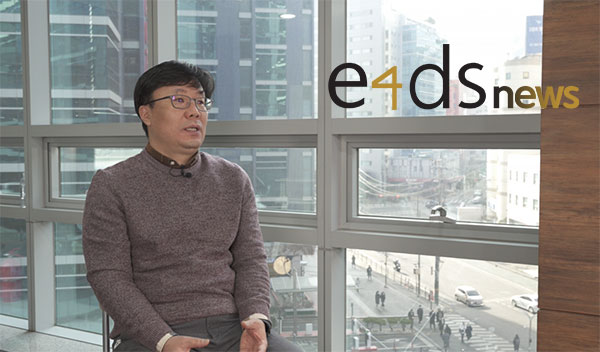
Up until LTE (4th generation mobile communication), the focus has been on high-capacity data transmission technology primarily used to provide voice calls, video calls, and high-quality multimedia services via internet access using mobile phones.
With the advent of 5G (5th generation mobile communication), low-latency and high-reliability communication technology has been developed that enables not only improved high-capacity data transmission but also fast and secure data transmission, just like a wired connection. In addition, hyper-connectivity technology has been developed that equips not only mobile phones but also various objects with mobile communication capabilities, enabling them to freely communicate with each other wirelessly.
Accordingly, the application areas of 5G have expanded, enabling its use in various industrial sectors such as smart manufacturing, smart homes, smart cities, automobiles, medical, energy, and defense.
In order to utilize 5G technology for the implementation of smart factories, it is necessary to integrate new IT technologies such as AI, big data, AR, and VR into the production process, and for this purpose, 5G's high-capacity transmission technology, wireless connectivity, and low-latency, high-reliability communication technology can be provided.
■ The 5G-based Industrial Internet of Things (IIoT) research being conducted at ETRI
ETRI has been conducting 5G-based Industrial Internet of Things (IIoT) technology development projects from 2017 to 2021. The main systems developed focused on low-latency, high-reliability, and hyper-connected communication technologies.
It has been internally or through an external accredited agency that the performance provided can offer reliability with a unidirectional transmission delay of less than 5 ten-thousandths of a second from a 5G terminal to a wireless base station, and with one or fewer errors occurring when transmitting about 1 million to 10 million pieces of data in the wireless section.
By applying this system, it is possible to provide latency and reliability within the factory that are wireless yet comparable to a wired connection.
Meanwhile, for real-time services within the factory, it is important not only to reduce latency in the wireless section but also to reduce round-trip service latency between the factory's equipment and control and monitoring systems. Through research, it was confirmed that 5G technology can be applied to such facilities that require more than 300 repetitive control monitorings per second, as round-trip service latency is provided at about 3 milliseconds.
And regarding wireless connections, it was confirmed that at least 1,000 terminals can be connected to a single base station, assuming an average of more than 1 per square meter, or a factory space of about 30m x 30m.
■ Please introduce the cases and current status of real-time domestic and international remote control/monitoring service verifications conducted by ETRI.
The primary objective of the real-time service verification conducted by ETRI is to demonstrate that, using a fast and stable 5G industrial IoT system, real-time local control and monitoring is possible within a factory that allows for free wireless connectivity while remaining similar to a wired connection. The second phase examines the results of operations performed at a remote location.
ETRI carried out the project in cooperation with the Korea Institute of Industrial Technology. The Korea Institute of Industrial Technology operates a smart factory in Gyeongsan, North Gyeongsang Province, capable of producing small motors about the size of an actual finger through 11 processes using 'KUKA' mobile robots.
In this model factory environment, when production equipment such as KUKA mobile robots, PLCs and dashboards of each process module, and real-time process control and monitoring systems such as the Manufacturing Execution System (MES), the control server of KUKA mobile robots, and wireless SCADA panels were wirelessly connected via 5G Industrial Internet of Things, it was demonstrated and verified that real-time control and monitoring were possible just like in an existing wired environment, and that the entire process operated normally.
In particular, although it is not a production facility, we confirmed that such demo equipment, which is only reliably possible through more than 300 iterations per second of repetitive control called an inverted pendulum, can also be achieved via a 5G connection.
The second is a domestic remote real-time service control verification case in which Daejeon ETRI, which is geographically about 150 km away from the Gyeongsan Model Factory but connected by a line of about 280 km, was connected via KOREN (Research Network).
All existing real-time control and monitoring systems in Gyeongsan were relocated and installed at ETRI in Daejeon. It was verified that real-time control and monitoring are possible when the interiors of each factory are connected via a KOREN-based wired network infrastructure. Additionally, a round-trip service delay of approximately 1/100th of a second was guaranteed between Daejeon and Gyeongsan.
Finally, in cooperation with Oulu University in Finland, some real-time control and monitoring systems were moved to Oulu University. It was possible to control and monitor factories in real time in Finland as well.
■ Please introduce the presentations you will be giving at the '2023 IIoT Innovation Day' hosted by e4ds news.
In this presentation, I would like to discuss the status of ETRI's system development and verification cases of local and domestic and international remote real-time control and monitoring services, and take the time to listen to the valuable opinions of the attendees.
■ What is the industry outlook for 2023, and are there any related technologies worth noting in the future?
Recently, 5G-based smart factories are evolving into a model where manufacturers can independently build a 5G network within the factory, either completely or partially independently, without being dependent on the mobile carrier network, based on a 5G standalone/specialized network also known as Eeum 5G in Korea.
A system solution capable of supporting specialized network frequencies is expected to be commercialized, and ETRI is also upgrading its currently developed system to support these frequencies through cooperation with technology transfer partners.
Even in Korea, 5G does not yet have 100% nationwide coverage, and there are many factories located in peripheral areas and relatively outside of coverage. It is expected that these various factories will be practically activated as smart factories through models based on 5G specialized networks. I hope that related government and private policies and projects can be rapidly activated.
thank you
※ e4ds news will host the ' 2023 IIoT Innovation Day ' on Friday, March 10 at Grand Ballroom 103, 1st Floor, Conference Room North, COEX. This event provides a platform to examine the latest trends and prospects in the smart factory and smart manufacturing industries, case studies of industrial application development using 5G in manufacturing sites, and plans for building a 5G specialized network ecosystem.
Comments
Related news

[Planning] 2023 Telecommunications Market Outlook "5G, Still a Hot Potato"
In 2022, the telecommunications market was dominated by the issue of 5G frequency band allocation. With the government taking active steps to secure a leading position in 6G services, controversies surrounding 5G are expected to continue. Continuous calls are being made for additional frequency band allocation in the 3.7~3.72GHz range for the three telecom operators. Meanwhile, discussions between the Ministry of Science and ICT and telecom operators regarding 5G mid-tier pricing plans are expected to continue. The long-standing issue of "network usage fee surcharges" between domestic Internet Service Providers (ISPs) and Content Providers (CPs) is intensifying, drawing attention to the direction of related legislation.
2023.01.02by 김예지 기자
SKT and Nokia Successfully Demonstrate 5G OpenRAN Virtualized Base Station
SK Telecom has installed a cloud-based OpenRAN virtualized base station with Nokia in its commercial network and confirmed stable 5G service speed and coverage performance through field testing.
2023.01.10by 김예지 기자

[Planning] '5G MEC' Leads to a World Without Loading
Edge computing, a core technology implementing the Fourth Industrial Revolution, is experiencing rapid growth due to the pandemic and transforming the paradigm of existing industries. <br><br>Thanks to its advantages of enabling fast, reliable, and cost-effective service delivery, edge computing technology is expanding its scope beyond security, healthcare, autonomous vehicles, and smart factories to widespread applications, establishing itself as critical digital infrastructure. <br><br>Domestically, the three telecom carriers have entered full-fledged competition to secure 5G MEC technology leadership. <br><br>#EdgeComputing #MobileEdgeComputing #5G #MEC #IDC #SKT #KT #LGU+
2023.01.12by 김예지 기자
The three major mobile carriers are locked in a fierce battle for 5G and 6G's core "Open LAN" technology.
Competition among the three domestic telecom carriers for leadership in 'Open RAN (O-RAN)' technology is intensifying. <br><br>Open RAN is an 'open radio access network' technology that separates wireless base station equipment and software from mobile telecommunications equipment, standardizes the interfaces required for equipment connectivity, and enables interoperability between equipment from different manufacturers. <br><br>#SKTelecom #LGUplus #KT #OpenRAN #Huawei #Nokia #Ericsson #Samsung Electronics
2023.01.18by 김예지 기자
Samsung Electronics Successfully Verified 5G Network Slicing
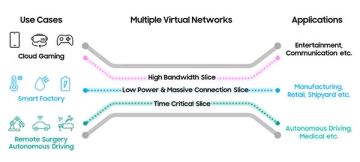
Samsung Electronics has successfully verified 'Network Slicing' technology in a commercial 5G standalone (SA) network environment with Japanese mobile carrier KDDI, which has been ongoing since September of last year.
2023.01.25by 김예지 기자











