



The Ministry of Science and ICT plans to expand the number of Korean mobile carriers.
 Published2023.03.13 13:44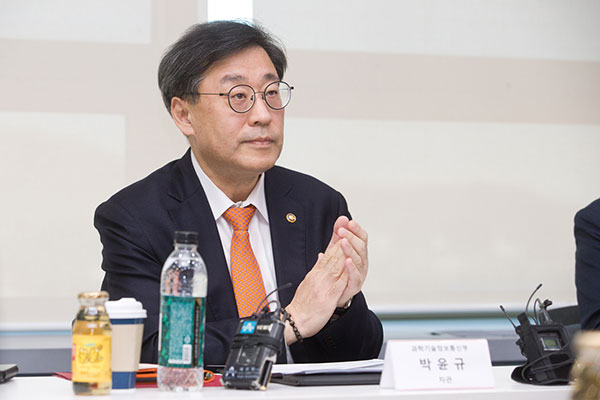
16.9% of mobile phone subscribers use mobile phones, but sales account for only 5%.
The government will address price competitiveness and wholesale price issues.
The Ministry of Science and ICT is expanding the affordable mobile phone market to stimulate competition in the telecommunications market and foster an ecosystem.
The Ministry of Science and ICT announced on the 10th that it held a meeting at the Korea Intelligent Information Society Agency (KISA) to discuss ways to strengthen the competitiveness of low-cost mobile phones. Major mobile phone operators, experts, and the government participated in in-depth discussions. This meeting followed the first meeting of the "Telecommunications Market Competition Promotion Policy Measures Task Force" held in February and a public discussion held on March 2nd.
Park Yoon-gyu, Second Vice Minister of Science and ICT, said, “The industry and the government must work together to ensure that a variety of affordable 5G mobile phone plans are launched,” and asserted, “We will consult with the National Assembly to improve the wholesale price calculation method so that it can be operated flexibly.”
Since its introduction in 2010, the mobile carrier has seen significant growth, with 13.06 million subscribers (as of January 2023), representing 16.9% of all subscribers. By offering lower-cost plans compared to the three existing carriers, the number of subscribers is increasing, particularly among younger generations.
However, the total sales of budget phones were found to be only about 5% of the entire market. Furthermore, 5G mobile phone subscribers reached 175,000 (as of January 23), accounting for 1.3% of mobile phone subscribers. Therefore, while the influence of mobile phones is growing, it is assessed that they do not account for a significant proportion compared to the three major mobile carriers.
As the share of budget mobile phone subscribers is growing rapidly in major overseas countries such as Germany, reaching 23%, measures to revitalize competition in the telecommunications market and create an ecosystem are being called for in Korea as well.
At the meeting held that day, the government and experts, along with budget phone service providers Viva Publica (Toss), KB Kookmin Bank, Eyes Vision, and telecommunications subsidiaries SK Telink and KT M Mobile, put their heads together.
At the meeting held that day, discussions were held with the mobile phone industry and experts on various issues, including: △ strengthening price competitiveness and differentiation to activate 5G mobile phone plans, △ resolving the issue of rigidity in wholesale price calculation standards, △ securing economies of scale for mobile phones, △ enhancing brand awareness of mobile phone plans, and △ efforts to protect users.
The Ministry of Science and ICT stated, “It is necessary for mobile carriers to grow to a level where they can shoulder responsibilities such as protecting personal information,” and added, “We will also consider policy measures such as mergers and acquisitions and supplementing the discount system for bulk data pre-purchases.”
He also said, “We need to discuss the issue of market share of telecommunications subsidiaries together from the perspective of revitalizing competition in the telecommunications market and creating a healthy ecosystem.”
As a means of strengthening the competitiveness of low-cost mobile phone operators, they proposed the following: △creating a stable investment environment to induce facility investment; △creating diverse services by reducing network wholesale prices; △improving systems to prevent identity theft and utilizing AI technology. In particular, he emphasized the need to develop improvement measures for the difficulties of non-face-to-face subscription and the complexity of number transfer procedures between mobile carriers and mobile carriers.
Experts suggested solutions such as: △ institutional improvements to facilitate easier entry for non-telecommunications operators such as platforms and distributors; △ continued policy efforts to reduce wholesale prices; △ providing information for accurate rate comparisons between telecommunications companies and budget phone companies; and △ encouraging the emergence of diverse rate plans by increasing the use of pre-purchasing large amounts of data.
Second Vice Minister Park Yoon-gyu stated, "The affordable mobile phone market must now move beyond its image as a simple resale model and low-price-centric approach. We need to break away from these old practices to allow for the emergence of diverse, innovative services and competitive operators." He also stated, "The telecommunications sector must also facilitate simple, non-face-to-face sign-up procedures." He proposed, "The government, industry, and related organizations will form a task force to swiftly address common industry issues like these."
Comments
Related news

2026, 5G market value '45 trillion won'
TrendForce announced on the 19th that the global 5G market size in 2023 is expected to reach $14.5 billion (17 trillion won) through activation of enterprise 5G private networks, advancement of small cell dedicated equipment, and 5G FWA, and is projected to reach $37 billion (45 trillion won) in 2026 with a CAGR of 11.0%. Metaverse-related applications were noted as a noteworthy application area.
2023.01.31by 김예지 기자

30% Increase in 5G Subscribers at Three Mobile Carriers Last Year
Despite a decrease in mobile phone subscribers among the three major telecommunications companies in 2022, the number of 5G subscribers increased. <br> <br>In relation to this, the three telecommunications companies achieved record-breaking performance in 2022, which is attributed to their 5G rate plans. However, there is ongoing controversy from consumers who express dissatisfaction with services such as speeds that are difficult to perceive, compared to the higher charges of 5G rate plans. <br> <br> ※ Articles containing important statistical data are provided on a paid basis.
2023.02.06by 김예지 기자
Keysight Launches 5G-Specific Network Quality Verification Solution
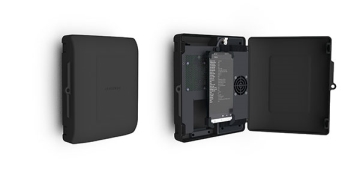
Keysight Technologies is launching the 'Nemo Industry Probe' to support automated service assurance, end-to-end quality of experience (QoE) and quality of service (QoS) validation, and active testing in 5G public networks and Private 5G (specialized networks).
2023.02.16by 김예지 기자
ETRI develops 5G small cell software...speeding up 5G specialized networks
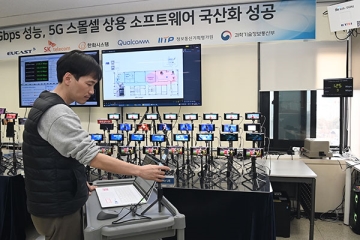
The Electronics and Telecommunications Research Institute (ETRI) announced on the 21st that it has developed commercial-grade software technology for a 5G small cell that provides downlink speeds of 2.2Gbps in the 5G millimeter wave band.
2023.03.02by 김예지 기자
.jpg)
Introduction of a plan to build a smart factory based on a 5G specialized network
e4ds news has organized a venue to examine the latest trends in smart manufacturing and this year's outlook, while presenting 5G-based IIoT solutions.
2023.03.06by 김예지 기자











