


[Interview] Hwang Ui-cheol, CEO of Marine Drone Technology: "Frequency regulation relaxation is essential to promote long-range drones."
 Published2023.03.14 14:42
.jpg)
▲Marine Drone Technology CEO Hwang Ui-cheol
"Frequency regulation must be relaxed to promote long-range drones."
Naraon, Korea's first maritime drone delivery platform.
Drone 5G Communication: Ultra-High Speeds and Reduced Latency
Signal amplifiers and high-performance antennas improve reception rates.
[Editor's Note] The drone industry is expanding into various fields. "Drone delivery," a service that uses drones to deliver items to their destinations, is emerging as a new logistics market due to its various advantages, such as reducing logistics costs and shortening delivery times by delivering food, medical supplies, and other items. The drone delivery industry is expected to continue expanding its coverage area, leading to industry development through long-range drones. Marine Drone Technology Co., Ltd. launched Korea's first cargo delivery drone service in 2021 and is leading the way in revitalizing the drone industry through the development of drone communication technology. This magazine spoke to Hwang Ui-cheol, CEO of Marine Drone Technology, about the marine drone technology platform and his thoughts on drone delivery regulations.
■ Please introduce your company.
Marine Drone Technology Co., Ltd. has launched a maritime drone service to deliver a small comfort from land to sailors stranded at sea due to landing restrictions caused by the COVID-19 pandemic.
Currently, the company aims to become an innovative platform that connects ships and local businesses, leading last-mile delivery and establishing safe air routes to foster a symbiotic relationship between maritime and land.
What is 'Naraon', a drone logistics delivery service based on marine drone technology?
Developed by Marine Drone Technology, "Naraon" is a drone delivery platform application. As the first in Korea to receive a drone delivery business license, it provides a service that enables the quick and economical delivery of essential items to anchored sailors. Anyone can download and use the app from the App Store.
Marine Technology Drones currently operate between ships using the "MDT-1600," a drone equipped with delivery equipment, and have completed approximately 700 free deliveries over the past two years. This drone can fly within a 10km radius for up to 60 minutes.
■ Types of drone wireless communication
Wireless communication methods for controlling drones include RF, LTE, 5G, and satellite communications. Drones are equipped with a controller and communication module that generates control signals to control the drone. The communication module is responsible for communication between the drone and the controller, and transmits the drone's flight information data.
Satellite communications are used not only for communication between drones and ground stations, but also between drones themselves. Systems like GPS can be used to determine the drone's real-time location, and internal sensors can be used to detect and control the drone.
Marine Drone Technology has established a joint venture with Skyports, a UK-based company, to collaborate on the development of satellite communication technology. Marine Drone Technology will focus on developing capabilities at the ports of Busan and Yeosu, leveraging its expertise in operating drone delivery platforms and Skyports' AAM infrastructure and drone service capabilities.
■ What is the long-range drone operation plan and what are the expected effects?
For long-range drone operations, a stable communication environment is essential, and government-level regulatory management is also necessary, including the development of location-based technologies, batteries, and charging technologies.
To ensure stable long-range drone communication and control, it is necessary to reduce the drone's EMI generation, and to have high-performance communication modules and stable communication technology.
Drone operations based on 5G can meet ultra-high-speed, high-capacity communications and low latency (URLLC, Ultra-Reliable and Low-Latency Communications). Furthermore, they are less affected by terrain and, with a base station, can operate over long distances, from Seoul to Busan.
As long-range drone operations become more active, the service area will expand to include islands and mountainous areas, enabling delivery, which is expected to result in savings in human and material resources. Long-range drones can deliver emergency medicines and essential supplies at high speeds and in a timely manner, and can also be a good business solution from an ESG perspective.
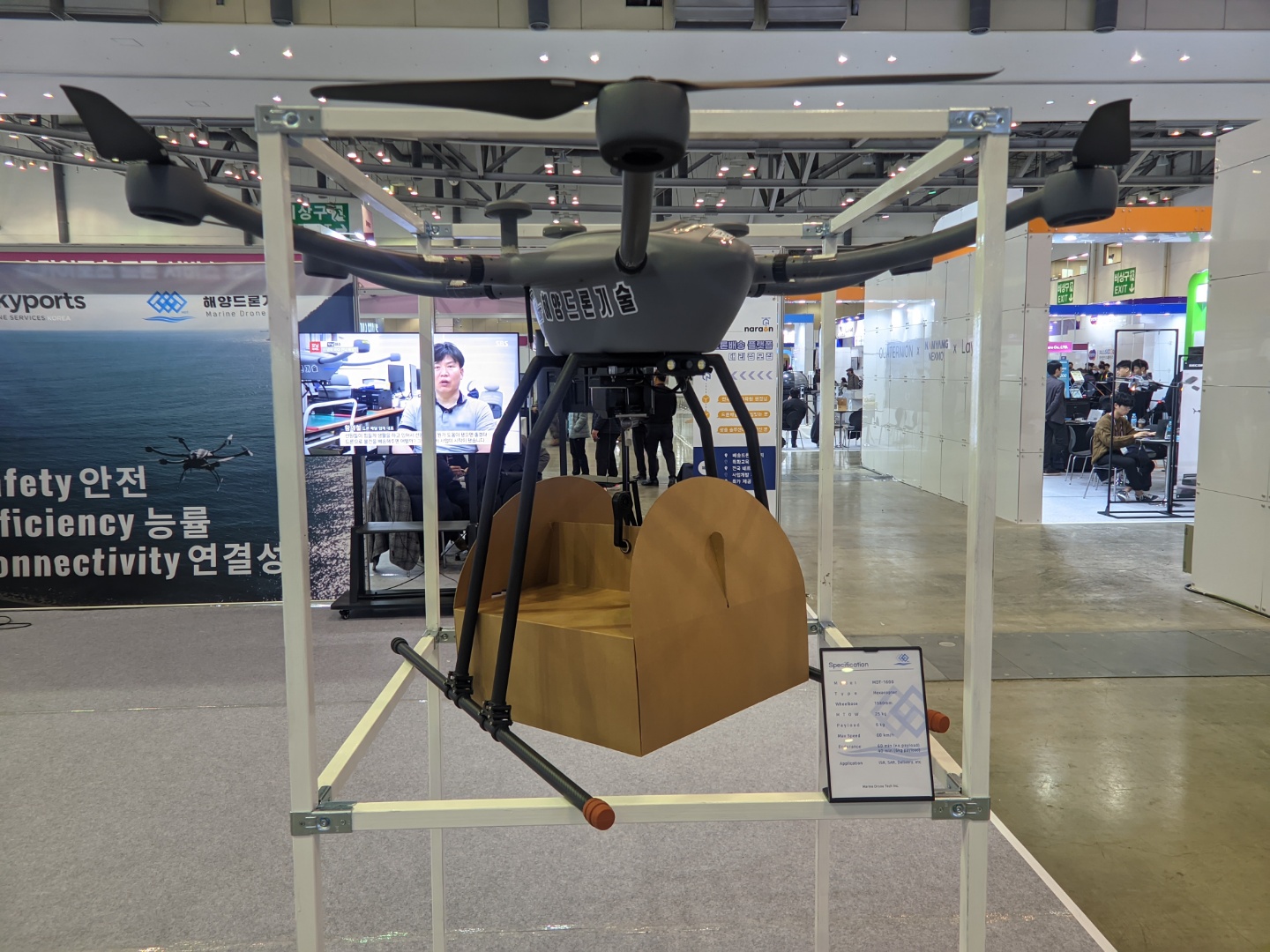 ▲Maritime drone technology's delivery drone ' MDT-1600'
■ What are the regulations related to communication frequency restrictions?
The wireless communication frequency bands available for drone operation are restricted by country. Recently, with the development of the drone industry, efforts are being made to expand the available wireless frequency bands for drone operation.
As regulations regarding communication frequency restrictions are relaxed, reception can be improved by adjusting the frequency bandwidth or using signal amplifiers or high-performance antennas. By changing the frequency bandwidth, the optimal bandwidth can be selected based on communication requirements, maximizing performance. This will support safe and accurate control of long-range drones.
I understand that drone communication distances are currently limited by the Special Flight Safety Standards of the Aviation Safety Act. What is the current status?
The current Aviation Safety Act's Special Flight Safety Standards are regulations designed to ensure the safety of drone operations. Consequently, communication distances during drone flight are limited. The special flight safety standards of the Aviation Safety Act are continuously being revised and supplemented.
Although there are restrictions on drone flight distances under the Aviation Safety Act's Special Flight Safety Standards, these are regulations to ensure safety when operating drones, and do not mean that long-distance drone flight is impossible.
Research on long-distance drone flight is being conducted both domestically and internationally. As drone communication technology advances, flight distance restrictions may be eased.
■ Compared to the domestic drone manufacturing market, I understand that the service provider-centric response is inadequate. What is the current status?
Current domestic drone regulations ensure the safety and security of drone operations, but some do not align with service providers' business models or restrict operation.
The government is exploring new regulatory measures through joint research and collaboration between domestic industry, academia, and research institutes.
For example, Korea has the Daily Life Logistics Act. Its implementation stemmed from the rapid growth of e-commerce. Twenty years ago, the Freight Truck Transport Business Act primarily targeted businesses, and the courier service sector failed to achieve significant scale. However, following the 1997 IMF crisis, losses exceeded 1 trillion won due to factors such as increased unemployment, a surge in the supply of freight drivers, declining unit prices due to the inherent multi-tiered transport structure, and increased costs caused by rising oil prices. In 2004, the government shifted the registration system, which previously allowed anyone to become a freight driver if they met the requirements, to a licensing system, thereby restricting the number of new trucks.
Since then, e-commerce has shaken up offline distribution in the distribution industry, and 'delivery' has also grown along with product delivery. However, the law still restricted the addition of new vehicles. This, in turn, led to a supply shortage for small trucks used for delivery, and this became the backdrop for the long-standing demand by the delivery industry for the enactment of a "Delivery Service Act."
The government is making significant efforts to revitalize drone logistics, led by the Ministry of Land, Infrastructure and Transport. To achieve these goals, demand is crucial. Creating initial demand is crucial for companies to survive, and the drone industry ecosystem is expected to develop and deregulate.
Comments
Related news
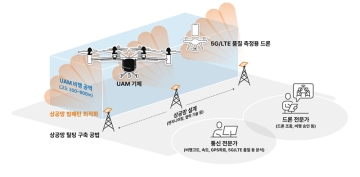
SKT, K-UAM demonstration project 5G commercial network construction
SK Telecom operated a communication quality measurement drone in a trial test related to 5G aerial network near the Goheung National Aviation Testing Center, verifying service quality based on communication altitude and distance.
2022.08.08by 김예지 기자
Ministry of Land, Infrastructure and Transport to Improve 'Drone Insurance' to Revitalize Drone Industry
The Ministry of Land, Infrastructure and Transport announced on the 1st that it has established a 'Drone Insurance Cooperative Body' with insurance companies and others to vitalize the drone insurance market, and has concluded relevant agreements.
2022.09.06by 김예지 기자
[2023 Drone Show Korea] The Future of the Drone Industry at a Glance
Busan Metropolitan City, Ministry of Trade, Industry and Energy, Ministry of Science and ICT, Ministry of Land, Infrastructure and Transport, and Ministry of National Defense present Asia's largest drone exhibition 'Drone Show Korea 2023,' which will be held for three days from February 23 (Thursday) to February 25 (Saturday) at Busan BEXCO.
2023.02.23by 김예지 기자
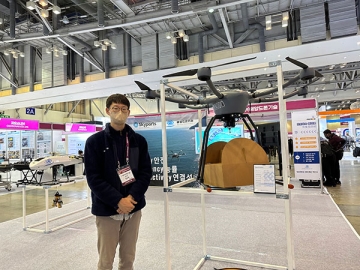
[2023 Drone Show Korea] Marine Drone Technology: "Korea's First Commercial Drone Delivery Capability to Target the Drone Platform Market"
Marine Drone Technology Co., Ltd., which launched South Korea's first cargo delivery drone in 2021, introduced a drone delivery platform at '2023 Drone Show Korea' and took the lead in activating drone services. At the exhibition, Marine Drone Technology Co., Ltd. unveiled the 'MDT-1600,' a drone equipped with delivery equipment. The company established a joint venture with Skyports, a leading future air mobility company from the UK, and launched 'Skyports Drone Services Korea.'
2023.02.24by 김예지 기자
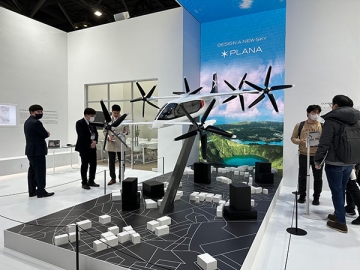
[2023 Drone Show Korea] Planar “Hybrid AAM 500km Flight”
Plana announced on the 23rd that it unveiled for the first time a scaled-down aircraft model of a hybrid electric propulsion AAM (Advanced Air Mobility), the only one of its kind in Korea, at the '2023 Drone Show Korea' held at BEXCO in Busan.
2023.02.27by 김예지 기자











