


Apple Pay Launched in Korea 'Available Starting Today'
 Published2023.03.21 11:50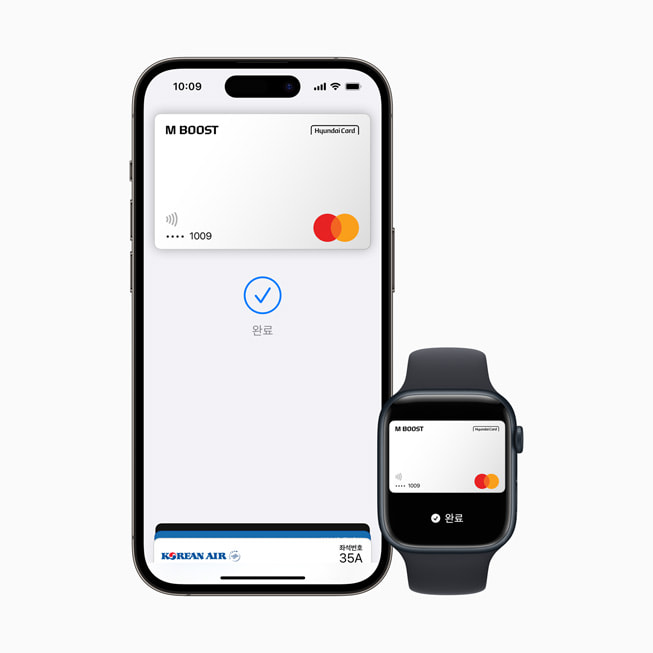
Support for domestic and international terminal-holding affiliated stores
Payment information stored on internal chip, not on server or terminal
High Fee Problem...Card Company ' Burden'
Apple Pay has finally been launched in Korea. Users with Apple devices and Hyundai Cards can now use the service for easy payment at online and offline stores.
Apple announced on the 21st that Apple Pay will be available on iPhone, Apple Watch, iPad, and Mac.
Apple Pay has been the subject of ongoing controversy in Korea since November of last year over its launch date. Hyundai Card attempted to exclusively launch Apple Pay in Korea, but gave up its exclusive usage rights during the Financial Services Commission’s review process, allowing other card companies to launch it as well.
Starting today, Hyundai Card Visa, MasterCard credit and check card users can add their cards to Apple Pay on their Apple devices and make online, offline, and in-app payments at domestic and international stores that support Apple Pay. UnionPay is not accepted.
Affiliated stores include offline stores such as Costco, Tous Les Jours, Lotte Department Store, Homeplus, and convenience stores, as well as apps and websites such as Baedal Minjok, Musinsa, GS SHOP, Paul Bassett, and Lotte Cinema.
Users can use Apple Pay in a web browser or when making in-app purchases without having to create an account, enter a password, fill out various information, or enter a shipping address or payment information each time.
Currently, the transportation card function is not supported, and only Apple devices and cards in your name can be registered.
■ Apple, concerned about security, stores payment information only on the security chip
Apple said Apple Pay is equipped with robust security and privacy technology. The technology embedded in Apple Pay protects the user’s information, payment data, credit and check card information, etc. every time they use it.
Card numbers are not stored on servers or personal terminals, and instead a unique device account number (DAN) is created, encrypted, and safely stored in the user's terminal's internal chip. The internal chip, 'Secure Element', is a security chip certified by industry standards, and is explained to be able to safely store payment-related information by complying with financial industry requirements related to electronic payments.
Each payment is authorized using a unique, dynamic security payment password that is generated each time you make a purchase. Apple does not store customer payment information, and payments remain between you, the merchant or app developer, and your bank or card issuer. Users can use the 'Find My' feature to lock or suspend any payments made on their device if their phone is lost or stolen.
“We are thrilled to finally be able to bring Apple Pay, our secure, contactless payment method, to Korea,” said Jennifer Bailey, vice president of Apple Pay and Apple Wallet. “Many Korean consumers have been looking forward to using Apple Pay to make payments in their everyday lives, whether at offline stores, online websites, or in apps. We are delighted that Apple Pay, a convenient and secure payment method, will now be available at Korean merchants.”
■ The direction of the domestic simple payment market
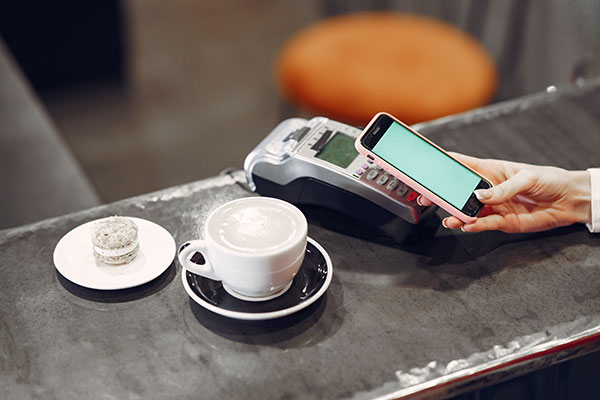
With Apple Pay being launched in Korea, attention is being paid to how the domestic simple payment market landscape will change. With the launch of Apple Pay, Apple will be competing with Samsung Electronics’ Samsung Pay, which was previously available for simple payment in Korea, and it is expected to have some impact on the simple payment market share.
However, some say that it will not have a big impact for the time being. Currently, Apple Pay only supports NFC (Near Field Communication), and the penetration rate of such terminals is only 10% in the country.
Apple Pay's high transaction fees are also causing a lot of controversy. When introducing NFC terminals to merchants for Apple Pay payments, there are costs for installation and additional maintenance. Additionally, card companies charge a fee per transaction when making payments, which ultimately becomes a burden for card companies and some merchants. Apple Pay is currently available in over 70 countries and regions, with the highest fee in the United States being set at 0.15% per transaction.
If Apple charges domestic card companies or banks a fee per transaction, there are also predictions that competitors such as Samsung Pay may also charge card companies a fee per transaction.
After today's launch, only Hyundai Card users will be able to use Apple Pay for the time being, but it has not been confirmed which card companies, including Hyundai Card, are in discussions.
Ultimately, the burden of the fee may also be a burden to domestic consumers, so a plan for the introduction of Apple Pay that can be negotiated between the industry and consumers is urged.
Comments
Related news

Samsung Electronics' Galaxy S23 Ultra 1TB for 2 million won
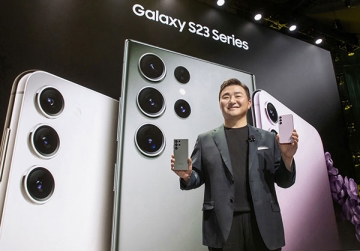
Samsung Electronics held "Galaxy Unpacked 2023: Share the Epic" at the Masonic Auditorium in San Francisco on the 1st (local time) and announced the unveiling of the "Galaxy S23 series." The devices will launch globally starting from the 17th, including Korea, with pre-sales in Korea running from February 7th to 13th. The series is being released in three models: S23 Ultra, S23+, and S23.
2023.02.02by 김예지 기자
Samsung Galaxy S23 vs Apple iPhone 14 comparison
Samsung Electronics will launch the Galaxy S23 series starting from the 17th in major countries worldwide following its pre-sales period that ran from the 7th to the 13th. The core strengths of the Galaxy S23 are upgraded performance compared to the previous generation and increased megapixel count in the main camera of the Ultra model. In contrast, the iPhone 14 positions overall performance improvements and the brand's inherent image as its competitive advantages.
2023.02.17by 김예지 기자
ESP32 Development Environment Selection and GPS Application Implementation
The ESP32 is a microcontroller that integrates Wi-Fi, Bluetooth, 12-bit ADC, capacitive touch, PWM, DAC, and UART in a single SoC. However, the abundance of features does not by itself solve the designer's problems. The real challenges lie in selecting the appropriate development environment, determining which pins can be used and which must be avoided, and converting raw data from modules into usable information. This document addresses ESP32 peripheral constraints (ADC2 and Wi-Fi coexistence limitation, UART1 occupancy, ADC non-linear regions), the trade-offs between Arduino IDE and ESP-IDF, and the process from connecting NEO-6M/NEO-M8N GPS modules to UART2, parsing NMEA sentences, and visualizing routes in Google Earth, all organized based on documented references.
2026.10.12by 편집부
MIPI CSI-2, DSI-2, C-PHY, D-PHY Test Solution Technical White Paper
The MIPI interface adopts a burst mode that transitions between low-power (LP) and high-speed (HS) states for low-power consumption, and in return, strict timing rules are imposed on state transitions. Additionally, the high-speed section operates as a packet-based protocol with headers, ECC, and CRC, so verification engineers must handle waveforms and protocols simultaneously. Traditional configurations combining general-purpose oscilloscopes and AWGs reveal limitations in setup complexity, measurement uncertainty, and lack of reproducibility when faced with these requirements. This white paper, based on webinar materials, organizes the structure of this problem and describes how the SV5C-DPTXCPTX generator for receiver testing and SV5C-DPRXCPRX analyzer for transmitter testing integrate state transition testing, stressed eye testing, and protocol analysis into a single bench, along with their application boundaries.
2026.10.12by 편집부

NVIDIA to Invest $1 Billion in U.S. Science Over Next Five Years
NVIDIA has announced plans to invest $1 billion over the next five years to strengthen U.S. scientific and technological competitiveness. The company will enhance cutting-edge artificial intelligence research and development capabilities in key areas including quantum computing, healthcare, and energy security, while expanding support for higher education research institutions and cloud service providers. NVIDIA is participating as a major industry partner in the White House Office of Science and Technology Policy's Genesis Mission, and is promoting supercomputer construction in collaboration with national laboratories including Argonne and Los Alamos.
2026.10.12by 배종인 기자











