


Auto parts companies see 30% slowdown in profit growth in the second half.
 Published2023.07.27 16:58
.jpg)
▲Kwon Eun-kyung, Research Director, Korea Automobile Mobility Industry Association (Photo provided by Korea Automobile Mobility Industry Association)
24 of the 80 companies surveyed saw their profit margins slow in the second half of the year.
Short-term challenges ranked first and second: raw material prices and labor shortages.
Kwon Eun-kyung, head of the Research and Development Department of the Korea Automobile Mobility Industry Association, said in a keynote speech at the 34th Automobile Industry Development Forum hosted by the Korea Automobile Manufacturers Association, “The results of the survey on the management conditions of parts companies conducted by KAMA showed that there is a large difference in perception regarding the management performance in the first half of the year and the sales conditions in the second half.” She continued, “Of the 80 responding companies, 44 companies (55.7%) said their sales increased compared to the previous year, but only 24 companies (30.4%) said their operating profit increased, showing that the increase in profit rates is slowing down.”
Looking at the survey results, △40% of companies responded that the sales conditions in the second half of the year will be similar to the first half, while △30% responded that the sales conditions in the second half of the year will be similar to the first half of the year. They responded that it would worsen compared to the first half of the year due to concerns over weakening profitability due to rising energy costs and decreased demand due to an economic slowdown.
In addition, the biggest short-term challenges were as follows: △ increased costs, such as high raw material and energy prices (27.4%), △ difficulties in managing human resources, such as labor shortages and rising labor costs (24.5%), △ burden of preparing for the transition to the future car industry (13.9%), △ decreased demand (12.2%), and △ worsening financial conditions (11.4%).
Director Kwon said, “As a result of additional questions about raw material prices, 58 out of 80 responding companies recognized that raw material prices are still high,” and expressed concern that “they selected the rise in raw material and energy prices as the main factor in the worsening financial situation, and that the future rise in energy prices, including electricity rates, will be a significant burden on parts companies.”
In the human resources management sector, although some of the labor shortage has been resolved recently due to factors such as the expansion of the quota for introducing foreign workers, the situation is still insufficient compared to before COVID-19. In addition, it is difficult to secure a stable supply of skilled workers due to frequent job changes and short stay periods, and the minimum wage increase has also raised wage levels, putting a burden on parts companies struggling with deteriorating profitability.
Among the 28 companies that cited worsening financial conditions as a challenge, 60% responded that conditions had worsened compared to the previous year, and it was revealed that the use of additional funds was mostly for working capital purposes (54.7%), such as raw material costs and interest expenses for business operations.
Mid- to long-term challenges include the deepening polarization of parts companies' ability to transition to future vehicles and the demand for supply chain risk management and decarbonization investments, which are putting pressure on business conditions.
The number of companies that have transitioned to future vehicles by company size is only △75.9% for mid-sized companies, △42% for medium-sized companies, and △15.9% for small companies. The small business size and lack of research capabilities of companies that have not transitioned are hindering the direction of transition.It was revealed that they were having difficulties setting up.
Director Kwon also said, "There are also responses that the disruption in parts supply due to supply chain risks following COVID-19 has expanded into issues of industrial competitiveness, such as establishing a supply chain centered on domestic industries, and that constant monitoring and response capabilities are necessary."
Director Kwon suggested the following measures to improve the short-term management conditions of parts companies: △ institutional improvements to ensure stable securing of foreign production personnel; △ expanding demand for short-term working capital due to accumulated debt and persistent high interest rates; and △ stimulating domestic demand to address the decline in demand.
The institutional improvement measures to secure a stable workforce of foreign workers include: △extension of the period of stay (basic period of 3 years), △increase in the number of foreign employees per company, △differentiation of minimum wage according to skill level, and △restriction on job transfer (first year).
Due to the continued accumulation of debt and high interest rates, the demand for short-term working capital has increased, so the government has proposed expanding policy financing support for small and medium-sized parts manufacturers with low collateral and low credit ratings. To stimulate domestic demand in response to the decline in demand, the government has proposed reintroducing the automobile acquisition tax reduction (from 0% to 30%).
Director Kwon also emphasized, “In order to enhance the mid- to long-term competitiveness of the parts industry during the transition to future vehicles, it is necessary to continue and expand investment incentives to expand the domestic future vehicle production base so that the parts industry can promote the transition to future vehicles and secure demand,” and concluded his presentation by saying, “It is also necessary to extend the deadline for temporary tax investment deductions and national strategic technology tax deductions, improve the tax investment deduction restrictions for electric vehicle factories in the metropolitan area, and increase the support limit and subsidy support ratio for local investment promotion national subsidies.”
Comments
Related news

[e4ds Tech Day 2026 ⑨] Sim Sang-gyu, Autocrypt CTO: "In the Physical AI Era, Automotive Security Must Extend Beyond the Vehicle"
At e4ds Tech Day 2026, Sim Sang-gyu, CTO of Autocrypt, explained automotive cybersecurity strategies in the era of Physical AI and SDV (Software-Defined Vehicle). Automobiles are evolving as part of an ecosystem connected to AI, cloud, chargers, IoT, and robots, and he emphasized that the scope of security must expand beyond the vehicle interior to the entire connected environment. In particular, AI model tampering, adversarial attacks, OTA updates, and EV charger hacking were identified as major threats. He explained that response measures require zero trust, AI model integrity protection, intrusion detection, Security by Design and Default, and full lifecycle security management, and that proactive security system establishment beyond regulatory compliance is critical for securing future mobility competitiveness.
2026.10.12by 배종인 기자

Practical HIL Construction Strategy for Automotive and Off-Highway Controller Validation
As vehicle E/E architecture transitions to zonal structures and shifts to software-defined vehicles (SDV), the number of controllers (ECUs) requiring validation and software complexity are surging dramatically. Meanwhile, real vehicle testing cannot provide repeated verification under identical conditions and entails lead time and safety concerns. This white paper explains the principles of HIL (Hardware-in-the-Loop) validation and the structure of the NI platform composed of PXI, SLSC, and VeriStand, and through two actual implementation cases—Camera Record & Replay HIL for In-Cabin Monitoring Controller (ICMU) and Forklift Controller (VCU) HILS—describes how controller-level regression testing becomes possible. Additionally, it explicitly states application boundaries and limitations, such as lack of A2B support.
2026.10.12by 편집부
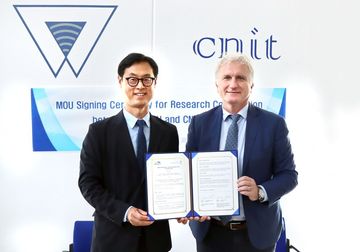
Korea Automotive Research Institute Signs MOU with Italy National Institute for Wireless Communications
The Korea Automotive Research Institute will sign an MOU with Italy's National Institute for Wireless Communications and launch joint research on next-generation mobility technologies based on 6G, V2X, and connected vehicles. The two organizations will conduct research to apply advanced wireless communication technologies to vehicles and discover international joint projects to advance next-generation connected vehicle technology development.
2026.10.12by 배종인 기자
Color Accuracy Issues in Vehicle Interior Ambient Lighting and Intelligent LED Drivers
Vehicle interior ambient lighting is spreading across all price segments, and the level of color accuracy required of lighting designers is rising accordingly. This white paper quantitatively addresses why temperature drift and individual variations of RGB LEDs cannot be corrected by standard constant-current drivers, and explains an intelligent LED driver approach that integrates an MCU, calibration data, and a LIN network interface into the driver. It covers implementation details of the LITIX Interior TLD4020-3ET currently in production, portfolio roadmap, and evaluation/development environments, and clarifies application boundaries including lack of 48V support, lack of RGBi/ISELED support, and absence of direct optical degradation diagnostics.
2026.10.08by 명세환 기자
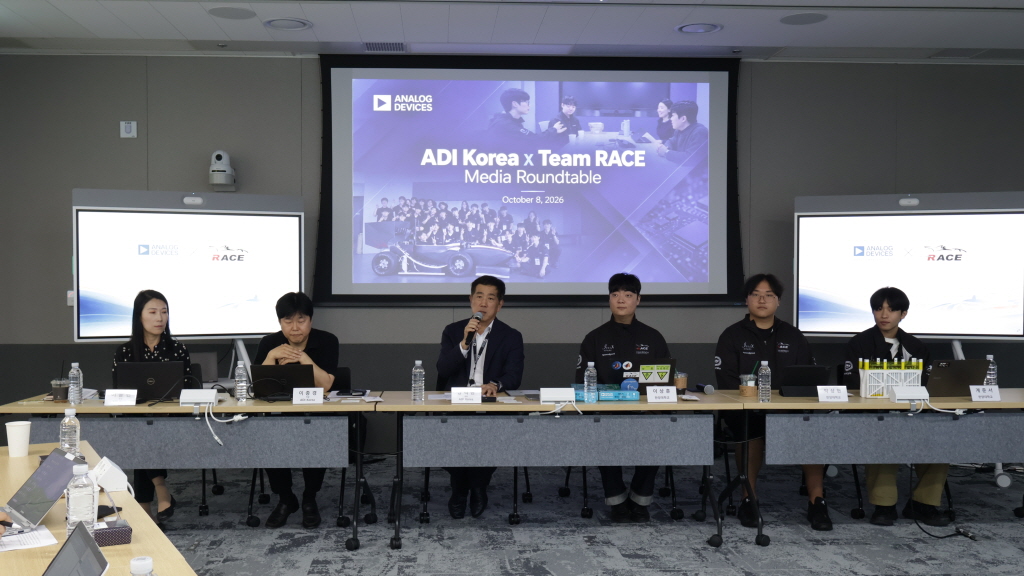
ADI, "Fostering Future Engineers Beyond Component Support"
Global semiconductor company Analog Devices (ADI) is drawing attention for moving beyond simply sponsoring university student car projects to serve as a partner in nurturing future engineers. Over the past three years, ADI has collaborated with Hanyang University's automotive research club Team RACE to support electric formula vehicle development, and recently has been providing technical consultation and semiconductor solutions to enable students to directly develop battery management systems (BMS), creating a model case of industry-academic cooperation.
2026.10.08by 배종인 기자











