


Cytime: “MEMS-based OCXO to Change the Landscape of Precision Timing Technology”
 Published2023.09.20 14:03
Goal to develop a $2 billion market over the next 10 years
Twice as long holdover… Increased network stability
SiTime plans to pioneer a $2 billion market over the next 10 years with its new MEMS-based epoch platform. It will change the landscape of quartz-based precision timing technology, which has persisted for about 100 years.
SiTime Corporation, a company specializing in high-precision timing solutions, announced the SiTime Epoch Platform on the 20th. On the 12th, Cytime held a press conference at the Grand Intercontinental Hotel in Samseong-dong to introduce the latest trends in precision timing and Cytime's MEMS-based Oven-Controlled Crystal Oscillator (OCXO).
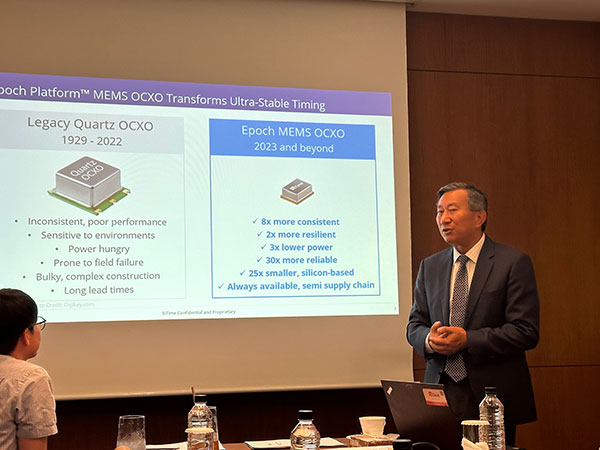
Jeff Gao, Vice President of Product Marketing at Sitime
Jeff Gao, Vice President of Product Marketing at Saitime, who visited Korea on this day, emphasized the importance of the Korean market by making Korea the first stop on his global tour.
Vice President Jeff stated, “The MEMS-based OCXO launched by SiTime can overcome the limitations of existing quartz OCXOs by providing a stable clock to data center and network infrastructure equipment, ensuring excellent stability, scalability, and low power consumption.”
Precision timing systems have a significant impact on network performance and stability. All nodes on the network must be synchronized in real time. As connectivity is maximized for all devices, companies aim to provide consumers with a stable network infrastructure. For example, devices such as RUs and DUs at a carrier's base station must provide a stable network over the long term, spanning 10 to 20 years.
Recently, the precision timing industry has grown explosively as the importance of connectivity, such as 5G networks, mobile devices, IoT, and automobiles, has been highlighted.
The advent of the AI era worldwide also plays a role. In the high-bandwidth, low-latency data center infrastructure required to support AI-based services, precise timing technology is emphasized in wired and wireless network connections. In addition, as harsh environmental conditions increase, high reliability is required at the edge as well.
SiTime argues that “while standard XOs are used when high accuracy is not required, the use of OCXOs is essential for 5G network equipment.” SiTime provides temporal synchronization at each point, including RANs, data centers, servers, and routers.
To achieve temporal synchronization in terms of the indicator of the rate of change of frequency due to temperature change, it is essential for the oscillator to maintain stability even in environments where resistance is present.
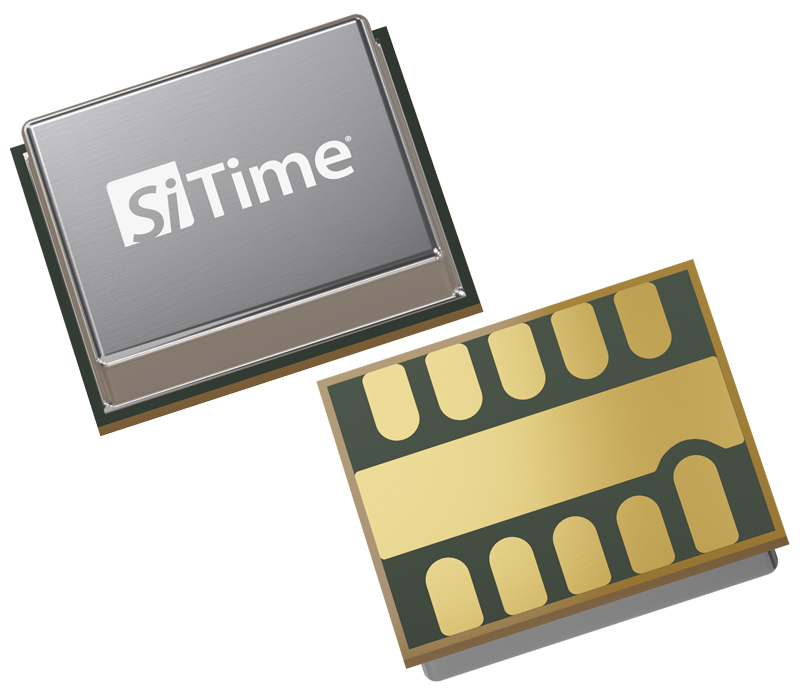
▲ Cytime Epoch Platform Product Image
Although existing quartz-based OXCOs have undergone continuous miniaturization, they still had limitations such as being large and consuming a lot of power. The Epoch platform, a MEMS-based OCXO launched by SiTime, is smaller than the existing model and reduces power consumption to one-third. It is also resistant to rapid temperature changes in harsh environments. Thanks to this, the frequency maintenance period, which previously took six months, is extended to three years. SiTime expects that achieving 30 times greater stability will reduce the number of failures and cut overall costs in half.
In particular, the SiTime Epoch platform ensures stable and continuous network operation by providing a 'Holdover' that is twice as long. The synchronized network adopts a redundancy structure that uses multiple timing sources for continuous operation. It is a method that uses it as a backup source if another source goes down due to node congestion or other factors.
Holdover refers to the time during which accuracy can be guaranteed, and ultimately, OCXO is the most important factor in synchronizing nodes and ensuring service continuity.
Compared to quartz-based products, SiTime products offer a holdover of up to 8 hours. Since performance varies by component as the frequency changes, ensuring consistency in system safety is crucial for engineers; the Epoch platform provides stability by exhibiting minimal variation.
Cytime stated, “3 billion applications are being generated in various fields such as wearables like smartwatches, mobile, IoT, servers, aviation, defense industries, and autonomous vehicles.”
For example, while conventional cars were not equipped with oscillators, their utility is gaining attention in autonomous vehicles as they become connected to the internet, utilizing systems such as LiDAR and Radar. Tesla, a client of Cytime, is developing an AI-based autonomous driving system by utilizing Dojo supercomputing at its own data centers.
SiTime stated that the SiT58xx epoch platform is scheduled for mass production in early 2024. SiTime said, “We cannot disclose the names of other customers, but engineering samples are currently being provided to select customers, and general samples are scheduled to be provided this coming October.”
Meanwhile, Psytime has been recording steady growth since listing on the NASDAQ in 2019, including a 30% year-over-year revenue growth rate. Psytime cited the fact that it manufactures products like a fabless company by owning its own IP as a differentiator from other companies.
Comments
Related news

Sitime Launches High-Precision MEMS Oscillator Targeting Telecom and Networking Timing Markets
SiTime Corporation announced the launch of an innovative Elite Platform™ that includes SuperTCXO™ (Temperature Compensated Oscillator) and oscillators.
2016.10.17by 홍보라 기자
Keysight Supports Qutel 5G RedCap NTN Module Verification
Keysight Technologies validated on the 25th that IoT wireless modules support the latest 5G RedCap (Reduced Capability) and Non-Terrestrial Network (NTN) features through the S8711A UXM 5G test application.
2023.07.25by 김예지 기자
Microchip Connects to Ethernet Networks Without an Embedded MAC
Microchip Technology (Asia General Manager and Korea Representative Han Byung-don) has announced a new LAN8650/1 MAC-PHY device family suitable for automotive applications, expanding Microchip's portfolio of automotive-certified Ethernet solutions.
2023.09.15by 배종인 기자
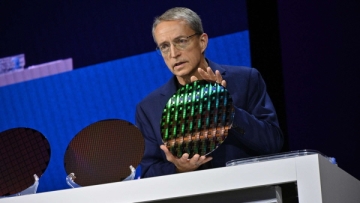
Intel: “The Next Step After Moore’s Law Is Multi-Chiplet Packaging”
Intel held its third annual Intel Innovation developer event in San Jose, California, and unveiled a variety of technologies designed to enhance accessibility and usability of artificial intelligence across all workloads spanning clients, edge, network, and cloud.
2023.09.20by 배종인 기자

Intel Unveils Next-Generation 'Core Ultra Series 3' and vPro Platform for Enterprise PCs
Intel has officially unveiled the "Intel Core Ultra Series 3" for next-generation enterprise PCs and the latest vPro platform, addressing a wide range of demands from enterprise notebooks to high-performance workstations.
2026.03.26by 배종인 기자











