



Ministry of Trade, Industry and Energy responds to hydrogen supply disruptions
 Published2023.11.24 16:20
Hyundai Steel's Dangjin Steelworks will supply 20-30% of hydrogen for transportation in the central region.
The Ministry of Trade, Industry and Energy announced that it held a meeting on the supply and demand situation of hydrogen charging stations in the central region in Seoul on the 24th, chaired by Park Chan-ki, Director General for Hydrogen Economy Policy.
It has been reported that two of the three hydrogen production lines at Hyundai Steel's Dangjin Steelworks, which currently supplies 20-30% of the hydrogen for transportation in the central region including the metropolitan area, have experienced problems.
As a result, hydrogen charging station inventory is starting to run out, and some hydrogen charging stations in the metropolitan area, Chungcheong, and Gangwon are operating with shortened business hours.
Accordingly, the Ministry of Trade, Industry and Energy has set up a meeting to review the hydrogen supply and demand situation and seek response measures together with hydrogen producers, suppliers, charging station operators, and local governments.
The Ministry of Trade, Industry and Energy is conducting a comprehensive inspection of the operational status and supply situation of hydrogen charging stations in the central region, and has requested cooperation from hydrogen suppliers to ensure that surplus hydrogen from other hydrogen production facilities in normal operation can be supplied to charging stations experiencing unstable hydrogen supply.
Additionally, we plan to establish an emergency communication network among the industry, related organizations, and local governments attending today's meeting to continuously monitor the supply and demand situation until supply and demand normalizes.
Park Chan-ki, Director of Hydrogen Economy Policy, said, “For hydrogen car users, the most important thing is an environment where they can conveniently charge hydrogen anytime, anywhere.”“The government will do its best to ensure a smooth supply of hydrogen to hydrogen charging stations by working closely with relevant industries and organizations,” he emphasized.
Meanwhile, Hyundai Steel produces hydrogen using the PSA (Pressure Swing Adsorption) method.
This is a process technology that removes impurities by adsorbing them under high pressure to purify hydrogen from a mixed gas containing hydrogen.
Hyundai Steel produces high-purity hydrogen by refining COG (Coke Oven Gas), a by-product gas produced at steel mills.
It has been reported that half of the hydrogen produced at Hyundai Steel's Dangjin Steelworks, which recently experienced problems, is supplied for automobile charging and semiconductor precision cleaning processes, and the remaining amount is used by the steelworks to prevent oxidation of products.
Comments
Related news
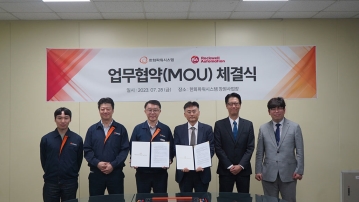
Rockwell and Hanwha Power Systems Join Hands for Hydrogen Blending Gas Turbine System Automation
Rockwell Automation announced on the 24th that it has established a strategic partnership with Hanwha Power Systems and agreed to mutually cooperate on the supply of automation solutions and equipment required for hydrogen co-firing power generation systems.
2023.10.24by 김예지 기자
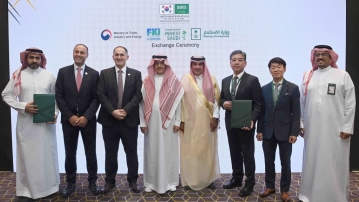
Hanjayeon supports participation of Korean SMEs in Saudi hydrogen mobility project
The Korea Automotive Research Institute, together with Hyundai Motor Group, Air Products Korea (hereinafter AP Qudra), and SAPTCO, takes the lead in establishing a hydrogen mobility ecosystem in Saudi Arabia.
2023.10.24by 성유창 기자
From green hydrogen to nitrogen and oxygen, we make whatever you want.
A research team led by Professors Ryu Jeong-gi and Lee Dong-wook from the Department of Energy Chemical Engineering at UNIST (President Lee Yong-hoon) has developed a large-area hydrogel thin film technology that can be universally applied to gas-producing electrodes. It is anticipated that this technology will enable easy production of clean gas feedstocks such as green hydrogen.
2023.10.24by 배종인 기자
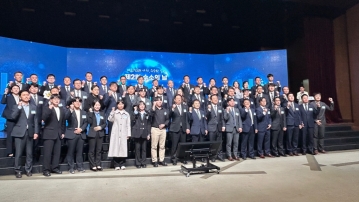
2nd Hydrogen Day, Forming a Hydrogen Economy Consensus and Encouraging Hydrogen Industry People
The Hydrogen Convergence Alliance held a meaningful second "Hydrogen Day" event, presenting government commendations to individuals and companies/organizations that have contributed to activating the hydrogen economy.
2023.11.02by 성유창 기자
Korea Mechanical Engineering & Construction Co. develops eco-friendly refrigerant compressor using hydrogen
A research team led by Kim Young, principal researcher at the Korea Institute of Machinery and Materials (Director Park Sang-jin) under the Ministry of Science and ICT, and a research team of professors Kim Min-sung and Kim Dong-kyou at Chung-Ang University (President Park Sang-gyu) have successfully developed an environmentally friendly refrigerant compressor that utilizes an electrochemical method rather than a mechanical approach.
2023.11.24by 배종인 기자











