


SM Lab Successfully Mass-Produces World's First 97% Nickel Single Crystal Clusters
 Published2024.02.29 16:42
Output characteristics improved by more than 16%p compared to conventional single-crystal particles even during fast charging
Single-crystal clusters supplied to Kumyang as 4695 size cylindrical battery material
SM Lab, a UNIST faculty startup, announced on the 27th that it has succeeded in mass-producing a 'single crystal cluster,' a high-capacity battery cathode material that can be used for fast charging.
In the high-energy density 46-series cylindrical batteries, which battery manufacturers have recently been competing fiercely to develop, only single-crystal cathode materials can achieve the desired cell capacity.
The 4-5 micrometer (μm) single-crystal cathode materials currently in use have poor output characteristics, making it difficult to fully charge the battery to its theoretical capacity during fast charging.
SM Lab has developed a single-crystal 'cluster' cathode material that improves output characteristics while maintaining the excellent durability of existing single-crystal cathode materials.
A technique was used to synthesize multiple 2μm single-crystal particles and simultaneously bond them firmly with an additive.
As a result of applying the cathode material produced with this technology to battery cells, charging Even when the time was reduced from 60 minutes to 15 minutes, it was charged to over 86% of the theoretical capacity.
On the other hand, general single-crystal materials showed a cell capacity retention rate of 70%.
In addition, it exhibited excellent physical properties, like a single crystal grain, even during the high-temperature rolling process, and did not break easily.
SM Lab has completed mass production verification of this material and is currently supplying it to Kumyang Co., Ltd. as a 4695 size cylindrical battery material.
SM Lab announced that it has been certified by the Ministry of Trade, Industry and Energy as a company possessing National Advanced Strategic Technology due to this technology.
CEO Jo Jae-pil stated, “We believe that the certification of possessing National Advanced Strategic Technology has secured a significant driving force for strengthening the company’s technology development capabilities and expanding our business.” He added, “As the government has designated this as a major next-generation technology, we plan to manage key personnel and technology security capabilities to the highest level through cooperation with relevant agencies to prevent technology leakage abroad.”
National advanced strategic technologies were specified into 17 technologies, including three secondary battery technologies, pursuant to the 'Special Measures Act on Strengthening and Protecting the Competitiveness of National Advanced Strategic Industries' (hereinafter the National Advanced Strategic Industries Act) enacted in 2022, and refer to technologies developed for the purpose of mass production or used in mass production.
SM Lab is expected to accelerate its business expansion as construction of its third factory (30,000 tons/year) is scheduled to begin in the second quarter of 2024, following its first and second factories (annual production capacity of 10,800 tons).
Meanwhile, SM Lab is a company founded in 2018 by Professor Jae-Pil Cho of the Department of Energy and Chemical Engineering at UNIST, a world-renowned scholar in the battery field. It received Series D investment (130 billion won) last October, bringing its total accumulated investment raised to 239 billion won, and is preparing for a listing on KOSDAQ within the year.
Comments
Related news
Ministry of Land, Infrastructure and Transport deliberates and decides on 8 regulatory sandbox demonstration cases including battery-swappable vehicles
The Ministry of Land, Infrastructure and Transport launched the First Mobility Innovation Committee (hereinafter referred to as the Innovation Committee) and deliberated and approved eight regulatory sandbox demonstration exceptions, including battery-swappable vehicles, under the goal of becoming a representative regulatory innovation platform for mobility.
2024.02.16by 성유창 기자
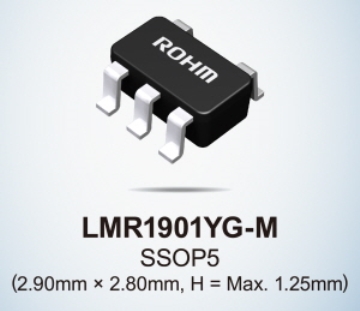
ROHM, OP Amp that drastically reduces battery consumption
ROHM has introduced a new OP Amp product 'LMR1901YG-M' that significantly reduces battery consumption by achieving a quiescent current of 160nA, thereby contributing to lower power consumption in consumer and industrial equipment.
2024.02.21by 배종인 기자
Battery Reuse and Recycling Industry of 600 Trillion Won by 2050, Full-cycle History Management Required
To activate the used battery reuse and recycling industry, it is necessary to establish a full-cycle history information management system. Drawing from China's experience, experts have raised the view that supplementary measures need to be introduced to mitigate initial market uncertainty and enhance soundness.
2024.02.27by 성유창 기자
Korea Challenges China's Dominance of LFP Batteries... Recycling Profitability Questioned
Amid intensifying price competition in the electric vehicle market, there is a strong trend toward launching affordable electric vehicles equipped with LFP batteries. Against the backdrop of China's firm grip on the LFP battery market, Korea's three major battery manufacturers are also throwing down their gauntlets in challenge.
2024.02.29by 성유창 기자

[Contribution] Professor Kim Pil-su of Daerim University - “The 2024 electric vehicle subsidy system is going well”
Ultimately, they are complaining that domestically-produced ternary NCM lithium-ion batteries with high energy density are at an advantage, while LFP batteries based on Chinese lithium iron phosphate technology are at a disadvantage.
2024.02.29by 명세환 기자











