


[Interview] ST Manager Jiyoon Jeong, “Realizing Highest Levels of RDS(on) Miniaturization and High Efficiency in Gen3 SiC MOSFETs”
 Published2026.04.06 09:16
EV traction inverters and data centers show the greatest effect in high power density.
[Editor's Note] STMicroelectronics (ST) secures quality and supply through a vertically integrated supply chain from wafers to finished products, and realizes miniaturization and high efficiency with the low RDS(on) of Gen3 SiC MOSFETs. It reduces customer risk through system-level solutions such as gate drivers, MCUs, and reference designs, as well as proven reliability; key areas include traction inverters in EVs and continuous operation and high power density in data centers. Against this backdrop, ST plans to introduce its SiC products via a webinar on April 16. We met with ST Manager Jung Ji-yoon, who was in charge of the presentation, to hear about ST's SiC products and technological capabilities.
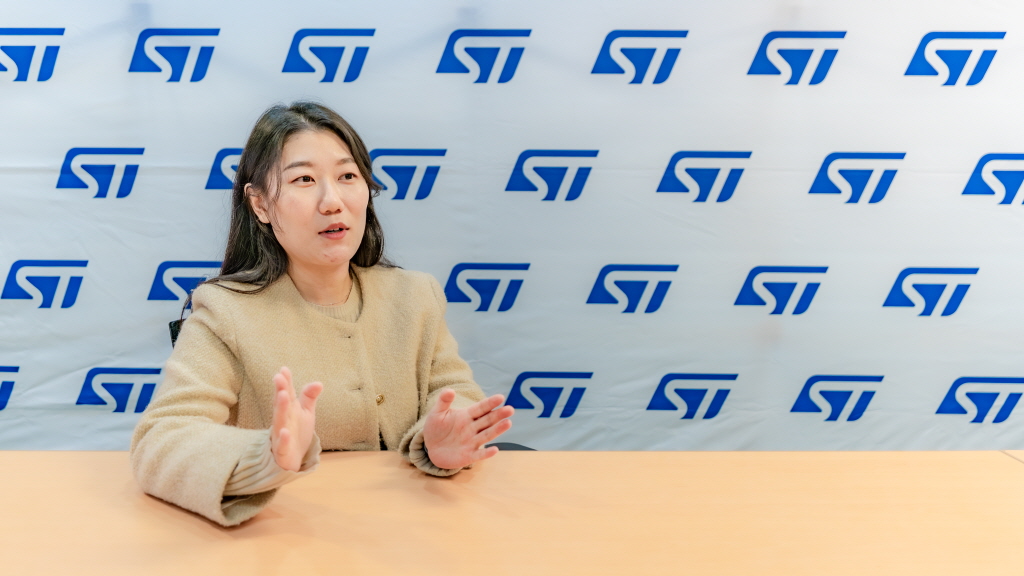
ST Manager Jung Ji-yoon is responding to an interview regarding SiC products.
■ Introduce ST's SiC-related products and explain what differentiates ST's solutions for customers compared to other products.
With years of accumulated know-how, ST directly manages the entire process from raw wafers to final products through a vertically integrated SiC supply chain currently being prepared at its headquarters in Italy, thereby possessing unrivaled quality stability and supply capabilities.
In particular, the latest Gen3 SiC MOSFETs feature the highest level of on-resistance per unit area (RDS(on)) characteristics, maximizing efficiency while reducing system size.
A major differentiator is that, rather than simply providing components, we offer technical support while minimizing customer risk based on reliability data verified over decades in the automotive and industrial markets.
■ Where do you think SiC will be most effective in electric vehicles?
Among electric vehicles, it is by far the traction inverter.
By applying SiC, which has excellent high-voltage and high-frequency switching performance, heat loss can be drastically reduced, increasing the driving range by more than 5 to 10 percent, and the size of the system can be reduced by making the cooling system lighter.
The flexibility of the finished vehicle design is maximized by adding battery capacity equivalent to the freed-up space and reduced weight to extend driving range or expand the interior space.
In addition, when applied to OBCs or DC-DC converters in the rapidly increasing 800V high-voltage systems, its value is further enhanced by the fact that, thanks to the thermal conductivity of SiC being three times higher than that of silicon, it can maintain stable output even in high-temperature environments while simultaneously achieving reduced charging time and system miniaturization.
SiC has recently been gaining attention in AI data centers as well. I am curious to know how the requirements differ from those for EVs.
Both AI data centers and EVs pursue high efficiency, but there are distinct differences in their specific requirements.
For EVs, durability and reliability are top priorities as they must withstand harsh driving environments involving repeated rapid acceleration and deceleration, as well as vibration and high temperatures, while the focus is on 'energy efficiency' to extend driving range within limited battery capacity.
On the other hand, the key to AI data centers is the stability of continuous operation that does not stop 24 hours a day and miniaturization that maximizes power density per unit area.
In particular, as the power density of server racks increases rapidly, there is a characteristic where compliance requirements for 'energy ratings' (such as 80 Plus Titanium), which must maintain high efficiency even in low-load conditions, are being applied more strictly.
■ Beyond simple component supply, the meaning of 'system-level solutions' emphasized by ST
This means that beyond simply supplying discrete components, it provides an integrated ecosystem that includes gate drivers, microcontrollers, and protection circuits—the optimal combination to bring out 100% of the performance of SiC MOSFETs.
We provide optimized reference designs and simulation tools to resolve technical issues that customers encounter before or during the design phase.
Headquarters' SRAThrough demo boards developed directly by the System Research & Applications team and tools such as POWERSTUDIO, customers can shorten development time and achieve optimal efficiency for the entire target system.
In addition, ST supports design reviews through organic collaboration between its headquarters, branch office FAEs, and technical marketing teams to enhance the completeness of customers' designs.
Through this, customers can eliminate potential risks that may occur during the early design phase and significantly shorten the time-to-market based on ST's proven reference designs.
In other words, the true system-level solution pursued by ST is a technical partnership that extends not only to the hardware end product but also to the entire process leading to the customer's mass production success.
■ Do you have any advice you would like to share with domestic customers or engineers who are considering adopting SiC?
In high-efficiency power design, SiC has now become a necessity rather than an option, but it is difficult to fully utilize its potential by applying existing silicon-based design methods as is.
Layout design and thermal management to control parasitic components generated during high-speed switching must be implemented, and to this end, it is important to collaborate closely with partners such as ST from the initial design stage.
In addition, an approach from the perspective of overall system costs is necessary.
By leveraging the high efficiency and high frequency characteristics of SiC, cooling heat sinks can be reduced and the size of peripheral passive components can be decreased, thereby offsetting the total manufacturing cost at the system level.
Aiming for performance gains through such system optimization will be the key to the adoption of SiC.
■ What presentations will be given at the April 16 webinar Please introduce yourself.
In this webinar, focusing on ST SiC technology, we will share ST's latest SiC technology roadmap and enhanced performance.
We plan to present ST's unique know-how and solutions, so we ask for your interest.

Comments
Related news
KBG expands high-purity silicon business for semiconductor packaging with low-volatility silicon technology
KBG, a functional silicon material company, has established a process to remove low-molecular siloxanes to 150ppm or below using thin film evaporator (TFE) technology. Along with building its own analysis system, the company is expanding its high-purity silicon business for semiconductor packaging and gradually broadening its supply scope as a binder for coating, molding, and thermal management materials.
2026.10.13by 배종인 기자

TI Unveils Three Solutions Including Ultra-High-Speed ADC for AI Data Centers
Texas Instruments (TI) has unveiled three semiconductor solutions to address power instability and downtime issues in AI data centers: an ultra-high-speed ADC, an isolated hot-swap controller, and a low-jitter oscillator. The ADC34DSO75 supports nanosecond-level real-time monitoring with 3GSPS sampling, the LMI800PS provides high-density integrated protection for 800V power, and the LMK6B ensures signal integrity with 9.6fs ultra-low-jitter performance. The initiative aims to reduce unplanned downtime and improve data center operational stability.
2026.10.13by 배종인 기자
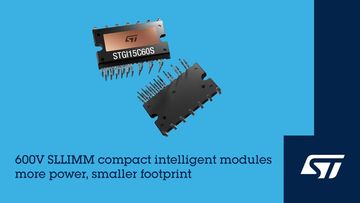
ST Microelectronics Launches Compact Intelligent Power Module for Air Conditioners and Heat Pumps
ST Microelectronics has launched the SLLIMM Compact series, a compact intelligent power module for air conditioners, heat pumps, and industrial drive applications. The module integrates a 600V 3-phase IGBT inverter bridge in a single package while reducing size by more than 30% compared to existing DBC-based products. The STGI15C60S implements a complete 3-phase inverter within an 18.8×32.8mm footprint and is optimized for low- to mid-power motor drive design.
2026.10.13by 배종인 기자
DDR/LPDDR Protocol Analyzer Technical Whitepaper: Non-Invasive Observation of Live Memory Links
This whitepaper addresses the live memory link observation solution composed of Introspect Technology's DDR/LPDDR protocol analyzer (M7030), remote sampling head (RSH, multi-channel active probe), and integrated tip interposer. Based on maximum 36-channel aligned capture and 80 Gsps asynchronous sampling, automatic command and timing verification based on JEDEC specifications, and field measurements of probing in non-terminated mode LPDDR5X 8533 MT/s systems, this document describes the causality and trade-offs of each design decision and their application boundaries. All figures are based on webinar presentation slides and technical Q&A; items that were not cross-verified have been excluded from the main text and separately organized as review items.
2026.10.12by 편집부
War on Noise: Piercing Through SI/PI/EMI in the Frequency Domain
In high-speed digital design, SI, PI, and EMI are not separate issues but a single physical phenomenon sharing Vias, PDN, coupling, and return paths. Based on WaveInSense webinar materials, this white paper organizes the causal chain of frequency domain analysis—from transmission line theory through Via Stub resonance, PDN anti-resonance, to a three-element model of system-level EMI. Finally, through an ultrasonic equipment EMC certification case study, it demonstrates how minimal changes targeting root cause structures led to certification acquisition and cost reduction (external chamber monthly usage reduced to 1/18 compared to the highest user).
2026.10.12by 편집부











