
 [연재기획-피지컬 AI와 센서②]환경 인식·엣지 센서가 지능을 결정
 기사입력2026.05.07 08:00
휴머노이드 로봇이 현실 공간에서 작동하기 위해 가장 먼저 해결해야 할 문제는 ‘보는 것’이다. 반면에 피지컬 AI 시대의 인식 기술은 해상도나 정확도보다, 오판을 얼마나 줄일 수 있는지가 핵심 경쟁력으로 떠오르고 있다. 이러한 변화는 환경 인식 센서와 엣지에서 판단이 결합되는 구조가 왜 중요한지를 분명히 보여준다.


댓글
관련 뉴스
[Serial Project] Physical AI: Redefining the Future of Industry ③, "Physical AI Sensors: A Key to Physical AI Competitiveness"
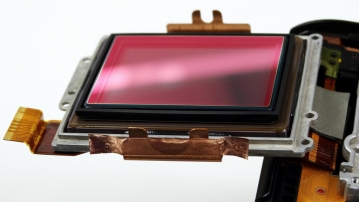
While conventional AI has focused on reasoning and generation within digital data, Physical AI directly acts and responds in the real world through sensors, edge computing, robots, and control systems. The implementation of Physical AI can greatly advance industrial innovation and automation since AI directly acts and solves problems in the real world, interacting directly with the physical environment. Accordingly, global companies including Nvidia, Tesla, and Google are making substantial investments in Physical AI, and the related market is expected to grow explosively. To implement such Physical AI, perception technologies including sensors, edge computing and embedded systems for local computation to process real-time data, as well as robotics and control technologies are essential. In response, e4ds news has prepared a series of planning articles to examine the core technologies and implementation strategies of Physical AI, ranging from its concepts to market prospects, related technologies, and practical cases. This edition covers sensors, which are the sensory organs of Physical AI.
2025.11.11by 명세환 기자
[Serial Feature] Physical AI: Redefining the Future of Industry ④, "Physical AI Emerges as a Key to Bridging the Automation Gap"
As the era of 'Physical AI,' where artificial intelligence directly interacts with the physical world, arrives, the manufacturing and logistics industries are experiencing the first wave of change, while Physical AI is rapidly emerging as a key solution to bridge the automation gap between large and small-to-medium enterprises.
2025.11.24by 배종인 기자

[Special Feature] Physical AI, Redrawing the Future of Industry ⑤, “'Integrated Operating Systems' as the Key Battleground”
Nvidia, leading the charge, along with major countries including South Korea, is actively advancing development and standardization efforts to secure an Integrated Operating System, recognized as a key driver in the widespread adoption of Physical AI.
2025.12.01by 명세환 기자
[Serial Project] Physical AI: Redefining the Future of Industry ⑥, "Multimodal AI: The 'Brain' and 'Language' of the Physical AI Era"
Multimodal AI is a technology that integrates learning from text, images, and behavioral data to enable robots to understand and execute language, vision, and actions in a human-like manner. It serves as a cornerstone for implementing Physical AI, and is essential for robots to autonomously perform tasks in real-world environments. Global companies such as Google DeepMind with RT-2, NVIDIA with GR00T, and Figure AI with its humanoid robots are accelerating development of robot intelligence based on multimodal AI. Going forward, advances in simulation-based synthetic data and 6G communication technology are expected to accelerate commercialization. This article examines multimodal AI, which serves as the brain of Physical AI.
2025.12.09by 배종인 기자
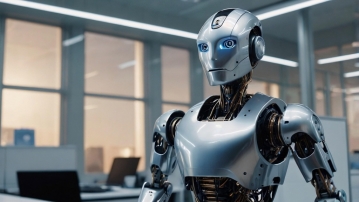
[Serial Project] Physical AI: Redefining the Future of Industry ⑦, "Physical AI: The Engine of Humanoid Evolution"
Physical AI is a technology that enables artificial intelligence to transcend the digital realm and directly interact with the real world, serving as a key driver in the advancement of humanoids. By combining AI-based models, computer vision, sensors, edge computing, and actuators, it enables cognition, judgment, and behavior similar to humans. Global companies are advancing the intelligence, sensing, behavior, and connectivity of humanoids through this technology and preparing for their expansion into industrial sites and everyday environments. This series covers the evolution of Physical AI and humanoids.
2025.12.16by 배종인 기자