



Mouser, “Consideration of Actual Application Environment is Essential When Selecting Connectors”
 Published2026.07.21 08:13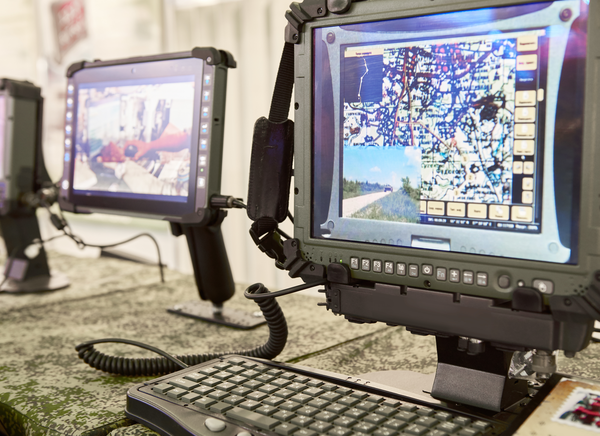
Comprehensive assessment of traceability, compatibility, durability, cost, and usage environment
Among some engineers, there is a perception that a connector meeting military specifications (MIL-Spec) is a product with the highest level of performance.
There is a belief that it will be superior to commercial products, as it is designed to withstand harsh military environments.
For this reason, the term 'MIL-Spec' is often perceived as automatically implying superior performance, going beyond the simple meaning of a specification.
However, just because a product meets military specifications does not mean it is superior in all performance indicators.
This merely means that the connector satisfies specific requirements and has passed the prescribed test conditions.
While these requirements can be very strict, they do not guarantee the best electrical performance, smallest size, or longest lifespan in all environments.
Selecting a connector may seem simple at first glance. Designers are generally accustomed to choosing products based on criteria such as the number of pins, current ratings, and physical size.
However, in an actual design environment, a much wider variety of factors must be considered. Connectors are often mounted on the exterior of equipment and are continuously exposed to various environments, such as wind and rain.
In addition, it must be repeatedly connected and disconnected, subjected to vibration or shock, and sometimes withstand rough handling.
Since some equipment is designed to operate for decades, it must be possible to reliably secure replacement parts that can be used for the same purpose even after a long time.
Therefore, selecting a connector is not merely a matter of securing an electrical connection.
Since the required performance and conditions vary depending on the application field, appropriate specifications and various design elements must be comprehensively considered.
In this article, we examine traceability, compatibility, consistency, military specifications, durability, and cost as key factors to consider when selecting such connectors.
■ Standards for traceability, compatibility, and consistency
Connector specifications were established to reduce various uncertainties that may arise during the product selection process.
These specifications include physical design and expected performance, as well as, in some cases, requirements related to logistics and supply.
For example, if a standard specifies particular water resistance or vibration resistance, that performance is based on results verified through documented certification and testing procedures.
In addition, for connectors using detachable crimp contacts, the quantity of spare contacts provided is also specified.
In fields requiring high reliability, such as aerospace, defense, and railways, the reliability provided by this traceability is as important a factor as the connector itself.
Interoperability between connectors is also treated as a very important factor in most standards.
Connectors manufactured according to specific standards must be able to properly mat with equivalent products from different manufacturers.
This reduces the risk of relying solely on a specific manufacturer, making it easier to maintain systems that operate for a long period.
This is because the same interface must be continuously usable even if the manufacturer changes.
Another reason engineers value standards is consistency.
The performance of standard-certified connectors is verified according to predefined test criteria. Of course, standardized performance does not replace all design verification processes, but it holds great significance in that it serves as a commonly trusted benchmark across the entire industry.
Another reason the standard has been maintained for a long time is that it enhances the stability of the supply chain.
When multiple manufacturers produce products according to the same standards, the flexibility of parts procurement improves.
Even if a specific manufacturer faces raw material supply issues or extended delivery times, the need to redesign the system is reduced because it can be replaced with products from other manufacturers that meet the same specifications.
■ Military Standards
Military standards are established based on the conditions required in actual military operational environments.
Resistance to shock and vibration, a wide operating temperature range, and mechanical reliability are essential elements for stable operation in harsh environments.
To meet these requirements, strictly controlled materials must be used, and more enhanced inspection procedures and additional documentation processes must be followed, which increases manufacturing costs accordingly.
On the other hand, commercial equipment used in safe office environments does not necessarily need to possess these characteristics.
This is because if the operating environment itself does not place a significant burden on the connector, there is no reason to accept the additional performance required by military standards and the associated costs.
There is also a tendency to equate military specifications with top performance.
However, all connectors are designed for different purposes and uses.
Military-grade certified connectors are often designed to prioritize durability and environmental isolation over high-speed signal transmission performance or high integration density.
Conversely, for use in data center equipmentEven though the latest high-speed board-to-board connectors are not military-certified, they can provide superior performance in terms of bandwidth compared to rugged, circular military connectors.
It is common to apply specifications beyond what is necessary during the initial design phase.
Engineers tend to select the highest-specification products with safety in mind, but in reality, this can result in increased costs and size without reducing risk.
For example, even if military-grade connectors are designed for long-term reliability, their mating life may only be tested up to 500 cycles.
On the other hand, there are quite a few commercial connectors that support high current capacities while providing mating lifespans that surpass this, even without military certification.
■ Considerations regarding durability and cost
In consumer electronics, cost, miniaturization, and assembly efficiency are often more important factors than connector performance.
These products are used in relatively stable environments, and if a malfunction occurs, it is common to replace the product itself rather than repair it.
Therefore, meeting strict official standards is not necessarily perceived as an important value by consumers.
Conversely, it is not advisable to select a connector based solely on the unit price of the component.
For example, low-cost connectors may require additional in-house performance testing and may be exposed to the risk of future discontinuation due to a lack of long-term supply chain support or the inability to secure alternative suppliers.
In this case, the cost of redesigning the product can far exceed the amount saved from the initial component purchase cost.
Conversely, actual demand Selecting a connector with specifications excessively higher than the required level can lead to unnecessary costs and wasted PCB space, potentially reducing the overall design efficiency of the system.
In the field of industrial automation, durability is far more important than in consumer products, but that does not mean military standard certification is always required.
On the other hand, in fields such as aerospace, medical, and defense where failures can lead to serious consequences, the additional reliability and quality assurance provided by high standards are of sufficient value.
Not all connectors are based on official standards such as military specifications.
Some interfaces become de facto standards as they are widely used across industries rather than being standardized by regulations.
Many industrial connectors were distributed through this process, and as usage expanded, a market naturally formed, and compatibility and a stable supply system were secured.
In other words, even without military standard certification, widely adopted connectors can provide sufficient compatibility and supply stability.
■ Conclusion
The value of a connector should not be judged simply by whether it has obtained well-known standards or certifications.
Above all, the most important thing is how faithfully the connector satisfies the requirements of the system to which it is applied.
For applications where long-term component supply and compatibility between manufacturers are critical, selecting connectors that comply with verified manufacturing standards can be a safer choice.
On the other hand, if high-speed signal transmission is critical for enclosed equipment in a controlled environment, other connector product families optimized for that purpose may be more suitable, regardless of military specifications.
The connector specifications areIt is a useful criterion that clarifies expected performance for the product and reduces uncertainty in the selection process.
However, meeting the specifications does not guarantee top performance in all aspects.
Accepting this as an absolute performance indicator risks incurring unnecessary costs or placing excessive trust in it compared to reality.
Therefore, when selecting a connector, it is important to first thoroughly review the operating environment, required product lifespan, and the impact of failure.
Subsequently, the most reasonable approach is to select a standard that can satisfy these conditions.
In some cases, military-grade certified connectors can be the optimal choice, but you must remember that they are not always the only option.
※ Author Introduction
David Pike is widely known in the connector and interconnect industry for his passion and deep expertise. He is active online under the name 'Connector Geek' and shares various connector technical information.
Comments
Related news

Mouser Wins TE 'Global Service Distribution Excellence Award'... Selected for the 12th Time
Mouser Electronics has received TE Connectivity's "2025 Global Superior Service Distributor of the Year Award." This award recognizes Mouser's online distribution services, global supply chain, and accessibility of components for engineers. This marks the 12th time Mouser has received this award.
2026.05.28by 배종인 기자
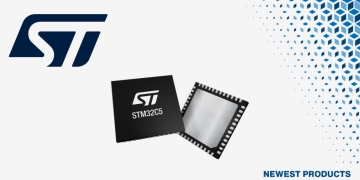
Mouser Supplies ST Cortex-M33-Based STM32C5 MCUs
Mouser Electronics is supplying ST Microelectronics' Arm Cortex-M33-based mainstream MCU 'STM32C5' series. The STM32C5 supports 144MHz operating frequency and up to 1MB flash memory with 256KB RAM, integrating Ethernet, octoSPI, FDCAN, and hardware security features. The product addresses performance, connectivity, and security requirements in entry-level applications such as smart home, industrial equipment, robotics, and wearables.
2026.06.02by 명세환 기자

Mouser Wins NXP's 'Most Customers in Asia' Award for the First Time... Proving Competitiveness in Semiconductor Distribution
Mouser Electronics received the "2025 Asia's Most Customers Award" from NXP Semiconductors for the first time. This award recognizes Mouser's achievements in expanding NXP's customer base by securing the largest number of new and existing customers in the Asia-Pacific region. Mouser has supported market expansion of NXP products primarily in the automotive, industrial, and edge AI sectors, and has broadened customer touchpoints across the Asia-Pacific region through its capabilities in new product supply and inventory management. The industry views this award as an example demonstrating that the role of semiconductor distributors is expanding beyond simple supply to encompass technology dissemination and market development.
2026.06.04by 명세환 기자
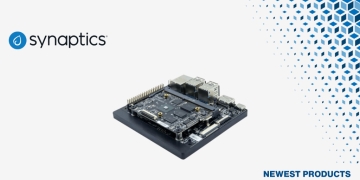
Mouser Supplies Synaptics Astra Machina SL2600 Development Kit
Mouser Electronics has begun supplying Synaptics' Astra Machina SL2600 development kit. The product is an edge AI development platform that supports prototype development of multimodal AI applications in industrial, smart home, healthcare, robotics, and consumer electronics IoT fields. It is based on Synaptics' Toke Edge AI platform, which incorporates Google's RISC-V based Coral Open NPU, and is targeted at running the latest AI models such as Vision Transformers and multimodal pipelines.
2026.06.09by 배종인 기자
.jpg)
Mouser Unveils Latest EIT Issue Covering Humanoid Robot Technology
Mouser Electronics has announced the latest edition of its "Engineering the Innovation (EIT)" series with the theme "Rise of the Robots." This content explains the trajectory of how humanoid robots are being utilized in real industrial, medical, and high-risk environments, based on technological advances in sensing, actuation, artificial intelligence (AI), embedded computing, and power systems.
2026.06.15by 배종인 기자











