


Korea Institute of Materials Science Discusses Failure Cases and Analysis Technologies in Defense, Automotive, Shipbuilding, and Power Generation Sectors
 Published2026.08.18 09:22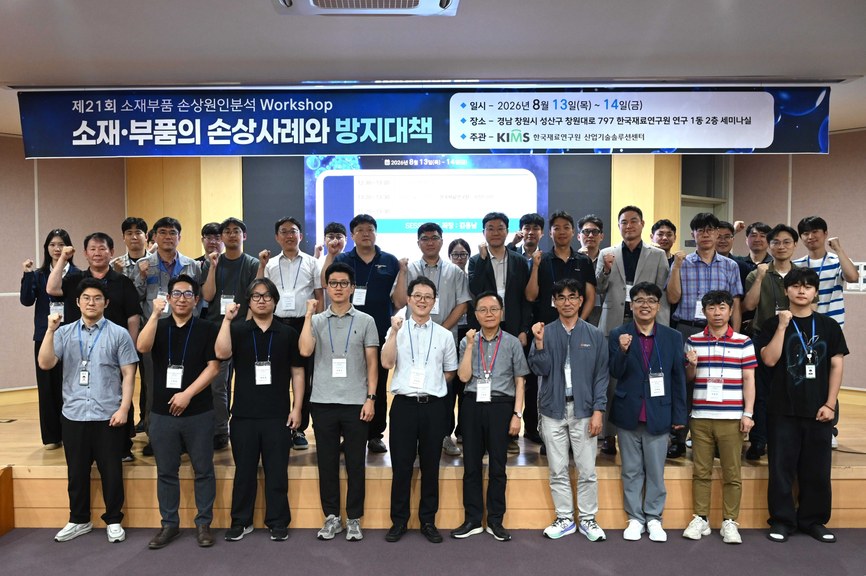
소재·부품 손상원인분석 워크숍, AI·산업용 CT 활용 사례 공유
한국재료연구원(KIMS)이 산업 현장에서 발생하는 소재·부품의 손상 원인을 분석하고 재발 방지 방안을 공유하는 전문 워크숍을 개최했다.
한국재료연구원은 8월 13일부터 14일까지 경남 창원 본원에서 ‘제21회 소재·부품 손상원인분석 워크숍’을 열었다고 밝혔다.
이번 행사는 산업계와 학계, 연구기관 전문가들이 참여해 소재·부품 손상 사례와 원인 분석 기술, 예방 대책을 공유하고 제품 신뢰성과 산업설비 안전성을 높이기 위해 마련됐다.
소재·부품은 자동차, 조선, 발전·에너지, 방위산업 등 주요 산업의 핵심 요소로 꼽힌다. 제조 과정의 결함이나 사용 중 발생하는 균열·부식·파손은 제품 수명 단축과 안전사고, 경제적 손실로 이어질 수 있어 손상원인분석의 중요성이 커지고 있다.
한국재료연구원 소재·부품 손상원인분석센터(FACE)는 산업체의 손상 사례를 분석하고 재발 방지 대책을 지원하는 역할을 수행하고 있다.

이번 워크숍에서는 △장갑판재용 철강 소재의 초고속 관통 파손 거동 △합성곱신경망(CNN)과 대규모언어모델(LLM) 기반 손상원인 분석 및 보고서 자동화 △산업용 CT 기반 비파괴 손상 분석 △부식 및 접착 불량 분석 사례 등이 발표됐다.
또한 방산, 발전, 자동차, 조선 분야의 실제 손상 사례와 최신 분석 기술이 함께 소개됐다.
둘째 날에는 △내열강의 크립 수명 영향 △군수품 고장 원인 분석 및 신뢰성 시험 △자동차 조향장치 파손 사례 △선박용 앵커 체인 링크 손상 원인 △마그네슘 소재 부식 거동 등 다양한 연구 결과가 공유됐다.
참석자들은 산업 현장에서 발생하는 손상 사례를 분석하고 제품 신뢰성과 설비 안전성을 높이기 위한 대응 방안을 논의했다.
최철진 한국재료연구원장은 “소재·부품의 작은 손상도 설비 중단과 경제적 손실, 안전사고로 이어질 수 있다”며 “정확한 원인 규명과 재발 방지 기술 공유가 중요하다”고 말했다.

Comments
Related news
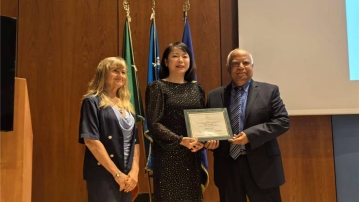
Hee-Sook Yoon, Principal Researcher at KIMS, Selected as Fellow of the World Academy of Ceramics
Hee-Sook Yoon, Director of Korea Institute of Materials Science, has been selected as a Fellow of the World Academy of Ceramics (WAC), the most prestigious international organization in the ceramics field. This international recognition reflects outstanding achievements in ceramic additive manufacturing research utilizing 3D printing technology, demonstrating the global competitiveness of Korea's ceramic materials sector.
2026.07.07by 배종인 기자
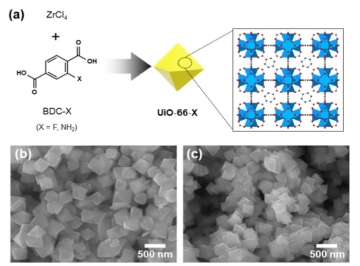
Korea Institute of Materials Science and Pusan National University Develop MOF-Based Multifunctional Fiber Electronic Devices
The Korea Institute of Materials Science and Pusan National University have developed a multifunctional fiber electronic device based on metal-organic frameworks (MOF). The technology enables self-power generation from ambient light such as sunlight without external power supply while simultaneously detecting hydrogen sulfide. By implementing a self-powered sensor with reduced battery dependency in a single fiber, it can be applied to smart textiles, industrial safety wearables, and IoT sensors.
2026.07.08by 배종인 기자
.jpg)
Korea Institute of Materials Science, Pukyong National University, and Busan Metropolitan City Sign MOU to Establish Marine AI Materials Research Center
The Korea Institute of Materials Science, Pukyong National University, and the Busan Metropolitan Government have established a cooperative framework for AI-based marine energy materials research and development. The Marine AI Materials Research Center will be established to combine advanced materials technology and AI research capabilities, with plans to pursue advancement of the regional marine industry, carbon-neutral technology development, and cultivation of specialized personnel.
2026.07.10by 배종인 기자
.jpg)
Korea Institute of Materials Science Bio-Health Materials Research Division Donates 10 Million Won to Children with Pediatric Cancer
The Biohealth Materials Research Division of the Korea Institute of Materials Science donated 10 million won to the Korean Pediatric Cancer Foundation in commemoration of receiving an award for excellence. The research department, which conducts materials technology research for the advancement of public health, returned its research outcomes to society by contributing funds to a project supporting the treatment and rehabilitation of children and adolescents with pediatric cancer, which aligns with its research objectives.
2026.07.13by 배종인 기자
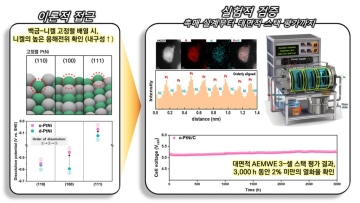
KIMS Develops High-Durability Platinum-Nickel Water Electrolysis Catalyst Technology
The Korea Institute of Materials Science has jointly developed a highly durable platinum-nickel catalyst technology for anion exchange membrane water electrolysis with Pukyong National University and Pohang University of Science and Technology. After 3,000 hours of continuous operation, performance degradation was maintained below 2%, overcoming durability issues of conventional catalysts. It is expected to contribute to extending the catalyst replacement cycle and reducing maintenance costs for green hydrogen production facilities.
2026.07.14by 배종인 기자











