



MongoDB Launches 'Atlas Agent Engine' for AI Agent Production Implementation
 Published2026.10.01 09:07
It is an integrated execution, memory, and governance layer designed to enable immediate deployment of AI agents to production environments without building a new stack, and is available immediately in public preview.
These are △uncontrolled agent task execution △agents unable to remember conversational context △vendor lock-in issues with specific models, clouds, and frameworks.
MongoDB explained that audit, guardrails, and cost control operate from a single control plane without connecting separate systems.
The company stated that the model records top-tier performance in RTEB, an evaluation metric reflecting actual enterprise search performance.
It added that this enables agents to provide more accurate answers with fewer tokens.
The explanation is that identical agents can be operated in any environment—self-managed environments, personal laptops, multi-cloud—without rebuilding.
The approach is to lead the establishment of open software and standards for a safe and interoperable agent ecosystem.
Amar Akshat, Senior Vice President of Architecture at Paysafe, stated: "It is expected to shorten the time from problem detection to team response and enable analysts to focus more on critical decision-making."

Comments
Related news
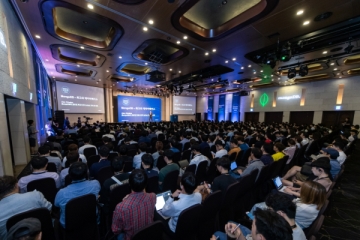
MongoDB Hosts First Technology Conference in Korea to Share Case Studies
MongoDB held the MongoDB.local Seoul 2019 technical conference and discussed various topics including app development expertise using the MongoDB platform and user experience. At this event, which was planned to encourage developer education and participation at enterprises, sessions were shared on app development and performance management using the MongoDB platform, development expertise from the database development team, and domestic usage case studies from actual MongoDB adopters.
2019.09.09by 이수민 기자
MongoDB-Google Cloud Expands Support for Building Generative AI
MongoDB announced on the 15th that it will further strengthen its collaboration with Google Cloud at 'Google Cloud Next '24'.
2024.04.16by 김예지 기자
MongoDB Launches Generative AI Application Development Assistance Program (MAAP)
MongoDB, a leading developer data platform company, announced on the 7th that it has launched the "MongoDB AI Applications Program (MAAP)," which enables enterprises to rapidly build and deploy modern applications with generative AI.
2024.05.07by 김예지 기자
MongoDB Launches Asia-Pacific Strategic Partner Program… Expands Support for AI Transformation
MongoDB has launched a strategic partner program in the Asia Pacific region to support enterprises in AI adoption and legacy system modernization. The program operates on a mega-scale basis, with a structure that selects and invests in partners who possess local industry and regulatory expertise as well as technical capabilities. MongoDB has set a goal to expand its partner organization in the Asia Pacific region and increase the number of strategic collaboration partners fourfold by the end of the fiscal year. Partners receive technical training and certification, region-specific expertise-based support, modernization tools, and co-marketing resources.
2026.03.31by 배종인 기자
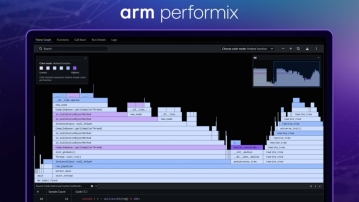
Arm Unveils 'Performix,' a Performance Analysis Tool for AI Development
Arm has unveiled 'Arm Performix', a performance analysis toolkit aimed at AI agent development environments. This tool analyzes memory bandwidth, latency, cache efficiency, and CPU utilization of applications running on Arm-based infrastructure to help identify performance bottlenecks. It is designed to work in conjunction with AI assistants within development environments and incorporates feedback from Microsoft, SAP, MongoDB, and Redis.
2026.05.06by 명세환 기자











