


SKT and A.X K2 Create 'Malmoi Font' and Select 100 Pure Korean Words
 Published2026.10.07 09:30
The company analyzed scanned versions of the Korean language dictionary manuscript "Malmoi" left by Professor Ju Si-gyeong and his students, along with native Korean word data from the Standard Korean Dictionary and "Urimalssem," a crowdsourced Korean language knowledge encyclopedia, using the AI foundation model "A.X K2" to create the "Malmoi Font" and select 100 pure Korean words.
The book of 100 pure Korean words will be distributed on the 8th and is scheduled to be donated to the National Hangul Museum.
SKT announced that the completed font can be downloaded free of charge from the Korean Language Society website.
The selection results include △'Yunseul' meaning small ripples that sparkle in reflected sunlight or moonlight △'Sutnun' referring to clean snow in its accumulated state △'Boleumul' referring to dimples △'Puthnat' meaning acquaintances familiar enough to recognize each other's faces, and others.
The final list underwent verification by the National Institute of Korean Language.
A campaign video utilizing voice recordings of Korean language scholar Professor Yi Guk-ro, kept at the French National Library, was released on SKT's YouTube channel on the 7th.
The video captures the process of Korean language records from 100 years ago being connected through AI to fonts and speech.
SKT will post reels and card news featuring dialects and new terminology on its official SNS accounts, and plans to provide selected event participants with special edition "2026 Malmoi" books and "2026 Malmoi Font" keycaps through a drawing.

Comments
Related news
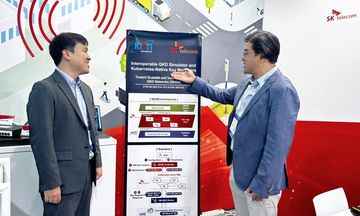
SKT and KISTI Jointly Develop Digital Twin Interoperability Technology for Quantum Cryptography Communication Network
SKT and KISTI have jointly developed digital twin technology that validates the performance of a quantum cryptography communication network in a virtual environment before actual construction. By applying an interface based on the ETSI international standard, they achieved real-time interoperability between SKT's quantum key management system and KISTI's QKD simulator, and with a flexible operational structure based on containers and Kubernetes, they can now efficiently verify various network environments.
2026.09.22by 배종인 기자

SKT, Hana Financial, and Samsung Electronics Establish Finance Industry's First 5G Private Network Smart Office
SK Telecom, Hana Financial Group, and Samsung Electronics have established the finance industry's first smart office based on a 5G private network at the Incheon Cheongna headquarters. This large-scale project covering 16 floors, 10 affiliated companies, and approximately 3,000 employees has applied multi-layered security systems including secure USIM-based authentication, encryption, firewalls, and DDoS response measures. Network slicing was used to configure independent operational networks for each affiliated company, and the design was created with future expansion such as smart buildings and AI CCTV in mind.
2026.09.28by 명세환 기자
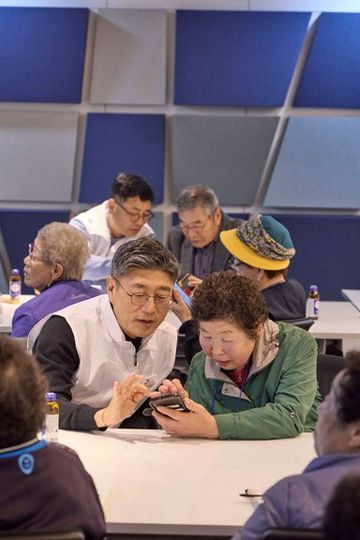
SKT Achieves 1st Place in All Three Major Domestic Customer Satisfaction Surveys
SK Telecom swept all three major domestic customer satisfaction surveys in 2024 (KCSI, NCSI, KS-SQI). This marks a return to the top position one year after relinquishing its ranking due to a cyber breach incident last year. Through strengthened on-site customer communication and the adoption of an AI-based quality management system, the company significantly improved scores in long-term customer benefits, call and data quality, and rate plan satisfaction categories.
2026.09.30by 명세환 기자
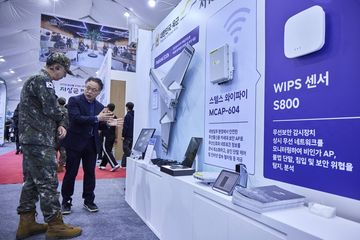
SKT Unveils Defense AX Technologies Including AI Staff and Low Earth Orbit Satellites at Ground Forces Festival
SK Telecom participated as the sole private company at the 2026 Ground Forces Festival, showcasing an AI operational support system and low earth orbit satellite communication technology. The "AI Staff" based on data platforms, ontology, and digital twin supports commanders' situational awareness and tactical decision-making, while a communications and security system combining quantum cryptography and stealth Wi-Fi underpins the Army's future combat system "Army TIGER+".
2026.10.06by 명세환 기자
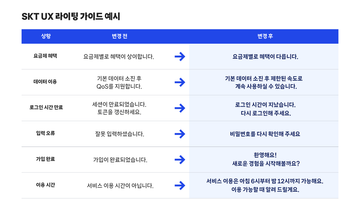
SKT Develops and Applies 'UX Writing Guide' in Commemoration of Hangul Day
SK Telecom has developed a UX writing guide that standardizes customer guidance text across mobile services and applied it to actual operations. The guide is characterized by the use of easy Korean language and reflection of customer emotions throughout the service usage flow. The company has established a real-time text review system using its proprietary AI agent 'Sotongi'. It improves customer experience through empathetic language by incorporating customer emotion maps, emoji usage standards, and language expression standards.
2026.10.06by 명세환 기자











