



Integrated IC technology proven in the consumer market as the key to success in the automotive industry
 Published2015.07.08 16:04
There is one more thing. True to its name, Maxim specializes in integration. These days, when introducing the company, they describe it as “a company leading analog integration… providing smaller, smarter, and energy-efficient analog semiconductor solutions to various industries.”
Maxim has been expanding its reach into the automotive market for over a decade to fully leverage its strengths and specialties. It chose the automotive sector early on to break away from its existing mobile-centric portfolio.
The strategy is to apply Maxim's consumer-proven solutions to automotive products to provide reliability while simultaneously reducing product risk. Director Choi Young-kyun, who oversees the automotive business at Maxim Integrated Korea, also emphasized an automotive strategy leveraging Maxim's strengths throughout the interview.
It seems there are surprisingly many people who do not know that Maxim has already been in the automotive business for over 10 years.
As you know, what Maxim does best is 'integration'. We can apply technology that has been recognized in the consumer sector. As a result, it has grown by 25% annually over the past decade or so, and it is a field that the company continues to invest in.
- What products are you making in the automotive field?
It is divided into roughly four categories: infotainment, safety, powertrain, and access/body. For infotainment, it provides sensors, power, and automotive GMSL, while for safety, it offers HD camera interfaces and LED lighting solutions. Regarding powertrains, it primarily provides Battery Management Systems (BMS), and in the Access/Body sector, it is equipped with solutions such as smart keys and remote keyless entry.
- You classified the automotive business as '3C'.
It is the '3C' of Clean, Conscious, and Connected. Clean emphasizes eco-friendliness, such as electric vehicle solutions; Conscious highlights safety features like ADAS (Advanced Driver Assistance Systems); and Connected encompasses infotainment and smart key fields.
I believe Maxim has a particular strength in the connected sector, as this is an area where the company has always excelled. In terms of specialized products, the company offers LEDs, USB (infotainment), hybrid radios, active antennas, powertrains, display lighting, cameras, smart keys, and sensors.
Please explain with specific examples when highlighting integration as a strength.
Since we are a semiconductor company specializing in integration, our goal in the automotive sector is also integration. Our strength lies in providing integrated ICs tailored to the specific applications our customers desire. For instance, we develop a single PMIC that covers the power requirements of the SoC while simultaneously providing peripheral power. In other words, power can be fully covered by simply inserting a single IC into the head unit.
ADAS has emerged as one of the core areas of the automotive industry. What ADAS solutions does Maxim offer?
In terms of market size within the automotive sector, Body and Engine are the largest, but the fastest-growing sectors are ADAS and HEV/EV. The fields Maxim is focusing on are ADAS and HEV/EV. Regarding ADAS, they primarily provide camera-based solutions. Since Maxim is an analog company, it can be assumed that they provide all other solutions, excluding products such as SoCs and signal processors.
- How were Maxim's integration advantages applied to ADAS?
In existing systems, ADAS solutions were built using various discrete components. When configuring the system, a palm-sized board was used, but recently, that has shrunk to about the size of a business card.
For example, if you look at a conventional vision system connecting four cameras, a total of eight ICs are used in the signal interface, including the serializer and deserializer. It is a complex system that uses an internal FPGA and a SERDES to pass signals to the head unit, but Maxim integrates the deserializer chip into a single chip. This makes the system significantly lighter.
-Why Maxim in ADAS as well?
Ultimately, ADAS is a safety-related solution. This is the reason for the focus on safety. Since Maxim provides system-level solutions, it can offer solutions tailored to the products of its partner SoC companies. By attaching Maxim solutions to each SoC, it becomes possible to power a complete product.
What is the direction of Maxim GMSL technology?
The method proposed by Maxim is GMSL technology. In other words, regarding the Gigabit multimedia signal link method, Maxim is moving toward Serial Link GMSL. Ethernet has been a hot topic recently, and it seems that both have their pros and cons. In the display sector, Serial Link is currently dominant. Even OEMs seem to be favoring serial links for displays.
- If we were to name the advantages of the MAX9286 in a surround view system.
In surround view systems, the ECU is a key topic. The crucial factor is how lightweight it can be. We have integrated the surround monitor system within the ECU into a single IC. A single IC can receive serial links from four cameras while enabling CSI-level output. This lowers system costs and shortens design time. We are currently in discussions with domestic companies regarding the application of this solution, and commercial vehicles are scheduled to launch first in Europe next year.
Comments
Related news
Signal-level HIL Solution for EV Power Conversion Controllers, NI ITS
EV power conversion circuits are becoming faster and more complex with SiC and GaN application and X-in-1 functional integration, and ECU verification requires the capability to simulate circuit behavior at nanosecond-level resolution in real time. This white paper organizes the position of signal-level HIL (sHIL) in the development flow and describes the hardware and software architecture, model implementation workflow, and application boundaries of NI ITS (Inverter Test System), which responds to this requirement through FPGA-based real-time simulation, based on webinar materials.
2026.10.16by 편집부
Microchip and Elektrobit Join Hands on AUTOSAR Solution
Microchip Technology and Elektrobit have unveiled a collaborative solution with pre-integrated automotive hardware and AUTOSAR software. With MCAL software based on EB tresos, the solution can reduce development effort for OEMs and Tier 1 suppliers and accelerate time-to-market. The two companies will employ an "Integration-as-Code" automation method to lower integration risk while beginning support in the Asian two-wheeler market.
2026.10.16by 배종인 기자
MathWorks Provides TUV SUD Certification Guidelines for Agentic AI Workflows
MathWorks has formalized certification guidelines for agentic AI workflows for safety-critical industries such as automotive and aerospace. This initiative, which includes AI tool classification guidelines based on ISO 26,262, presents methods to comply with functional safety standards while improving development efficiency through the use of Simulink Agentic Toolkit and Polyspace Agentic Toolkit.
2026.10.15by 배종인 기자
IBIS Participates in Next-Generation High-Performance Vehicle Computer Software Development Project
Software company IBIS is participating in a national R&D project led by Hyundai Mobis to advance middleware technology in high-performance vehicle computer (HPVC) environments. The project aims to develop technology for real-time synchronization and processing of sensor data from cameras and radars to support VLA-based autonomous driving, running through December 2029. IBIS is responsible for all phases of software development environment construction and middleware application, verification, and optimization.
2026.10.14by 배종인 기자
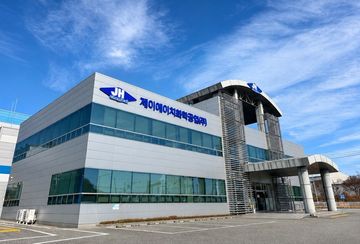
L&F Subsidiary JHC Expands Spent Battery Preprocessing and Lithium Recovery Business
L&F subsidiary JHC is expanding its spent battery preprocessing and lithium recovery business. The company has annual preprocessing capacity of 15,000 tons, and recovers approximately 95% of lithium from lithium-containing wastewater generated during secondary battery material manufacturing processes, converting it into lithium carbonate for resource recovery. The company responds to various battery chemistries including NCM, LFP, and LCO, and is promoting the establishment of a domestic circular economy system through collaboration with CIS Chemical.
2026.10.14by 배종인 기자











