



Freescale: Overload and overheating in next-generation car batteries can be controlled with electronic technology.
 Published2015.10.12 16:02
Freescale Semiconductor ( www.freescale.co.kr ) announced the MC33772, a 3- to 6-cell lithium-ion battery cell controller that reduces BOM costs and improves operational robustness.
This expands our portfolio of connectivity solutions that meet the safety requirements of next-generation automotive and industrial battery systems.
The MC33772 product provides a single-chip solution that can control the full range of 3 to 14 cells, and the two products are hardware and software compatible.
Freescale's comprehensive family of cell controllers supports a wide range of battery chemistries, including lithium iron phosphate, lithium nickel manganese cobalt oxide, lithium titanate, and lithium polymer, enabling simple, scalable solutions to meet diverse battery management needs without new R&D investments. Additionally, Freescale battery cell controllers feature advanced diagnostics and verification capabilities that support ISO 26262 ASIL-C requirements on a single chip.
Lead-acid batteries in automobiles are being replaced by lithium-ion batteries to reduce weight, improve reliability, and increase energy efficiency in engine start-stop systems and energy recovery technologies. With recent improvements in low-temperature operation and cold-start capabilities of lithium-ion battery chemistries, lithium-ion batteries are now replacing lead-acid batteries for starter batteries as well.
As a result, essential challenges such as overcharging, overheating, and internal short-circuiting are increasingly being managed electronically. Freescale thus ensures system-wide battery control with reliable battery diagnostics and high-speed status communication. Using multiple Freescale battery cell controllers for redundancy also enables implementation of higher-level ASIL-D systems.
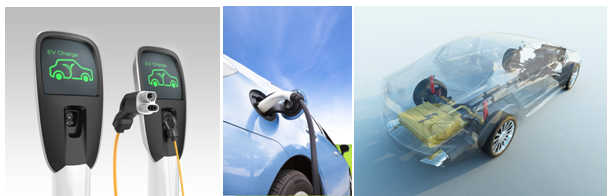
“Drivers face numerous challenges and concerns with lead-acid batteries, many of which are caused by external factors like difficult-to-control extreme temperatures, resulting in 100 million batteries being replaced each year in the U.S. alone,” said James Bates, executive vice president at Freescale. “By further expanding our broad portfolio of battery cell controllers, Freescale is helping to alleviate these challenges and make it easier for customers to offer an efficient lithium-ion alternative to lead-acid batteries, while meeting stringent performance and functional safety requirements across a wide range of battery sizes and types.”
Comments
Related news


[e4ds Tech Day 2026 ⑨] Sim Sang-gyu, Autocrypt CTO: "In the Physical AI Era, Automotive Security Must Extend Beyond the Vehicle"
At e4ds Tech Day 2026, Sim Sang-gyu, CTO of Autocrypt, explained automotive cybersecurity strategies in the era of Physical AI and SDV (Software-Defined Vehicle). Automobiles are evolving as part of an ecosystem connected to AI, cloud, chargers, IoT, and robots, and he emphasized that the scope of security must expand beyond the vehicle interior to the entire connected environment. In particular, AI model tampering, adversarial attacks, OTA updates, and EV charger hacking were identified as major threats. He explained that response measures require zero trust, AI model integrity protection, intrusion detection, Security by Design and Default, and full lifecycle security management, and that proactive security system establishment beyond regulatory compliance is critical for securing future mobility competitiveness.
2026.10.12by 배종인 기자

Practical HIL Construction Strategy for Automotive and Off-Highway Controller Validation
As vehicle E/E architecture transitions to zonal structures and shifts to software-defined vehicles (SDV), the number of controllers (ECUs) requiring validation and software complexity are surging dramatically. Meanwhile, real vehicle testing cannot provide repeated verification under identical conditions and entails lead time and safety concerns. This white paper explains the principles of HIL (Hardware-in-the-Loop) validation and the structure of the NI platform composed of PXI, SLSC, and VeriStand, and through two actual implementation cases—Camera Record & Replay HIL for In-Cabin Monitoring Controller (ICMU) and Forklift Controller (VCU) HILS—describes how controller-level regression testing becomes possible. Additionally, it explicitly states application boundaries and limitations, such as lack of A2B support.
2026.10.12by 편집부
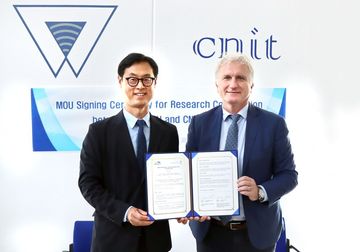
Korea Automotive Research Institute Signs MOU with Italy National Institute for Wireless Communications
The Korea Automotive Research Institute will sign an MOU with Italy's National Institute for Wireless Communications and launch joint research on next-generation mobility technologies based on 6G, V2X, and connected vehicles. The two organizations will conduct research to apply advanced wireless communication technologies to vehicles and discover international joint projects to advance next-generation connected vehicle technology development.
2026.10.12by 배종인 기자











