



ARM, the winds of acceleration for IoT devices are blowing.
 Published2015.11.12 10:20
The launch of ARM's product line is expected to drive the spread of Internet of Things technology.
This is because the 'ARM® mbed™ IoT Device Platform' products and technologies were unveiled. The product family revealed at ARM TechCon 2015 in California includes 'Devixe Connector,' a free service that enterprises can use to securely manage and connect IoT devices. It also includes an enhanced 'mbed OS (Technology Preview version)' and a new 'mbed Reference Design.' This shortens hardware design time, allowing capabilities to be focused on product differentiation.
“ARM mbed partners now have access to basic building blocks for development and can securely deploy IoT devices at all scales. “Since the launch of the mbed IoT Device Platform last year, we have focused on providing mbed partnerships along with tools to support hosts requiring everything from single cloud-connected sensors to enterprise-grade IoT solutions,” he said.
New secure and scalable ARM mbed products
The 'mbed Device Connector' not only enables developers to connect devices during prototype deployment, but also allows them to quickly build secure web applications and easily integrate them into cloud solutions. The 'mbed Device Connector' is provided free of charge, allowing developers to process 10,000 events per hour across up to 100 devices.
'mbed OS Technology Preview version' is the latest version of a modular and efficient OS for ARM Cortex®-M based MCUs. This version allows developers to utilize Thread's first native OS support, including 'mbed TLS', and basic device management.
Companies implementing IoT applications must address all aspects, including connectivity, security, and productivity. To this end, ARM has developed two new reference platforms as part of the 'mbedReferenceDesign' roadmap, enabling developers to shorten the time from prototype to final device design by utilizing open source resources.
Process up to 10,000 events per hour for free with 'mbed Device Connector'
The 'mbed Wearable Reference Design' implements an efficient wrist-worn connected device capable of providing a full interactive user experience while maintaining a battery life of approximately eight weeks.
The 'mbed Smart City Reference Design' is intended for infrastructure monitoring and smart industrial applications by using Sub-GHz 6LoWPAN & CoAP mesh network protocols for a large number of devices. This supports the reduction of device costs through the rapid deployment, configuration, and management of devices and routers compatible with various backhaul technologies for industrial applications.
Paul Teich, Senior Analyst at Tirias Research, stated, “ARM enables developers to build corresponding web services in the cloud while prototyping the interactions of end-to-end devices. The mbed device connector can handle up to 10,000 events per hour across up to 100 devices for free. This will allow developers to decide on the next steps after making significant progress in product development. This will impact the speed of innovation by reducing product development risks.”
Comments
Related news
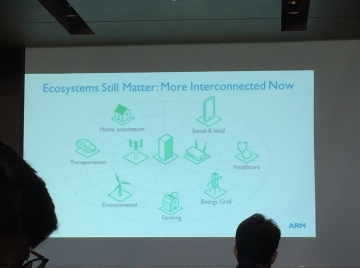
ARM displays confidence based on 25 years of experience.
At the 'ARM Tech Symposia 2015' held last month, Pete Hutton, President of Products, presented ARM's specific status and plans for the IoT market through 'Shaping the Connected World'.
2015.11.11by
Korea Instrument, KOLAS Accredited Calibration Agency First to Simultaneously Acquire ISO/IEC 27,001·27,701
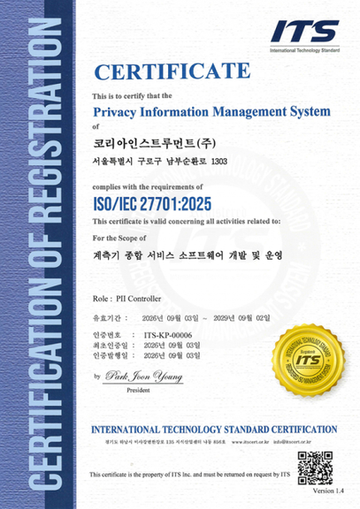
Korea Instrument has become the first among KOLAS accredited calibration agencies to simultaneously acquire ISO/IEC 27,001 and ISO/IEC 27,701 certifications. Through its proprietary platforms CWIZ Enterprise and CWIZ Partners, the company has embedded information security and personal data protection requirements across all business processes including customer information, equipment data, and calibration reports, with plans to continuously advance its management system through regular audits and security inspections.
2026.10.12by 배종인 기자

TeamViewer One, IT Incident Automation Workflow and Resolution Center Enhanced
TeamViewer has added IT incident automation capabilities and an advanced Resolution Center to its integrated digital workplace management platform 'TeamViewer ONE'. Recurrent service disruptions, configuration errors, and capacity shortages are automatically handled according to preset policies, and device status verification through script deployment can be managed in a unified interface, significantly reducing repetitive tasks for IT teams.
2026.10.12by 배종인 기자











