


ARM Launches Architecture Implementing TrustZone Capabilities
 Published2015.11.19 20:29
ARM recently announced its latest ARMv8-M architecture, which implements the ARM TrustZone feature at ARM TechCon 2015. The newly implemented TrustZone helps to keep data, firmware, and peripherals safe by identifying “secure” and “non-secure” states throughout the processor system.
Mike Muller, chief technology officer, ARM, said: “The ARMv8-M architecture enables developers to more easily address the demands of the next generation of embedded devices with enhanced security, scalability and improved debug capabilities. Despite the increasing importance of security, today’s small embedded devices either have limited protection or rely solely on software-managed security systems that require developers to have a high level of technical expertise. By embedding security into the hardware architecture as implemented in ARMv8-M, ARM is making it much easier to build and implement security efficiently.”
Beyond these CPU architecture-level changes, ARM is also notable for taking data security beyond architecture to the next level with its recently launched TrustZone CryptoCell family. These enhanced security technologies create additional layers of hardware security, provide cryptographic optimizations, and provide life-cycle management for key products. This also enables separate storage for high-value assets.
“The rapid growth in innovation and adoption of IoT presents new cybersecurity risks,” said Shankar Somasundaram, senior director, IoT, Symantec. “To help bring trust and security to IoT devices, Symantec is working with ARM to deliver one of the first secure commercial applications to run on TrustZone. We look forward to continuing our partnership with ARM to deliver innovative secure-by-design solutions for TrustZone on ARMv8-M based devices.”
This new architecture makes it easier for developers to write code that can run on any ARMv8-M processor, from the most energy-efficient to the highest-performance. It also enables the development of high-performance system-on-chip (SoC) products by facilitating the integration of more powerful Cortex-A processors with lower-power ARM Cortex-M processors.
On the one hand, it is expected to strengthen the production capacity for the industry's premium embedded SoC design, providing new opportunities for 'smart connected technology'. In particular, the new architecture is expected to be useful in industrial fields including health, identity identification, or factory machine management, where the use and analysis of security data can create new values.
Comments
Related news

ST Supports ARM's Embed Operating System for Rapid Development
ST announced that its STM32 family of ARM® Cortex®-M based microcontrollers, along with sensors, connectivity, and power management products, support the ARM mbed IoT device platform including the latest ARM mbed OS open source release.
2015.11.17by
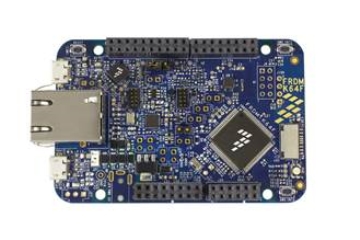
Support for device platform technologies including Freescale and ARM mbed software
The FRDM-K64F board from Freescale Semiconductor works with ARM® mbed™ and supports ARM mbed IoT (Internet of Things) device platform technology, including ARM's latest mbed OS operating system.
2015.11.18by
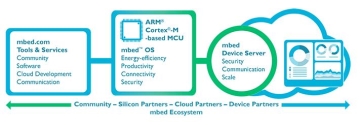
u-blox Selects ARM mbed Platform for IoT Wireless Applications
u-blox has announced that it has selected the ARM mbed IoT device platform for customers developing Internet of Things (IoT) wireless applications. By adopting the open ARM mbed environment and u-blox ODIN-W2 module, developers can rapidly and easily develop and deploy wireless IoT applications.
2015.11.19by 신윤오 기자

Intel Unveils Next-Generation 'Core Ultra Series 3' and vPro Platform for Enterprise PCs
Intel has officially unveiled the "Intel Core Ultra Series 3" for next-generation enterprise PCs and the latest vPro platform, addressing a wide range of demands from enterprise notebooks to high-performance workstations.
2026.03.26by 배종인 기자

ROHM Launches ESD Protection Diode Compatible with High-Speed Interfaces of 10Gbps or Higher
Semiconductor specialist ROHM has developed the 'RESDxVx series' of ESD (electrostatic discharge) protection diodes capable of responding to next-generation high-speed data communication environments exceeding 10Gbps, simultaneously enhancing both signal quality maintenance required in high-speed interfaces and IC protection performance.
2026.03.26by 배종인 기자











