



Universal Robots participates in establishing safety standards for collaborative robots.
 Published2016.03.03 17:21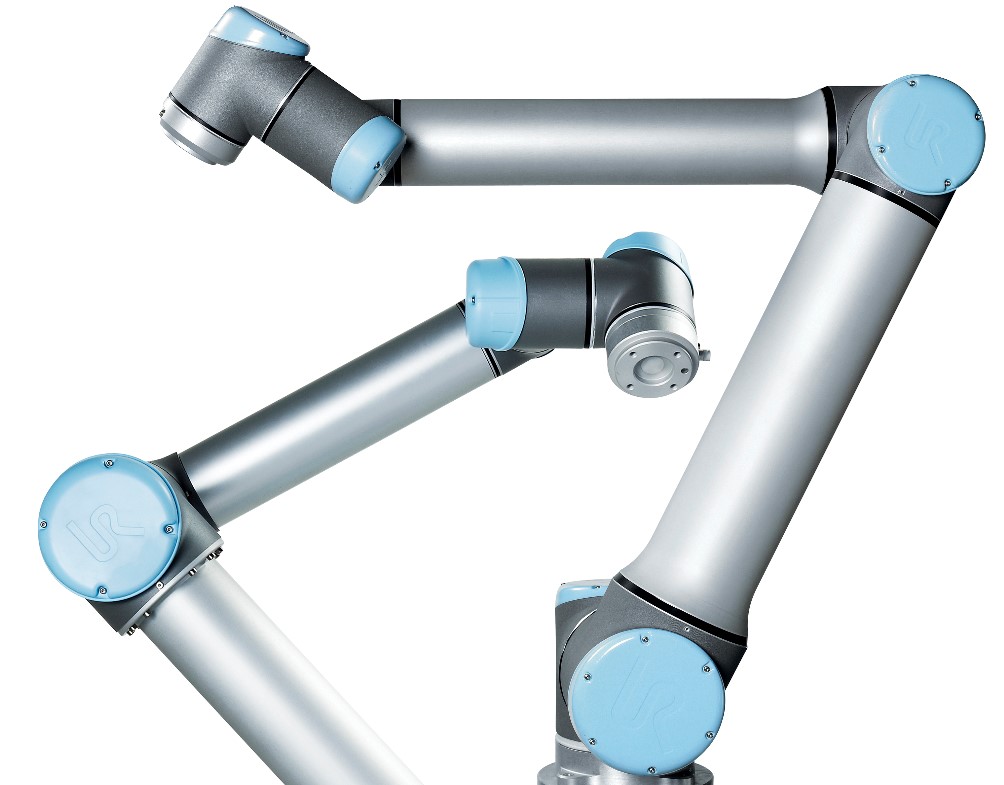
The International Organization for Standardization (ISO) has released new guidelines, ISO/TS 15066, to ensure the safe operation of collaborative robots.
It is expected to become a solid foundation for the collaborative robot system field.
The International Organization for Standardization (ISO) has released ISO/TS 15066, a safety standard for collaborative robots. ISO/TS 15066 complements ISO 10218, the standard safety standard for industrial robots, and comprehensively addresses risk assessments of robot cells when installing collaborative robots. Universal Robots, which participated in the committee developing the new ISO/TS 15066 standard, stated that the newly released guidelines are expected to serve as a solid foundation for future collaborative robot systems.
Lasse Kieffer, Global Compliance Officer (GCO) at Universal Robots, is an active expert on the ISO committee that developed ISO/TS 15066. He said, “The ISO 10218 standard, published in 2011, mainly stipulated the safety of traditional industrial robots, and collaborative robots, which were a new technology at the time, were not covered in detail.” He added, “I am pleased that the recently published ISO/TS 15066 has added new standards to ensure that collaborative robots and humans can work together safely.”
The recently published ISO/TS 15066 describes various collaborative concepts and the requirements necessary to realize them. In addition to design and risk assessment requirements, it also includes research on the relationship between pain thresholds for specific body parts and robot speed, pressure, and impact.
Apply 8 functions including position and speed, TCP position, tool posture, speed and force.
“As a leader in collaborative robots, Universal Robots has safety features that comply with these collaborative robot guidelines,” said Esben Østergaard, CTO of Universal Robots. “The publication of ISO/TS 15066 today represents a consensus among our members on this new technology.”
“While we recognize that the world needs to take a conservative approach to robot safety, there is still a lot of research underway on how to establish practical guidelines for human-robot interaction and unlocking the potential of collaborative robots,” he said. “Universal Robots is closely watching the results of this research.”
Meanwhile, the patented Universal Robots safety system has safety features that can adjust eight functions, including the robot's power and momentum, as well as the joint position and speed, TCP position, tool posture, speed, and force.
Comments
Related news
Universal Robots' Profitability Soars with Robot Arms
Universal Robots reconfirmed the infinite growth potential of the robotics industry through its recently announced financial statements. Last year (2015), Universal Robots generated revenue of approximately 418 million Danish krone (approximately 62 million USD), recording a revenue growth rate of approximately 91% compared to 2014 and achieving a profit of approximately 65.4 million Danish krone (approximately 9.65 million USD).
2016.03.02by 명세환 기자
Korea Instrument, KOLAS Accredited Calibration Agency First to Simultaneously Acquire ISO/IEC 27,001·27,701
Korea Instrument has become the first among KOLAS accredited calibration agencies to simultaneously acquire ISO/IEC 27,001 and ISO/IEC 27,701 certifications. Through its proprietary platforms CWIZ Enterprise and CWIZ Partners, the company has embedded information security and personal data protection requirements across all business processes including customer information, equipment data, and calibration reports, with plans to continuously advance its management system through regular audits and security inspections.
2026.10.12by 배종인 기자
TeamViewer One, IT Incident Automation Workflow and Resolution Center Enhanced
TeamViewer has added IT incident automation capabilities and an advanced Resolution Center to its integrated digital workplace management platform 'TeamViewer ONE'. Recurrent service disruptions, configuration errors, and capacity shortages are automatically handled according to preset policies, and device status verification through script deployment can be managed in a unified interface, significantly reducing repetitive tasks for IT teams.
2026.10.12by 배종인 기자
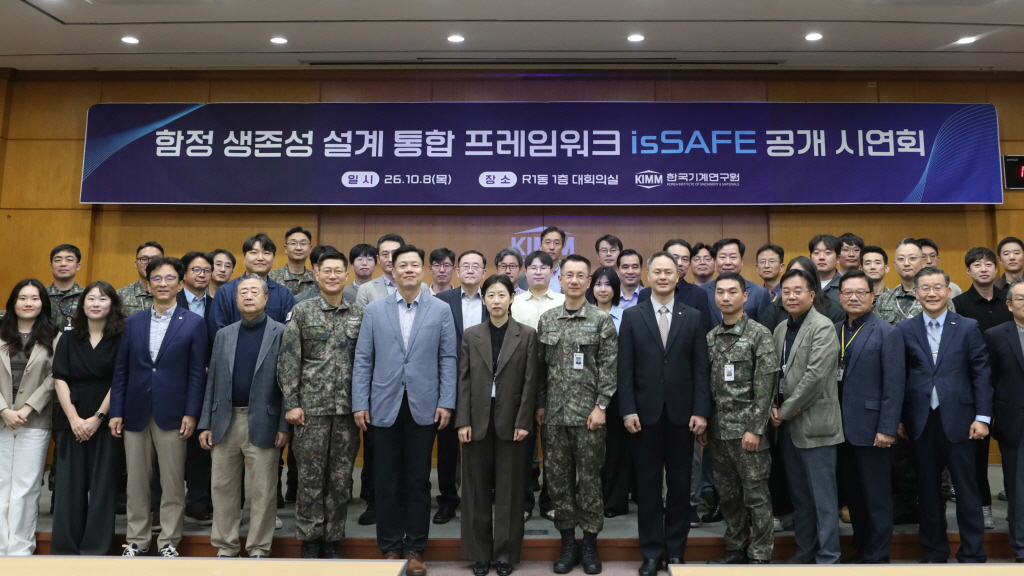
KAERI Develops Domestically-Produced SW 'isSAFE' for Integrated Warship Survivability Analysis
The Korea Institute of Machinery and Materials has developed domestically-produced software 'isSAFE' that comprehensively analyzes warship survivability. This design framework integrates the entire process—from warship modeling to hit scenario generation, vulnerability analysis, and results analysis—into a single platform, establishing an independent technology foundation in the defense technology sector that had previously relied on foreign software.
2026.10.08by 배종인 기자
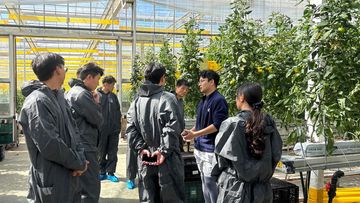
ioCrops Shares AI Smart Farm Operations Case Study
About 20 cultivators from the Agricultural Cooperative's Smart Agriculture Support Centers visited ioCrops' smart farm in Jincheon, North Chungcheong Province. They directly confirmed how data collected through substrate weight sensors, drainage weight sensors, and soil moisture sensors is applied to tomato cultivation, as well as the greenhouse pest control process using the AI-based autonomous spraying robot 'HERMAI'. By sharing on-site operational case studies combining data and automation technology, the adoption of smart farms in agricultural fields is being promoted.
2026.10.07by 배종인 기자











