


[it-Movie] The Present and Future of Wearable Robots in Movies. 'Iron Man' Can't Protect Me?'
 Published2016.03.14 11:30
Is the synonym for wearable robots Iron Man?
On February 3, the Defense Acquisition Program Administration (DAPA) and the Ministry of Public Safety and Security announced that they would develop “wearable strength-enhancing robot” technology by 2020. A strength-enhancing robot is a type of wearable robot that recognizes the user’s movement intentions and enhances strength. When we think of wearable robots, the first movie that comes to mind is “Iron Man,” which features the line “I’m Iron Man.” Accordingly, articles about strength-enhancing robots were decorated with titles such as “Will an Iron Man suit appear in the movie?” (Dong-a Ilbo), “A Korean Iron Man is coming out” (Hankook Ilbo), and “The Korean military will wear Iron Man suits in 4 years” (Yonhap News).
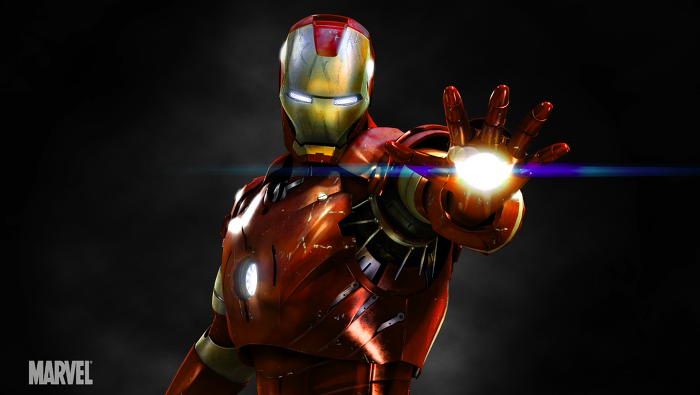
Iron Man, the synonym for wearable robots(?)
Since then, augmented robots have appeared in other sci-fi films, including the 2013 film "Edge of Tomorrow" starring Tom Cruise and the 2014 film "Elysium" starring Matt Damon. As those who have seen the movie will know, it looks somewhat heavier and more clunky than Iron Man's suit. Even the way it is worn is clearly different, to the point where it seems like the technology has regressed. So what exactly is the difference between the wearable suits worn by Robert Downey Jr. and Tom Cruise? And if these two men fought wearing their own suits, who would win?
First, let's take a look at the two suits. Iron Man creates his suit with the help of Jarvis using light and thin metal materials. He uses the powerful energy 'Acro Atom' to power the suit, and it is equipped with various cutting-edge equipment and artificial intelligence. It even has the ability to fly, and boasts abilities far superior to humans in combat.
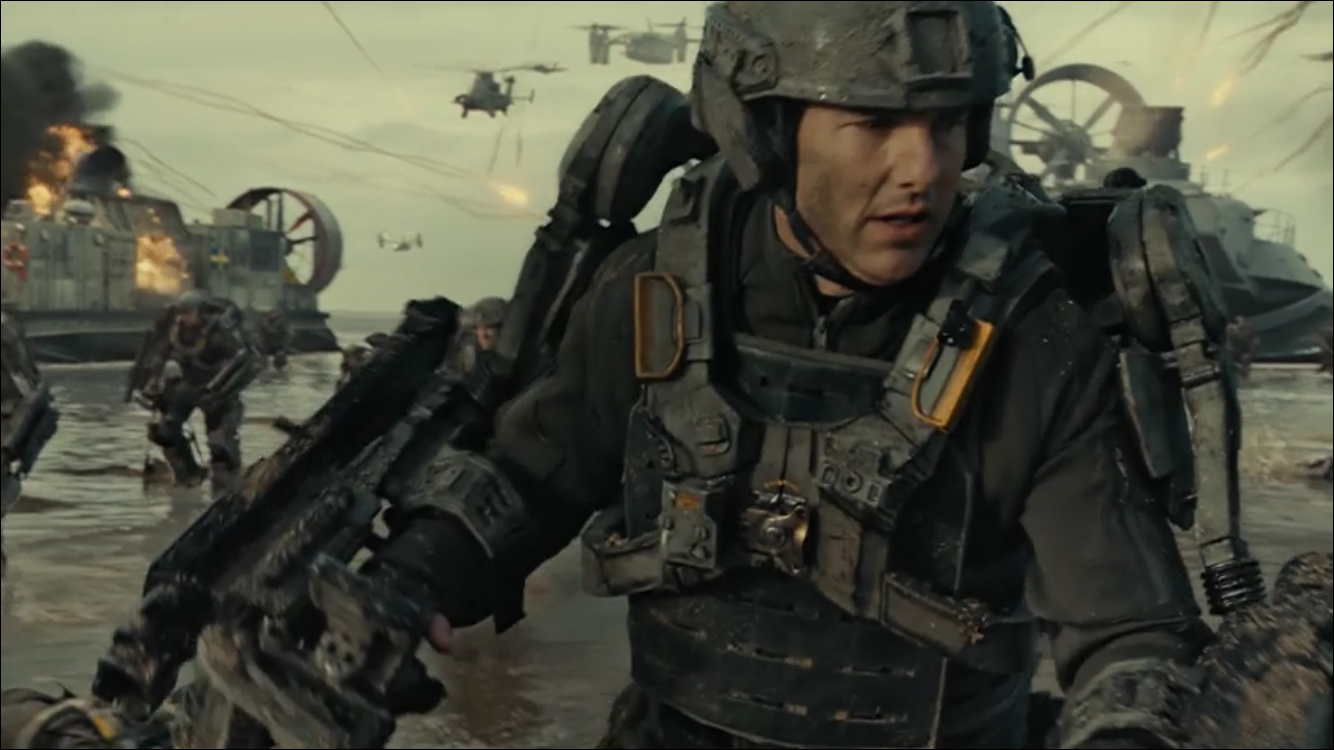
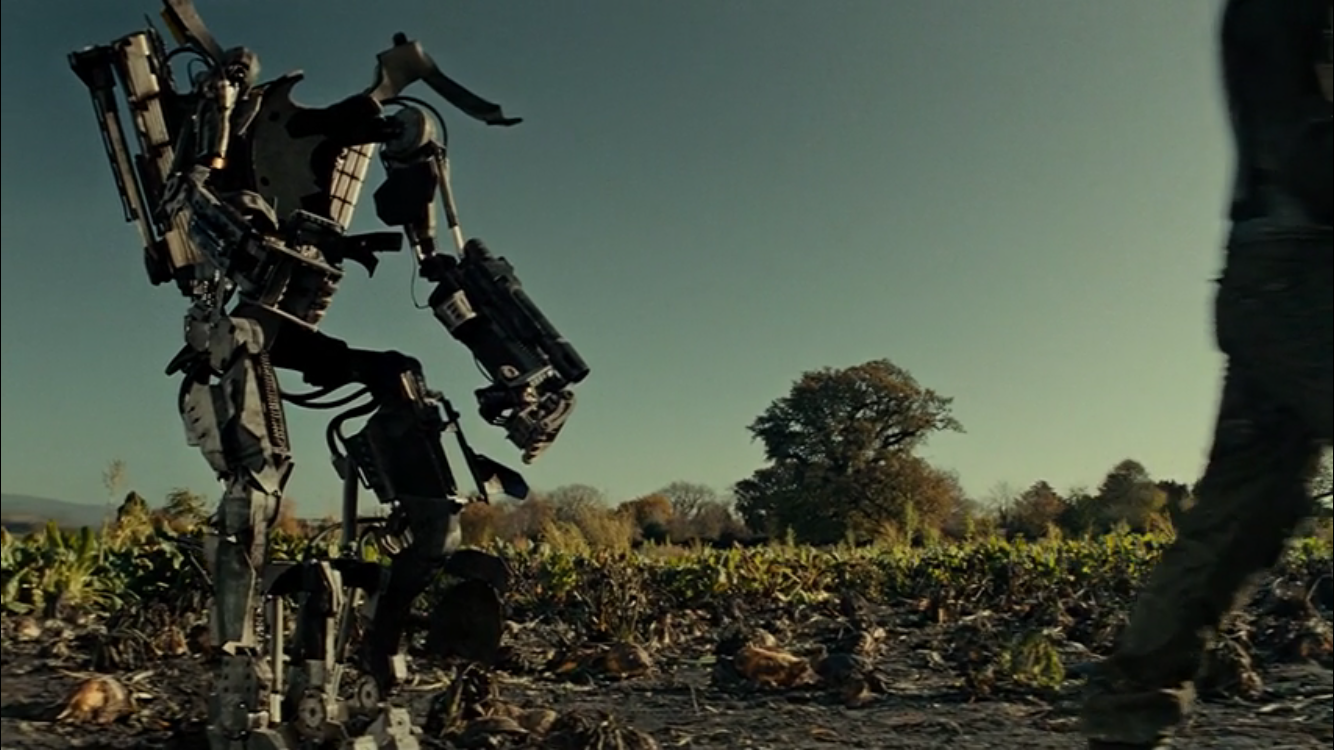
In a scene from 'Edge of Tomorrow,' Tom Cruise looks uncomfortable in a wearable suit.
Unlike the light Iron Man, Tom Cruise looks like he has trouble even walking.
What is the difference between the two wearable robots?
In contrast, the augmented robots in Edge of Tomorrow look very heavy. They are armed, but they are large and cumbersome to move around, and they have a large rectangular module on their back with a lot of wires surrounding it. Also, unlike the Iron Man suit, it doesn't cover the entire body from head to toe and it can't fly, so it seems to have poor combat capabilities.
Is this an obvious outcome? But which of these two will survive in the suit?
Professor Yang Woo-sung of Kwangwoon University, who studies muscle-augmenting robots, raised his hand for Tom Cruise in Edge of Tomorrow. Unfortunately, he said that Iron Man is a “wearable robot with clear technological limitations,” and that if you fight wearing the Iron Man suit, you could suffer serious injuries. He also added that it is very unrealistic.
Wearable robots are not only meant to augment strength, but they also have to be made in a way that they don’t cause harm to people no matter what they do when worn. “A thin suit like Iron Man’s can’t protect people inside the robot from impacts during combat,” Professor Yang explained. For example, “In movies, when people fall to the ground during a fight, it looks like the suit absorbs all the impact, but that’s physically impossible.”
A wearable robot also appears in Elysium, released in 2013. Unlike Iron Man and Edge of Tomorrow, it has a very simple form, as the spinal cord is directly connected to the robot.
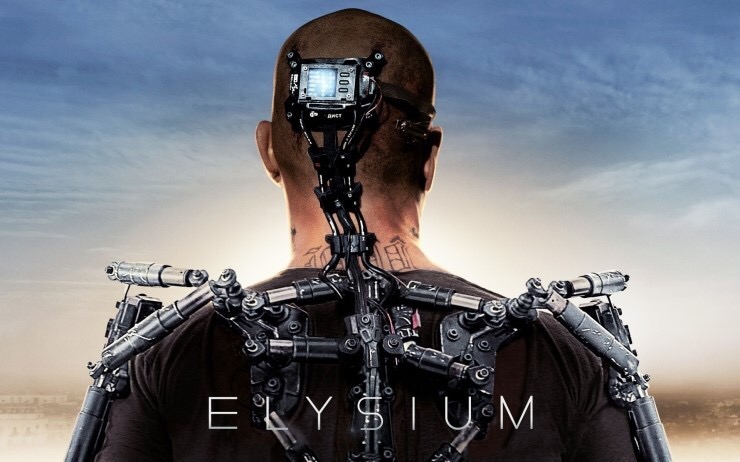
The 'Elysium' suit, a muscle-enhancing robot directly connected to the nerves
Natural and free movement possible, but risk of having to implant a chip in the body
This device has the advantage of being able to move almost identically because when nerves are generated, they are transmitted to the muscles and robots at the same time. It is known that research in this field is currently underway, but Professor Yang said that it is a method that he personally does not prefer because it requires inserting a chip into the body.
Finally, in the movie 'Prometheus', a chairman of a large corporation who is old and cannot walk well wears a wearable robot and walks through a bumpy cave. Wearable robots like this are not only for military use, but also for rehabilitation robots and industrial use to maintain the strength and time needed for labor.
In order to implement these various wearable robots, the core technology HRI (Human-Robot Interaction) is the most important. In addition to existing robot technology, it requires ergonomic design technology due to the structure that must move like a person, and sensor fusion and inference to understand the wearer's intentions.
Electric motor drive and hydraulic motor drive
Professor Yang said, “The system configuration varies depending on the wearable’s intended use, but robots for patients use sensors to identify the patient’s intended movements. However, for the general public (industrial, military), it will be configured as a system that judges through the movement of the muscles made by the person,” he explained in detail. Because it supports and assists the power according to the purpose of the movement, it can be divided into two representative types: an electric motor-driven method and a hydraulic motor-driven method.
Electric motors are a technology that has been used in industrial robot sites because they are easy to control precisely and use electricity. Hydraulic motors operate multiple actuators with a single main hydraulic pump. In addition, unlike motors, they have a very strong force compared to the speed, and since only the fluid pressure needs to be maintained when supporting external weight, power consumption can be reduced. In addition, they have the advantage of being able to operate without mechanical parts such as gears in the drive section. Since the actuators are not heavy, the weight increase is small even when placed in multiple joints, and there is also the advantage of being able to concentrate the mass in the location of the relatively heavy main pump. Due to these advantages, hydraulic motors have been applied to various wearable robots that require large output.
Wearable Robotics Challenges: Increasing Weight of Equipment and Batteries
But I was curious. Why does my gait seem so awkward when I'm wearing a robot that augments my strength?
Professor Yang Woo-sung said, “In order to amplify power, the equipment has to become heavier.” He also explained, “This is because the robot must be able to absorb shock when it is subjected to external impact.”
However, he said, “The technology has not been secured yet.” “For the robot to absorb that power, it has to be free to move, but it is not. That is why it is bound to be uncomfortable when wearing a wearable. “When a human moves their wrist, the center of rotation is in the middle, but the robot is attached next to the human skeleton, so the center of rotation is outside. If the radius of movement is not right and an external impact occurs, the robot can harm me instead,” he said.
Then, you can suggest that we can make the robot using many joints so that it can move freely, but the robot will be heavy. So the researcher's issue is to find out the range of motion that can be secured simultaneously by the robot and the person. Motion capture equipment and EMG (electromyography) sensors are installed to collect data when the person moves. And based on that, the robot design and the power capacity of the actuator are calculated.
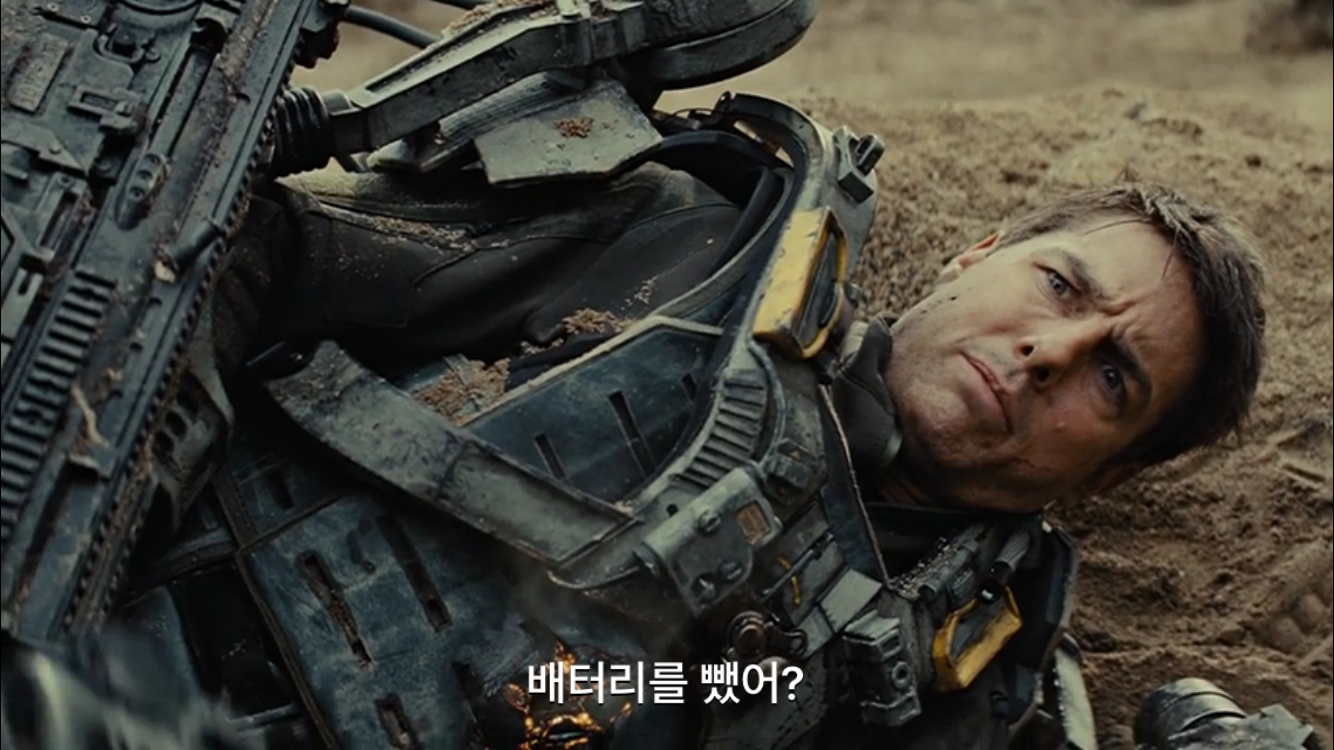
The second issue with augmented robots is the battery. In Edge of Tomorrow, when the male protagonist is injured and lying down, there is a scene where the female protagonist Emily Blunt takes his battery. This is quite different from the way she takes the magazine or weapon in most movies. Also, the suit that enhances combat ability is often just thrown away when the battery runs out.
According to Professor Yang, the weight of the battery used to make the current wearable robots for national defense in our country is about the same as the weight of the robot. However, he said that the usage time required by the military is barely being achieved. It should last for a maximum of 6 hours, but usually 4 hours, and to operate like that, the robot would have to weigh 40 kg and the battery would have to weigh 20 kg.
He emphasized that the weight was also greatly reduced, and said that the maximum power operation time is about 2 hours. However, he explained that battery research is currently being actively conducted in automobiles in addition to robot augmentation, so it is not too late to collaborate when battery technology integration is successful. He also said that research on batteries is included among Professor Yang's future planning projects.
As the interview was wrapping up, it occurred to me that perhaps the most suitable field for machines that “help humans” would be wearable robots.
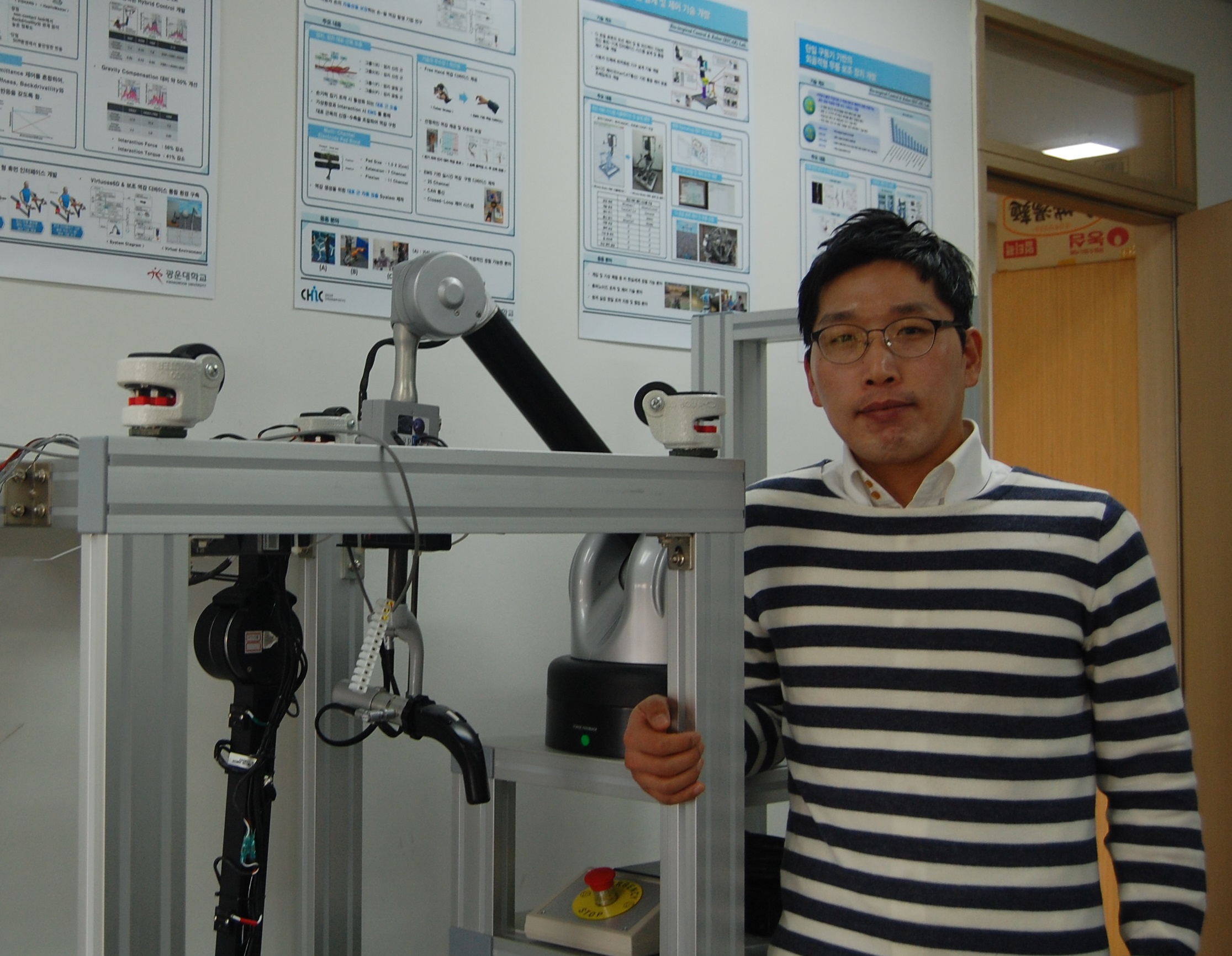
Woo-Sung Yang, Ph.D., Biomimetic Control & Robotics Lab (BICAR Lab.), Department of Robotics, Kwangwoon University
“Why aren’t wearable robots as popular with the general public as artificial intelligence?”
“Wearable robots are the closest to the definition of ‘machines that help humans,’ but they operate in a way that others cannot notice for the sake of human safety. That’s why they’re not popular,” he continued. “Just like movies, what we need to make the public aware of in the robotics field is that we need to clearly inform them of their limitations and functions first. Some people try to capitalize on the popularity of the public by talking as if anything is possible, but I think that only inflates expectations and actually hinders the development of robots.”
We should think about whether we are missing out on the 'coexistence between humans and machines' that we should be pursuing in the midst of sweet lies like the Iron Man suit that makes everything seem possible, or whether we are rather holding back development out of fear that machines will dominate humans. This is an issue worth considering through wearable robots.
Comments
Related news
[it-Movie] The present and future of artificial intelligence as seen through movies. Is 'Jarvis' from 'Iron Man' our friend?
At CES 2016, IBM Chairman Virginia Rometty forecast that artificial intelligence (A.I.)—technology that thinks and makes judgments like humans—will lead the future of the IT industry. In her keynote address, she explained that "digital alone cannot create differentiated value in the massive Internet of Things market," and emphasized that "artificial intelligence technology capable of understanding and reasoning about data is necessary for data analysis that brings business insights." Artificial intelligence has always been a topic of interest, as seen in many films up to now. But why is it being discussed in this way this year?
2016.01.25by

ESP32 Development Environment Selection and GPS Application Implementation
The ESP32 is a microcontroller that integrates Wi-Fi, Bluetooth, 12-bit ADC, capacitive touch, PWM, DAC, and UART in a single SoC. However, the abundance of features does not by itself solve the designer's problems. The real challenges lie in selecting the appropriate development environment, determining which pins can be used and which must be avoided, and converting raw data from modules into usable information. This document addresses ESP32 peripheral constraints (ADC2 and Wi-Fi coexistence limitation, UART1 occupancy, ADC non-linear regions), the trade-offs between Arduino IDE and ESP-IDF, and the process from connecting NEO-6M/NEO-M8N GPS modules to UART2, parsing NMEA sentences, and visualizing routes in Google Earth, all organized based on documented references.
2026.10.12by 편집부

MIPI CSI-2, DSI-2, C-PHY, D-PHY Test Solution Technical White Paper
The MIPI interface adopts a burst mode that transitions between low-power (LP) and high-speed (HS) states for low-power consumption, and in return, strict timing rules are imposed on state transitions. Additionally, the high-speed section operates as a packet-based protocol with headers, ECC, and CRC, so verification engineers must handle waveforms and protocols simultaneously. Traditional configurations combining general-purpose oscilloscopes and AWGs reveal limitations in setup complexity, measurement uncertainty, and lack of reproducibility when faced with these requirements. This white paper, based on webinar materials, organizes the structure of this problem and describes how the SV5C-DPTXCPTX generator for receiver testing and SV5C-DPRXCPRX analyzer for transmitter testing integrate state transition testing, stressed eye testing, and protocol analysis into a single bench, along with their application boundaries.
2026.10.12by 편집부

NVIDIA to Invest $1 Billion in U.S. Science Over Next Five Years
NVIDIA has announced plans to invest $1 billion over the next five years to strengthen U.S. scientific and technological competitiveness. The company will enhance cutting-edge artificial intelligence research and development capabilities in key areas including quantum computing, healthcare, and energy security, while expanding support for higher education research institutions and cloud service providers. NVIDIA is participating as a major industry partner in the White House Office of Science and Technology Policy's Genesis Mission, and is promoting supercomputer construction in collaboration with national laboratories including Argonne and Los Alamos.
2026.10.12by 배종인 기자

Advanced Capacitive Sensing Technology for Moisture-Resistant Touch and Digital Level Sensing
Capacitive sensing is replacing mechanical buttons and contact-type water level sensors by virtue of its non-contact and movable-part-free characteristics. However, water and frequently changing ground conditions directly disturb its measurement principle. Based on Microchip webinar materials, this white paper describes the principles, configuration, and performance basis of Digital Level Sensing (DLS), which reports water level regardless of ground conditions, and Impulse Touch Sensing (ITS), which eliminates the effect of water at the moment of signal acquisition. Furthermore, it specifies application boundaries that designers should be aware of, including recommended mechanical stack-up below 5mm, inapplicability to metal containers, and the necessity of validation for media other than water.
2026.10.12by 편집부











