


Axis Reduces Storage Usage by Equipping Cameras with Video Compression Technology
 Published2016.04.28 15:45
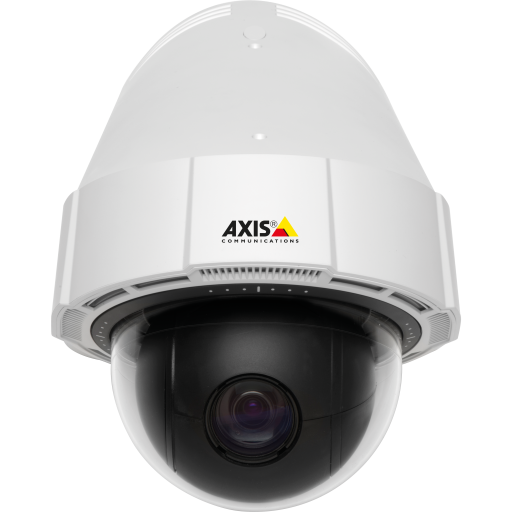
Axis Communications announced that Axis PTZ network cameras support Zipstream, Axis's video compression technology.
Today, most IP-based video surveillance systems use H.264 video compression technology to reduce bandwidth and storage usage. Zipstream boasts excellent compatibility with major video management software (VMS) as well as the currently widely used compression standard H.264, and reduces bandwidth and storage usage by an average of 50%.
Axis ZipStream technology analyzes and optimizes video streams from network cameras in real time. This allows important images, such as faces, tattoos, and license plates, to be recorded in high definition, while other elements like white walls and grass are heavily compressed for efficient use of storage and bandwidth.
When the PTZ camera moves and bandwidth usage reaches its maximum, blurry or unclear video may result during video recording or real-time monitoring. When Zipstream technology is applied to PTZ cameras through a firmware upgrade, the Dynamic Rate Controller is automatically activated during pan, tilt, and zoom operations, preventing bandwidth increase and enabling perfect video surveillance.
"Even if you are equipped with the best video system, the usability of the video surveillance system is bound to be significantly reduced if you cannot store recorded footage for a sufficient period due to insufficient storage capacity or if you have to lower the video quality. Zipstream technology is a groundbreaking technology that enables customers to efficiently utilize storage and bandwidth, thereby increasing the usability of video surveillance systems and reducing operating costs," said Kim Sang-jun, Executive Director of Axis Korea.
Comments
Related news

Axis: Simultaneous Sports Analysis and Security with CCTV
Axis Communications (www.axis.com) announced today use cases that leverage network cameras to analyze athlete movements and gameplay, maintain safety within stadiums, and prevent crime.
2016.02.24by
Axis Cameras Responsible for Security at U.S. Academy Awards for 5 Consecutive Years
Axis Communications announced that Axis network cameras were utilized for security and attendee safety at the 88th Academy Awards ceremony held on February 28 (local time) at the Dolby Theatre in Hollywood, California. Since being deployed for security at the Academy Awards in 2012, Axis network cameras have continuously served security duties for five consecutive years through this year's ceremony.
2016.03.09by

Axis Korea Participates in Save Children Campaign for 5th Year
Axis Communications (www.axis.com) announced today that it has participated in the 'Newborn Hat Knitting Campaign' conducted by Save the Children, an international relief and development non-governmental organization, as part of the 'Axis SafeKids Campaign', and produced 59 knitted hats. The Newborn Hat Knitting Campaign is a participatory campaign in which participants knit and send hats directly to help maintain body temperature in newborns in Africa and Asia, and to protect them from colds and pneumonia.
2016.03.15by

Flower Fragrance Care Facility Adopts Axis Cameras for Elderly Patients
Axis Communications (www.axis.com, CEO Ray Morison), a leading company in the next-generation CCTV "network camera" sector, announced that Kkotbyanggee Care Facility, located in the Dongbaek district of Gyeonggi Province, has adopted Axis network cameras for both internal and external security. Kkotbyanggee Care Facility, which opened in March 2016, decided to implement a video security system that supports high-quality video and network-based video transmission in order to effectively monitor its expansive premises of approximately 1,000 pyeong and provide a secure living environment for its residents.
2016.04.18by
European Patent Applications Surpass 200,000 for the First Time… South Korea Maintains 5th Place, Led by Batteries and Telecommunications
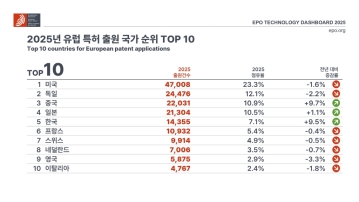
According to the European Patent Office (EPO)'s 'Technology Dashboard 2025', European patent applications last year reached 201,974, surpassing 200,000 for the first time. Korean companies and inventors filed 14,355 applications, representing a 9.5% increase from the previous year and maintaining 5th place by country. Battery, digital communication, and semiconductor technologies led the growth, with Samsung ranking as the top EPO applicant for the second consecutive year and LG reaching 3rd place. The presence of major domestic cities such as Seoul, Suwon, and Yongin was also confirmed. It was also revealed that Korea's European patent strategy is expanding beyond individual technologies to span the entire industry.
2026.03.24by 명세환 기자











