



Mobile Security Industry Growth Outlook: Will Adoption of Cloud-Based EMM Solutions Increase?
 Published2016.06.14 11:30
Focus on the growth of related markets, such as MTM, which includes the mobile antivirus and spyware markets.
According to the 'Domestic Enterprise Mobile Security Software Forecast Report 2016-2020' recently published by IDC Korea (CEO Hong Yoo-sook), the domestic enterprise mobile security software market was estimated to be approximately 14 billion won last year. Furthermore, this market is projected to grow at an annual average rate of 12.2% over the next five years, reaching 25 billion won by 2020.
The report predicted that as smart work environments become more widespread, companies will review various mobile security solutions to support enterprise-wide mobile work based on stronger security policies. With the scope of smart device control expanding to include not only PCs, smartphones, and tablets but also recent wearable devices such as smartwatches, the areas requiring management are growing, necessitating enterprise-wide device management. Accordingly, interest in the adoption and application of cloud-based EMM solutions is expected to gradually increase.
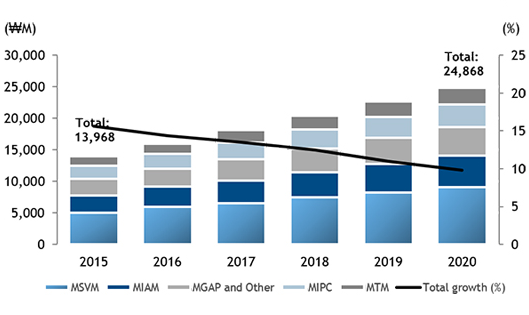
▲ Domestic Enterprise Mobile Security Software Market Outlook, 2015-2020 (Unit: Million KRW. Source: IDC, 2016)
In addition, the report pointed out that due to the nature of mobile devices, there is an increasing number of cases where individuals suffer financial damage through various attacks such as pharming, smishing, and ransomware, and that this can lead to secondary damage as it contains personal information such as contacts, text messages, and photos.
As not only personal information but also key corporate data in BYOD environments are exposed to threats of infringement, this is expected to present new business opportunities in the personal security solution market, which has traditionally been dominated by free antivirus software. The growth of related markets, such as Mobile Threat Management (MTM), which includes mobile antivirus and spyware markets, is attracting attention.
Meanwhile, according to the report, security investments by domestic companies and institutions remain passive despite various security incidents. In fact, according to IDC's 2015 survey of the domestic IT security product market, the market decreased by 4.1% last year compared to the previous year.
While the security software market has grown, the growth of the security appliance market has slowed significantly. This is analyzed to be due to the dominance of integrated security application products, rather than applications implementing single security functions, which has impacted market growth in each sector. A similar trend is observed in the enterprise mobile security software market, where the adoption of integrated mobile products is increasing instead of single mobile security products.
Choi Moon-soo, a researcher at IDC Korea, said, “Recently trending technologies such as cloud, IoT, fintech, FIDO, and wearables are all being integrated with mobile security, and as new security investments increase accordingly, the mobile security industry is also expected to grow alongside them.” In addition, stating that "stronger security for mobile applications is required due to changes in the corporate environment caused by BYOD," mobile security solution providers will need to cooperate more closely with mobile manufacturers.
Comments
Related news

Security issues becoming visible due to the spread of industrial automation and the Internet of Things (IoT)
In the industrial automation security sector, it is important to integrate security features into the devices themselves. It is no longer possible to rely solely on the security functions provided by perimeter defenses. It must not be forgotten that hackers are highly intelligent and do not give up. There is no way to perfectly protect a device with a single solution. What is more important today is not only adding security layers across the enterprise in the industrial automation field, but also incorporating security features into individual embedded devices.
2016.05.03by 명세환 기자
35% Illegal Software Usage Rate in Korea, High Cybersecurity Risks
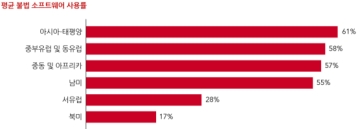
The Business Software Alliance (BSA) announced that the illegal software usage rate among computer users in Korea reached 35%, despite the high correlation between unlicensed software and cyberattacks. This finding was revealed through the BSA Global Software Survey: Seizing Opportunity Through License Compliance, recently published by the Business Software Alliance. While this represents a 3 percentage point decrease compared to the same survey conducted in 2013, it still indicates that numerous domestic systems remain exposed to cyberattacks.
2016.05.25by 명세환 기자
Intel Launches New Home Gateway, Delivering High-Performance, Secure Connectivity
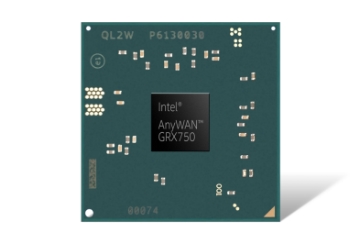
At this Computex event, Intel introduced the Intel AnyWAN GRX 750 System-on-Chip (SoC), Intel's 5th generation 11ac MU-MIMO Wi-Fi product family, and leading OEM home gateway portfolios for the retail networking industry. Intel's connectivity products for the connected home provide the foundation necessary to support an increasing number of connected "things" and Internet-based cloud services, delivering reliable and seamless experiences for consumers and small businesses. Home connectivity through the Intel AnyWAN GRX750 SoC product family for home gateways: The Intel AnyWAN GRX750 SoC product family is a high-performance, low-power broadband and communications processor SoC based on the Intel Atom™ microarchitecture. Intel's latest SoC not only enables service providers and retail OEMs to rapidly deliver innovation to the connected home, but also enables cost reduction, operational simplification, development of new services and applications, and meeting evolving customer expectations.
2016.06.02by 명세환 기자

ESP32 Development Environment Selection and GPS Application Implementation
The ESP32 is a microcontroller that integrates Wi-Fi, Bluetooth, 12-bit ADC, capacitive touch, PWM, DAC, and UART in a single SoC. However, the abundance of features does not by itself solve the designer's problems. The real challenges lie in selecting the appropriate development environment, determining which pins can be used and which must be avoided, and converting raw data from modules into usable information. This document addresses ESP32 peripheral constraints (ADC2 and Wi-Fi coexistence limitation, UART1 occupancy, ADC non-linear regions), the trade-offs between Arduino IDE and ESP-IDF, and the process from connecting NEO-6M/NEO-M8N GPS modules to UART2, parsing NMEA sentences, and visualizing routes in Google Earth, all organized based on documented references.
2026.10.12by 편집부

MIPI CSI-2, DSI-2, C-PHY, D-PHY Test Solution Technical White Paper
The MIPI interface adopts a burst mode that transitions between low-power (LP) and high-speed (HS) states for low-power consumption, and in return, strict timing rules are imposed on state transitions. Additionally, the high-speed section operates as a packet-based protocol with headers, ECC, and CRC, so verification engineers must handle waveforms and protocols simultaneously. Traditional configurations combining general-purpose oscilloscopes and AWGs reveal limitations in setup complexity, measurement uncertainty, and lack of reproducibility when faced with these requirements. This white paper, based on webinar materials, organizes the structure of this problem and describes how the SV5C-DPTXCPTX generator for receiver testing and SV5C-DPRXCPRX analyzer for transmitter testing integrate state transition testing, stressed eye testing, and protocol analysis into a single bench, along with their application boundaries.
2026.10.12by 편집부











