



Nordic is developing low-power LTE technology for cellular IoT
 Published2016.07.14 14:34
Nordic Semiconductor (Country Manager for Korea: Choi Soo-chul) announced that it is developing low-power LTE technology for the cellular IoT (Internet of Things).
This development project incorporates the leadership Nordic Semiconductor has built over more than 10 years in the field of Ultra-Low Power (ULP) wireless technology, as well as the outstanding technical capabilities and expertise of a newly recruited Finnish cellular R&D engineering group (composed of former employees from Nokia, Ericsson, Motorola, and Broadcom).
Low-power cellular IoT is expected to spread widely across numerous markets and application fields. For example, applications are very diverse, including smart utility metering, asset and people (such as children) tracking, vehicle management, building security and safety, remote management, smart vending machines, retail, healthcare, medical monitoring, real-time traffic monitoring, wearables, indoor/outdoor GPS navigation, smart home technology, automotive (e.g., customized insurance based on actual driving data), and industrial and agricultural automation.
Nordic Semiconductor's roadmap for cellular IoT includes highly integrated chipsets and advanced software that support the upcoming 3GPP Release 13 (Release 13) LTE-M and NB-IoT. Highly optimized for power and size, Nordic Semiconductor's new nRF91 series is specifically designed for emerging low-power cellular IoT applications. It enables ubiquitous network coverage and offers long battery life, low deployment and maintenance costs, scalability to billions of devices, and an ultra-small form factor for application in almost any field.
Nordic expects that samples of the nRF91 series solution will be adopted by key customers in the second half of 2017, and anticipates that mass supply and production will begin in 2018.
LTE-M and NB-IoT are low-power, secure, reliable, and future-proof open standards defined by 3GPP for IoT applications where cost, size, and power are limited, and they are interoperable with cellular access technologies. These two technologies are expected to serve as drivers for the expansion and growth of the new cellular IoT market, where more than 1.5 billion devices are projected to be connected by 2021. Nordic expects these technologies to begin being applied for the first time in 2017 and to expand widely between 2018 and 2019.
Long-range, low-power wireless technology, which complements Nordic’s leading product portfolio and roadmap for short-range wireless semiconductor technology, is being pursued as part of the company’s strategy to target new high-growth markets based on its proven wireless technology, embedded processing technology, and extensive R&D expertise.
Nordic Semiconductor CEO Svenn-Tore Larsen said, “We are very pleased to unveil Nordic’s roadmap for cellular IoT,” and added, “By combining our ultra-low-power wireless DNA with Finland’s unrivaled cellular expertise, Nordic has secured the engine power for the low-power cellular IoT market and established a strong position.” “Through this roadmap, Nordic Semiconductor will supply products based on expanded technology and be reborn as a more advanced company of a new dimension through continuous organizational and R&D investments,” the company stated.
Thomas Embla Bonnerud, Director of Product Management at Nordic Semiconductor, stated, “Although the cellular IoT market is still in its early stages, new low-power LTE technology, much like Bluetooth® Low Energy for short-range wireless, will soon experience massive growth across various sectors.” He further explained, “Over the next few years, this market will evolve into something very different from what it is today. Nordic Semiconductor’s nRF91 series is a new and differentiated solution for this new market.”
Svein-Egil Nielsen, CTO of Nordic Semiconductor, stated, “About two years ago, we discovered new possibilities with the emergence of low-power LTE technology and simultaneously hired outstanding cellular engineering talent from Finland.” He added, “LTE is a highly complex and specialized technology within the wireless field. There are likely only a handful of development teams worldwide with the capability and experience to develop and deploy such technology. We possess such a team, and our company’s goal is to build the future of the low-power cellular IoT market in the same way we have achieved in the fields of ultra-low-power wireless and Bluetooth Low Energy.”
Comments
Related news
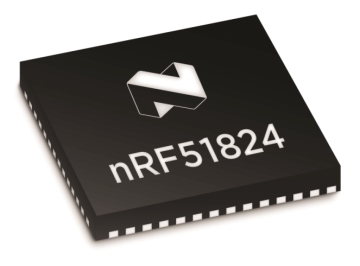
Nordic Launches Bluetooth Low Energy SoC for In-Vehicle Wireless Charging
Nordic Semiconductor (Korea Branch Manager: Choi Su-chul) has announced the launch of the nRF51824 Bluetooth® Low Energy (formerly known as Bluetooth Smart) SoC for intelligent vehicle applications in the latest connected cars and in-vehicle wireless charging. The nRF51824 has obtained AEC-Q100 stress test certification for automotive specifications on the IC, and is implemented based on Nordic's highly successful nRF51822 Bluetooth Low Energy SoC (consisting of 256kB flash and 16kB RAM products) which has been proven in the field. It provides the same diverse features and performance.
2016.06.08by 명세환 기자

Nordic Launches Ultra-Small Bluetooth SoC for Next-Generation Wearables and IoT
Nordic Semiconductor announced that it supplies WL-CSP (Wafer Level Chip Scale Package) nRF52832 Bluetooth® Low Energy (formerly known as Bluetooth Smart) SoC (System-on-Chip), which occupies only one-quarter of the footprint area of the standard package type nRF52832. This product is designed for next-generation high-performance wearable applications.
2016.07.05by 명세환 기자
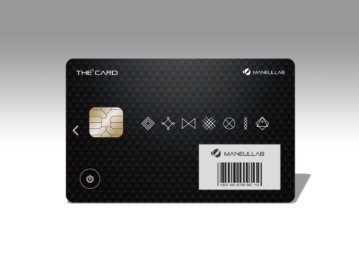
Nordic supplies all-in-one payment solution to domestic IT payment solution developer
'The Card' by Maneul Lab, a domestic IT payment solution developer, supports various payment methods by supporting Bluetooth low energy and NFC, embedded IC, dynamic magnetic stripe, and barcode with a single card. Nordic Semiconductor (Korea Country Manager: Choi Su-chul) announced that Maneul Lab, a domestic IT payment solution developer, has adopted Nordic's award-winning nRF51822 SoC (System-on-Chip) in its all-in-one payment solution, 'The Card,' which integrates cash withdrawal, transportation, membership, and secure smart card functions into one.
2016.07.11by 신윤오 기자
ESP32 Development Environment Selection and GPS Application Implementation
The ESP32 is a microcontroller that integrates Wi-Fi, Bluetooth, 12-bit ADC, capacitive touch, PWM, DAC, and UART in a single SoC. However, the abundance of features does not by itself solve the designer's problems. The real challenges lie in selecting the appropriate development environment, determining which pins can be used and which must be avoided, and converting raw data from modules into usable information. This document addresses ESP32 peripheral constraints (ADC2 and Wi-Fi coexistence limitation, UART1 occupancy, ADC non-linear regions), the trade-offs between Arduino IDE and ESP-IDF, and the process from connecting NEO-6M/NEO-M8N GPS modules to UART2, parsing NMEA sentences, and visualizing routes in Google Earth, all organized based on documented references.
2026.10.12by 편집부
MIPI CSI-2, DSI-2, C-PHY, D-PHY Test Solution Technical White Paper
The MIPI interface adopts a burst mode that transitions between low-power (LP) and high-speed (HS) states for low-power consumption, and in return, strict timing rules are imposed on state transitions. Additionally, the high-speed section operates as a packet-based protocol with headers, ECC, and CRC, so verification engineers must handle waveforms and protocols simultaneously. Traditional configurations combining general-purpose oscilloscopes and AWGs reveal limitations in setup complexity, measurement uncertainty, and lack of reproducibility when faced with these requirements. This white paper, based on webinar materials, organizes the structure of this problem and describes how the SV5C-DPTXCPTX generator for receiver testing and SV5C-DPRXCPRX analyzer for transmitter testing integrate state transition testing, stressed eye testing, and protocol analysis into a single bench, along with their application boundaries.
2026.10.12by 편집부











