


A survey of cloud adoption suggests that "information management should be more important than infrastructure."
 Published2016.07.20 17:43
74% of companies use complex cloud infrastructure.
Veritas Technologies (www.veritas.com/kr) has released its "State of the Hybrid Cloud" report, which examines the current state of cloud adoption among global enterprises. The report highlights that three out of four enterprises today are adopting a hybrid private and public cloud strategy, placing a critical emphasis on corporate information management and security strategies.
Commissioned by Veritas and conducted by Cicero Group, this survey included 1,800 IT decision-makers from companies with 500 or more employees and 75 TB or more of data under management worldwide. The survey found that business-critical workloads in public cloud environments are expected to double over the next 24 months, a growth rate comparable to that of general workloads.
This growth is expected to increase the responsibility of IT departments to ensure high availability and security not only for infrastructure but also for all business services.
This report analyzes the percentage of companies migrating data to the cloud using both private and public cloud services, as well as the factors driving their adoption of hybrid cloud. Our research has revealed that some common myths surrounding cloud migration are untrue.
For example, while it was previously thought that relatively low-criticality workloads would be migrated to the public cloud first, in reality, the percentage of business-critical workloads such as customer relationship management (CRM) and enterprise resource planning (ERP) moving to the cloud is reaching 25-30%, the same as general workloads.
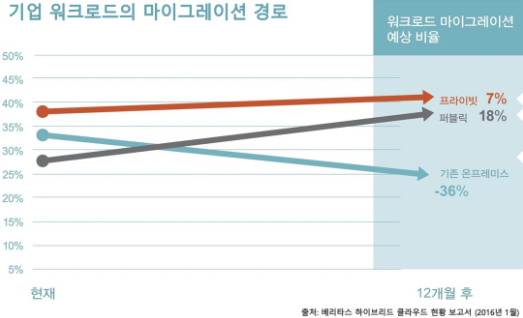
38% of enterprise workloads run in private clouds, 28% in public clouds.
This means businesses are becoming increasingly confident about migrating all types of data to the cloud. Consequently, service providers must more reliably ensure high availability and prevent downtime, and IT departments must also develop appropriate data protection strategies that encompass heterogeneous on- and off-premises infrastructure.
38% of enterprise workloads run in private clouds, while 28% run in public clouds. These figures are expected to grow by 7% and 18%, respectively, over the next 12 months. Seventy-four percent of enterprises use two or more cloud infrastructure vendors to meet their workload requirements, and 23% use four or more cloud infrastructure vendors. Protecting, managing, and leveraging data across these heterogeneous environments will largely fall on the shoulders of IT departments.
Looking at the percentage of workloads migrating to the public cloud by region, Japan and Brazil are actively using the public cloud, migrating about 50% more workloads to the public cloud than the United States, Canada, France, and Germany.
By industry, manufacturing leads the way in public cloud migration, running more than 30% of workloads on the public cloud, followed by telecommunications at 24%, healthcare and finance at 23%, and the public sector at 16%.
One in three respondents cited "cost" as the primary reason for migrating to the public cloud. Furthermore, "security and protection architecture" was cited as the top reason for not choosing the public cloud by 50%, revealing that "security" remains the biggest obstacle to public cloud adoption. Interestingly, however, companies that have adopted the public cloud cited "security" as the number one reason for their satisfaction with their decision. Considering this, public cloud vendors need to further emphasize their security capabilities and success stories.
A significant number of respondents predicted that certain workloads would remain on-premises rather than migrate to the cloud. Twenty-eight percent said they would continue to run backup and recovery on-premises. Twenty-seven percent said they would not migrate disaster recovery to the cloud, and 26% said they would keep archives, data warehousing, and relational/OLTP databases on-premises.
81% of companies rely on service providers for support in cloud implementation and ongoing operations. For IT departments, complex hybrid cloud environments are a constant challenge, and the role of service providers with superior support and technical expertise in migrating workloads to the public cloud will become increasingly important.
“While trust in migrating data to cloud environments is growing, this places another burden on service providers to ensure high availability and prevent unexpected downtime,” said Wonyoung Cho, CEO of Veritas Korea. “This change presents new challenges for corporate IT departments to consider when establishing data protection strategies that are appropriate for both on-premises and off-premises infrastructure to ensure reliable data management.”
More details from Veritas' "State of the Hybrid Cloud" report can be downloaded here, along with four information management strategies for enterprises to maximize agility and minimize risk in hybrid cloud environments.
Comments
Related news
Domestic cloud software market to grow at an average annual rate of 16.3% over the next five years
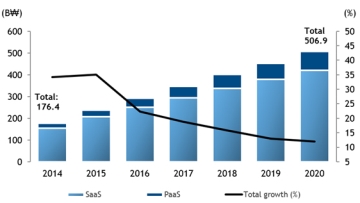
According to a recent report from Korea IDC (CEO Hong You-suk), the domestic cloud software market recorded a growth rate of 35.1% year-over-year last year, reaching a market size of 238 billion won. This market is projected to continue growing at an average annual rate of 16.3% over the next five years, exceeding 500 billion won by 2020. According to the report ('Korea SaaS and Cloud Software Market Forecast, 2016-2020, #AP40489816'), the domestic cloud market is growing centered on infrastructure services, while demand for cloud-based software is also increasing in tandem. Vendors that have successfully entered the cloud software market ahead of others are exploring various strategies to expand their market share in the cloud market, while vendors that were relatively less prepared are focusing on acquiring cloud-based software service providers or converting existing on-premise software to cloud-based software.
2016.05.13by 명세환 기자

Acronis Records 800% Year-on-Year Growth with Cloud Data Protection Solutions
Acronis (Branch Manager Seo Ho-ik) announced that it will supply "Acronis Backup Cloud," a cloud data protection solution at a reasonable price, and strengthen its channel partner support program to enhance its market penetration strategy in the cloud data protection sector. Following the launch of a new cloud architecture and data protection platform last year and the announcement of related partner support programs, Acronis has received strong response from service providers and cloud resellers worldwide, with sales of its cloud data protection solution "Acronis Backup Cloud" recording 800% growth compared to the previous year, the company stated.
2016.05.20by 명세환 기자
Mobile Security Industry Growth Outlook: Will Adoption of Cloud-Based EMM Solutions Increase?
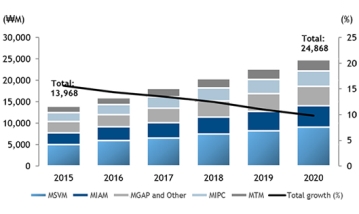
According to the "Domestic Enterprise Mobile Security Software Outlook Report 2016-2020" recently published by Korea IDC (CEO Hong Yu-suk), the domestic enterprise mobile security software market last year was estimated at approximately 14 billion won. Furthermore, this market is projected to grow at an average annual rate of 12.2% over the next five years, forming a market scale of 25 billion won by 2020. The report predicts that as smart work environments become more commonplace, enterprises will review various mobile security solutions to support company-wide mobile operations based on stronger security policies. With smart devices extending beyond PCs, smartphones, and tablets to include recently emerging wearable devices such as smartwatches, the range of smart device control has expanded, and the areas requiring management are growing accordingly. This situation calls for enterprise-level device management. Consequently, interest in the adoption and implementation of cloud-based EMM solutions is expected to increase progressively.
2016.06.14by 김수지 기자
.jpg)
SalePoint Signs Multi-Year Partnership Agreement with AWS… Promoting Identity Security that Integrates Even AI Agents
Sailpoint has entered into a multi-year strategic partnership agreement with AWS and is moving forward with establishing an integrated governance system that manages both human and non-human identities together. The plan is to consistently manage access permissions in an environment where AI agents are increasing as work execution entities, while applying the principle of least privilege and automated policy enforcement. The two companies plan to jointly expand capabilities to manage the identities of various entities, including AI agents, within a single layer in the AWS environment. This collaboration is interpreted as a move to design security and governance together in corporate environments where AI adoption is expanding.
2026.03.26by 배종인 기자
.png)
Databricks Unveils Open AI Security Monitoring 'Lakewatch'
Databricks entered the security market on March 24 by unveiling LakeWatch, an open-source agentic SIEM. The core functionality of this product is to integrate and analyze security, IT, and business data in a single environment to support AI-based threat detection and investigation. The company explained that it reduces the limitations of existing security operations centers, which have had to forgo some data due to high cost structures, and enables large-scale data analysis and automation based on open formats and ecosystems. LakeWatch is currently offered as a private preview, with Adobe and Dropbox mentioned as early customers. Databricks also announced an expanded partnership with Anthropic as well as the acquisition of Antimatter and SiftD.ai.
2026.03.26by 배종인 기자











