


Fairchild Announces USB Controller Compatible with Latest Type-C Specifications
 Published2016.07.28 08:59
Fairchild announced that its FUSB302 family of USB Type-C controllers is the industry's first to be compatible with USB Type-C standards, including Power Delivery (PD) specifications. This enables manufacturers to easily support all USB Type-C specifications within their products using the FUSB302.
The USB Implementer Forum (IF) recently announced updates to the specifications for USB Type-C, USB Type-C cables, connectors, and USB power supply. These updates address existing issues and add significant new features, including support for new IEC power supplies.
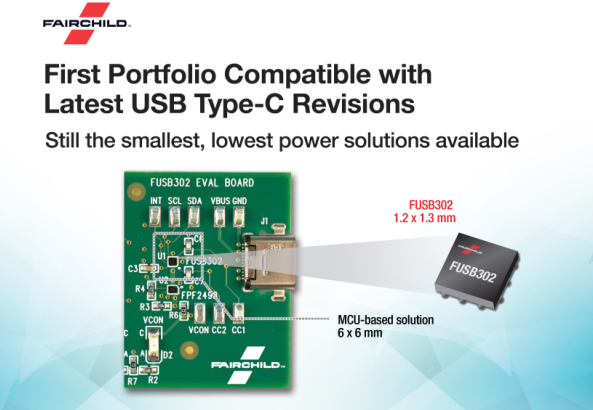
Unlike existing USB Type-C controllers, the FUSB302 is designed to work with existing microprocessors via the I2C protocol. This allows for easy and convenient switching between various USB Type-C specifications through firmware rather than hardware.
"Our FUSB302 family of USB Type-C controllers addresses manufacturers' concerns regarding specification updates, making it easy to add next-generation USB capabilities to existing smartphones, tablets, PCs, and other mobile devices," said Myron Miske, Director of Interface and Protection Products at Fairchild. "The FUSB302 is a popular solution used in many product shipments today thanks to its small size, low power consumption, and Investment Protection."
The newly released FUSB302B is the latest addition to the FUSB302 product family. It is currently the smallest among PD-supported USB Type-C products, measuring just 1.2mm x 1.3mm, and is available in a 9-ball WLCSP package.
With such a small size and ultra-low power consumption of 25µA, it can be considered a very important advantage for battery-powered devices. The FUSB302B also supports data roll swap, power roll swap, hard reset, soft reset, active cable support, and VDM packet transmission functions.
More information about Fairchild’s complete USB Type-C solutions can be found at fairchildsemi.com/usbtype-c.
Comments
Related news
Fairchild Launches Discrete and Bare Die IGBTs for Hybrid Electric Vehicles
Fairchild is currently expanding its portfolio of automotive-grade semiconductor solutions for hybrid electric vehicles (HEV), plug-in hybrid electric vehicles (PHEV), and electric vehicles (EV) with new discrete and bare die IGBTs and diodes. These IGBTs and diodes are suitable for traction inverters and all key components of HEV, PHEV, and EV that convert direct current battery power into three-phase alternating current required by the vehicle's drive motor. All of these new discrete and bare die IGBTs and diodes utilize advanced field-stop third-generation IGBT technology and soft fast-recovery diodes that meet automotive-grade standards, along with additional features and options. Through the combination of these technologies, features, and options, Fairchild is able to provide discrete and bare die solution products with tightly controlled characteristic distribution.
2016.05.18by 명세환 기자
Fairchild Announces LED Solutions Simplifying LED Lighting Product Development
Fairchild has announced the new FL77944, the first solution in its LED Direct AC Drive product family, a solid-state LED lighting solution. Manufacturers can now easily scale power and create smart, scalable LED-based lighting products that are smaller, deliver stronger performance, and offer longer usable life compared to products using switch mode power supply (SMPS) approaches.
2016.05.24by 명세환 기자
Fairchild Strengthens MOSFET Technology for Ethernet Power Supply-Based IoT Products
Fairchild has advanced its GreenBridge™ Active Bridge Quad MOSFET technology with the FDMQ8205, the first product in the next-generation GreenBridge series for various power delivery devices (PD) powered over Ethernet (POE), including security cameras, wireless access points, LED lighting, and other applications. Designers can now leverage GreenBridge's best-in-class Rdson performance, ultra-compact form factor, and excellent thermal characteristics to reduce temperature and increase efficiency while reducing solution size.
2016.07.26by 신윤오 기자
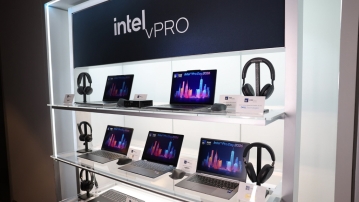
Intel Unveils Next-Generation 'Core Ultra Series 3' and vPro Platform for Enterprise PCs
Intel has officially unveiled the "Intel Core Ultra Series 3" for next-generation enterprise PCs and the latest vPro platform, addressing a wide range of demands from enterprise notebooks to high-performance workstations.
2026.03.26by 배종인 기자
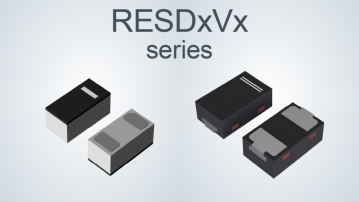
ROHM Launches ESD Protection Diode Compatible with High-Speed Interfaces of 10Gbps or Higher
Semiconductor specialist ROHM has developed the 'RESDxVx series' of ESD (electrostatic discharge) protection diodes capable of responding to next-generation high-speed data communication environments exceeding 10Gbps, simultaneously enhancing both signal quality maintenance required in high-speed interfaces and IC protection performance.
2026.03.26by 배종인 기자











