


How smart passive sensors are used in tire pressure monitoring solutions
 Published2016.08.18 16:44
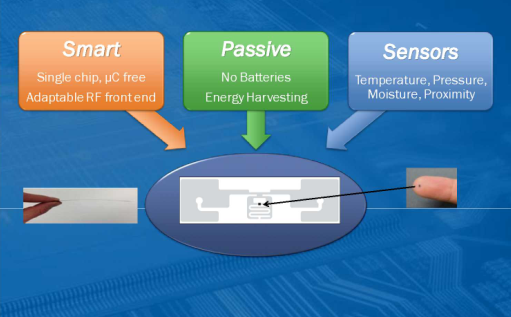
Battery-free wireless sensors can be used to verify temperature, pressure, proximity, and humidity data in various applications where size and accessibility are critical. This latest technology, which operates without batteries, integrates the key features and functions of various types of sensors into a single chip.
In addition to the fact that stimulus detectors are not used, what is more important is that sensing is possible even without a separate MCU designed for each sensing node. The detected data is sent to a remote central processing hub called an 'interrogator,' where the next stage of post-processing takes place. Unlike conventional sensor solutions, a single processing unit can handle many sensors at once.
Battery-free wireless sensors are a highly cost-effective solution, and once installed in a product, they effectively eliminate the need for maintenance. Due to the low cost of battery-free wireless sensors, systems adopting this technology are highly suitable for disposable products such as automotive tire pressure monitoring solutions (TPMS).
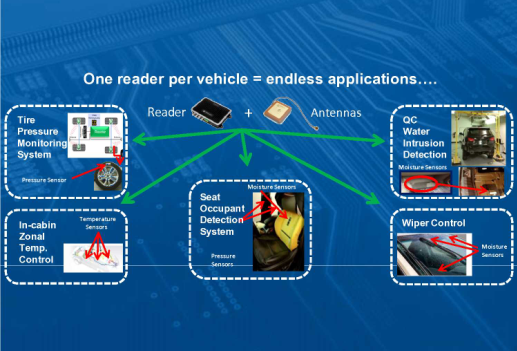
ON Semiconductor is making headlines by showing a video (http://www.onsemi.com/community/blog/post/auto-tire-pressure-monitoring) demonstrating how its smart passive sensor products are used in tire pressure monitoring solutions.
This demo used a standard-sized passenger car tire suitable for ON Semiconductor's smart passive sensor tag. The sensor tag consists of an inductive tune loop used as a sensing element, a printable antenna, and a smart sensor IC.
First, a flexible metal piece is mounted inside the tire to induce a change in loop inductance due to the rise and fall of pressure. Then, an adaptive RF front-end configured in the smart sensor IC is used to detect the impedance change in this environment and modify the change value to maintain maximum antenna gain.
Changes in impedance are transmitted to the microwave RFID reader as a 5-bit sensor code. ON Semiconductor used a handheld reader in the demo, but in actual applications, this can be changed to a fixed reader built into the vehicle. When the sensor code obtained at this time is transmitted to the reader, the back-end microcontroller can be configured to process the detected information and transmit that information as a specific tire pressure to the instrument panel or electronic control unit inside the vehicle.
In this demo, pressure was measured three times. First, a tire inflated to 42 PSI was measured using a standard analog pressure gauge, and the result was compared with the value from a smart passive sensor positioned inside the tire. If the demo operates correctly, a value within a margin of error of 2 PSI should be read from the sensor tag. In the actual demo, the value read by the analog pressure gauge was 41.9 PSI, while the value read by the smart passive sensor was 41 PSI. This demonstrates a result within a margin of error of +/-2 PSI.
The second measurement was taken after lowering the air pressure to 38 PSI (the analog pressure gauge displayed 38.2 PSI), at which point the smart passive sensor tag read 39 PSI, which is within the margin of error.
The third and final measurement was taken with the tire pressure lowered to 35 PSI (the analog pressure gauge showed 35.2 PSI), at which point the value of the smart passive sensor was 36 PSI.
Through this demo, we explored how a tire pressure monitoring solution can be implemented using ON Semiconductor's smart passive sensors. A passive tag created by combining a printable antenna and a single smart sensor IC enables the implementation of a very low-cost tire pressure sensing solution.
Comments
Related news
ON Semiconductor Enhances Near-Infrared Capability of CCD Image Sensors to 8 Megapixels
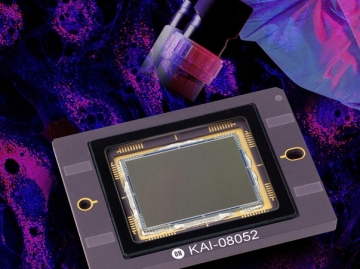
ON Semiconductor (Nasdaq: ON) is upgrading image performance required in various industrial applications through technology that enhances near-infrared CCD image sensors. The KAI-08052 image sensor, an 8-megapixel product from ON Semiconductor's CCD-related product portfolio incorporating this technology, has doubled near-infrared wavelength sensitivity and begun shipping as the standard for the company's interline transfer CCD pixel design. Interline transfer refers to a method in which a transfer path called a vertical transfer CCD is installed between pixel rows, and accumulated charge is transferred through this path.
2016.07.13by 홍보라 기자
NXP Supplies RFCMOS System Chip for Hella's 77 GHz Radar Sensor
NXP Semiconductors announced that HELLA has developed a CompactRadar Sensor based on NXP's highly innovative RFCMOS radar system. This sensor has established a new benchmark in the 77 GHz technology sector. The highly robust all-weather radar-based system is attracting significant attention as an important approach for implementing various safety and convenience features in vehicles. Radar technology, which is becoming widely adopted in autonomous vehicle design, enables vehicles to reliably sense their environment. HELLA's CompactRadar product line is scheduled to be launched in mid-2018.
2016.08.05by 신윤오 기자

[ICT R&D Overview] ③ Urgent Development of ICT Devices, Complex Sensors, and Intelligent Semiconductors
ICT devices comprehensively refer to intelligentized terminals and components that deliver information and communication technology and services between users and objects in IoT environments, extending beyond conventional terminals such as PCs and smartphones. Based on functions such as sensing, processing, and communication, the scope includes devices and related component technologies used in various fields including healthcare, transportation, safety, education, and convenience. ICT devices handled by the Ministry of Science and ICT include smart devices, wearable devices, unmanned mobile devices, intelligent semiconductors, smart vehicles, and 3D printing. As society enters into a hyper-connected era where all people, objects, and spaces are interconnected centered on ICT, the number of network-connected devices is increasing rapidly and numerous types of application products and services are emerging, generating high expectations for ICT devices.
2016.08.16by 신윤오 기자

[e4ds Tech Day 2026 ⑨] Sim Sang-gyu, Autocrypt CTO: "In the Physical AI Era, Automotive Security Must Extend Beyond the Vehicle"
At e4ds Tech Day 2026, Sim Sang-gyu, CTO of Autocrypt, explained automotive cybersecurity strategies in the era of Physical AI and SDV (Software-Defined Vehicle). Automobiles are evolving as part of an ecosystem connected to AI, cloud, chargers, IoT, and robots, and he emphasized that the scope of security must expand beyond the vehicle interior to the entire connected environment. In particular, AI model tampering, adversarial attacks, OTA updates, and EV charger hacking were identified as major threats. He explained that response measures require zero trust, AI model integrity protection, intrusion detection, Security by Design and Default, and full lifecycle security management, and that proactive security system establishment beyond regulatory compliance is critical for securing future mobility competitiveness.
2026.10.12by 배종인 기자

Practical HIL Construction Strategy for Automotive and Off-Highway Controller Validation
As vehicle E/E architecture transitions to zonal structures and shifts to software-defined vehicles (SDV), the number of controllers (ECUs) requiring validation and software complexity are surging dramatically. Meanwhile, real vehicle testing cannot provide repeated verification under identical conditions and entails lead time and safety concerns. This white paper explains the principles of HIL (Hardware-in-the-Loop) validation and the structure of the NI platform composed of PXI, SLSC, and VeriStand, and through two actual implementation cases—Camera Record & Replay HIL for In-Cabin Monitoring Controller (ICMU) and Forklift Controller (VCU) HILS—describes how controller-level regression testing becomes possible. Additionally, it explicitly states application boundaries and limitations, such as lack of A2B support.
2026.10.12by 편집부











