


Efficient Automotive Design Methods? Find The Answer in Maxim's Integrated Semiconductor Technology
 Published2016.08.29 13:46
Presenting solutions that reflect customer needs, such as ECU integration and minimization of space and power consumption.
How will future cars change?
Although they differ in name—such as autonomous vehicles, electric vehicles, and driverless cars—fierce competition is underway in the development of automobiles focused on driver convenience and safety.
User-centric future automobiles inevitably require the development of vehicles that reflect user needs. This means that cars must vary depending on the purpose of use or the user's profession. Consequently, as the technology to provide functions tailored to each vehicle concept and optimize them becomes increasingly important, semiconductor companies are facing growing concerns.
Maxim Integrated, which is actively utilizing its strength in integration technology to solve these concerns, can be described as a semiconductor company making very impressive strides in the rapidly changing automotive market.
Solving High-Speed Data Interface Issues with Giga Serial Link Technology
Maxim is applying the proven integrated power solution technologies it has showcased in the consumer sector directly to the automotive industry. The company's approach to the automotive market is also thoroughly customer-centric. It focuses on identifying the challenges customers face in the market and, if so, how those challenges can be resolved.
In other words, we seek ways to integrate the ever-increasing number of ECUs, minimize the resulting space and power consumption, and reduce the overall system cost. We must also address the rapidly growing need for faster data processing speeds. In addition, addressing safety issues and simplifying the system are also challenges.
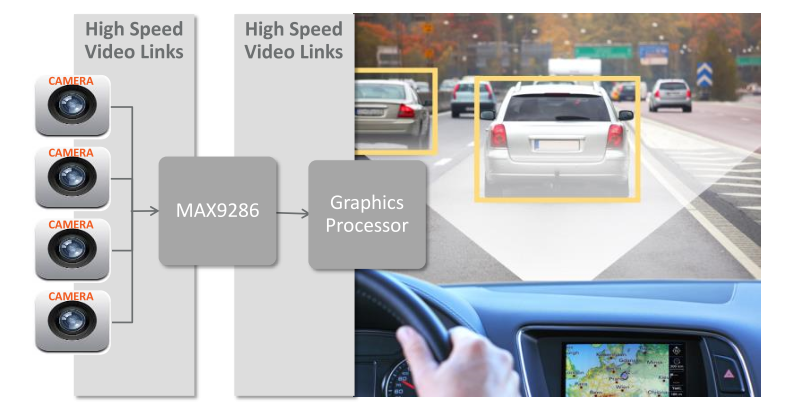
As the bandwidth of data that serial links must process increases, Maxim is preparing products to support up to 6G by the end of this year, following the mass production of 3.5G products.
Accordingly, High Speed Serial Links can be considered a representative technology that optimizes Maxim’s integration and power technologies for the automotive sector. As the volume of data to be processed in automobiles—such as from large-inch CIDs and clusters—increases, data signal interfaces are becoming increasingly faster, necessitating serial links to handle this.
As the bandwidth of data that serial links must process on their own increases, Maxim is preparing products to support up to 6G (12G when used as dual link) by the end of this year, following the mass production of 3.5G products.
The advantage of Maxim’s GMSL (Gigabit Multimedia Serial Links) technology is that it supports both STP and Coax cables; these single cables can transmit not only data but also bidirectional control signals and power. Additionally, it reduces EMI by utilizing spread spectrum between links and incorporates a jitter filter within the IC. This is necessary because the jitter of the SoC clock output varies significantly depending on temperature and product characteristics.
In particular, GMSL has powerful capabilities for fault diagnosis as well as checking error bits. It also supports an Adaptive Equalization function that can automatically clean jitter generated between the deserializer and serializer. Additionally, the Eye Width Monitor (EWM) function, which monitors directly within the IC, allows value readings to be performed without the need for a separate oscilloscope, thereby reducing the workflow for development engineers. This monitoring feature is one of the representative technologies reflecting customer needs.
With Maxim's unique GMSL solution, you can easily configure a surround view system.
Previously, the structure involved transmitting video signals from four SVM (Surround View Monitoring) cameras, which were then sent from the SVM ECU to the SoC via 'four deserializers' to synthesize the images into one. However, using the Maxim 9286 simplifies the structure so that the 9286 synthesizes the four camera images and transmits them directly to the SoC.
Automotive USB solutions and BMS are also differentiated
In addition, Maxim supplies innovative USB solutions and BMS (Battery Management Systems) as automotive solutions. With the recent increase in demand for USB ports in vehicles requiring not only USB 3.0 but also, in some cases, version 3.1, Maxim is developing related solutions with OEMs.
Furthermore, as the issue of green cars grows, the question of how to properly manage batteries has become a significant concern. Maxim's analog front-end ICs, which monitor battery condition, are highly precise and maximize energy efficiency.
Director Choi Young-kyun of Maxim Integrated Korea said, “Maxim has a very diverse range of serializer products. “This is intended to enable customers to purchase products with the features they want at the price they want,” he said, adding, “Reflecting the diverse needs of customers for various automobiles and supplying products that meet those needs is Maxim’s strength and competitive edge.”
Comments
Related news
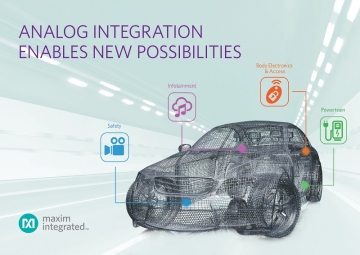
Maxim Ships 1 Billionth Flexible, High-Integration Automotive Solution
Maxim announced that it has shipped its 1 billionth integrated circuit (IC) used in electronic devices such as automotive infotainment, safety systems, Keyless Go (enabling door opening/closing without removing the car key), and powertrains. Maxim's integrated products are widely utilized in automotive subsystems where size has been reduced and reliability has been enhanced.
2015.12.17by
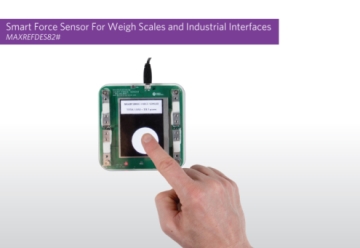
Maxim, Fast Measurement of HMI Devices with 3D Interface Smart Force Sensor
Maxim Integrated Products Korea (CEO Kim Hyun-sik) has announced the Smart Force sensor reference design 'MAXREFDES82#'. Design engineers can use MAXREFDES82# to quickly evaluate and leverage new Human Machine Interface (HMI) devices. Conventional measuring instruments provide only one-dimensional information such as gravitational magnitude. In contrast, Maxim's MAXREFDES82# reference design uses four load sensors with a 24-bit 6-channel Analog-to-Digital Converter (ADC) 'MAX11254' to provide not only weight information but also data on the center of gravity. This unique configuration utilizing a highly integrated 24-bit ADC enables measurement of two- and three-dimensional information for all objects.
2016.05.25by 명세환 기자
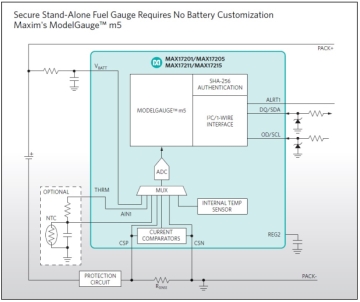
Maxim Announces Standalone Battery Level Monitor Suitable for Wearables, Drones, and IoT Devices
Maxim Integrated Products Korea (CEO Kim Hyun-sik) has launched the 'ModelGauge m5' portfolio, which easily and safely measures remaining battery capacity in portable devices. The Maxim ModelGauge m5 battery gauge (MAX17201/MAX17205, MAX17211/MAX17215) integrates SHA-256 security authentication for the first time in the industry and combines a 160-bit secret key to prevent battery pack counterfeiting. Since battery voltage changes with temperature and load, measuring battery capacity is challenging, and sophisticated calibration is required to eliminate cumulative offset errors in coulomb-counting. Through sophisticated algorithms, the Maxim ModelGauge m5 accurately converts raw measurement values of battery voltage, current, and temperature into state of charge (SOC%), absolute capacity (mAhr), time-to-empty, and time-to-full during charging, enabling users to use their devices more conveniently and for longer periods.
2016.06.08by 명세환 기자

[e4ds Tech Day 2026 ⑨] Sim Sang-gyu, Autocrypt CTO: "In the Physical AI Era, Automotive Security Must Extend Beyond the Vehicle"
At e4ds Tech Day 2026, Sim Sang-gyu, CTO of Autocrypt, explained automotive cybersecurity strategies in the era of Physical AI and SDV (Software-Defined Vehicle). Automobiles are evolving as part of an ecosystem connected to AI, cloud, chargers, IoT, and robots, and he emphasized that the scope of security must expand beyond the vehicle interior to the entire connected environment. In particular, AI model tampering, adversarial attacks, OTA updates, and EV charger hacking were identified as major threats. He explained that response measures require zero trust, AI model integrity protection, intrusion detection, Security by Design and Default, and full lifecycle security management, and that proactive security system establishment beyond regulatory compliance is critical for securing future mobility competitiveness.
2026.10.12by 배종인 기자
Practical HIL Construction Strategy for Automotive and Off-Highway Controller Validation
As vehicle E/E architecture transitions to zonal structures and shifts to software-defined vehicles (SDV), the number of controllers (ECUs) requiring validation and software complexity are surging dramatically. Meanwhile, real vehicle testing cannot provide repeated verification under identical conditions and entails lead time and safety concerns. This white paper explains the principles of HIL (Hardware-in-the-Loop) validation and the structure of the NI platform composed of PXI, SLSC, and VeriStand, and through two actual implementation cases—Camera Record & Replay HIL for In-Cabin Monitoring Controller (ICMU) and Forklift Controller (VCU) HILS—describes how controller-level regression testing becomes possible. Additionally, it explicitly states application boundaries and limitations, such as lack of A2B support.
2026.10.12by 편집부











