



Why 5G is cited as the core driving force of the eight major future industries
 Published2016.09.13 10:17
Automobiles offer new value propositions through 5G, such as enhanced GPS and collision avoidance features.
Through the recently released global report "New Opportunities with 5G in 8 Major Industries," Ericsson analyzed the impact that 5G, the next-generation mobile communication technology, will have on specific industries. This report takes an in-depth look at how 5G will be applied in the eight industries analyzed, what new technologies will emerge, and what the business objectives are for adopting 5G.
This report (Opportunities in 5G: The view from eight industries) surveyed over 650 chief IT infrastructure executives worldwide, including CIOs, CTOs, and CMOs, from eight major industry sectors expected to be most impacted by 5G: automotive, utilities, public safety, high-tech manufacturing, Internet/digital natives, health care, financial services, and media/gaming.
Most of the key decision-makers in the business are pursuing innovation through active investment in telecommunications technology. 94% of respondents predicted that next-generation mobile communication networks would play an important role in the strategic development of the business in the future.
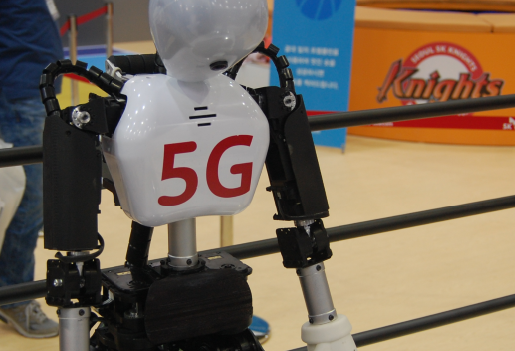
<Reference Photo: SK Telecom's 5G Exhibition>
Responding to changes in continuously evolving technologies such as M2M communication, broadband connectivity, cloud, and mobile is a key driving force enabling innovation in companies and industries. A significant number of respondents stated that they plan to consider major changes to their existing businesses to leverage 5G in the future.
Rima Qureshi, General Manager and CSO of Ericsson North America, said, “Emerging technologies like IoT are bringing significant changes across industries as they become part of our economy and lifestyles. 5G will further accelerate these changes and present new uses, additional revenue, and new business models for both enterprises and consumers. Based on 5G, companies will experience the agility to respond quickly and innovatively to customer needs, as well as customized connectivity tailored to specific requirements.”
1. Guaranteed high-performance network, automobile
The business value of 5G appears significant in enhancing automotive performance and security, as well as in communication between devices. Connected vehicles are currently the most 주목ed trend in the automotive industry. While many people are looking forward to autonomous driving systems, there is even more interest in how 5G will improve GPS performance along with real-time traffic conditions and map updates.
2. Cost reduction and safe facilities, utilities
Utility companies will adopt 5G primarily to improve productivity, deliver new products and services to customers more quickly, and increase operational efficiency. Protecting facilities and assets in remote or hazardous areas through sensor-based remote monitoring and maintenance is expected to be the greatest benefit of 5G.
3. Better experience, security, and public safety for citizens
Public safety agencies aim to ensure the safety of citizens at minimal cost through 5G and IoT technologies. 96% of respondents stated that they are already investing in new technologies. They intend to expand the capabilities of connected devices and utilize network slicing via 5G to provide secure emergency communications in the event of a disaster.
4. Highest productivity, high-tech manufacturing
Existing manufacturers are facing challenges due to the emergence of new competitors and business processes. Many companies are leveraging 5G technology to increase productivity and provide a better customer experience, while simultaneously delivering new products and services to customers quickly. Many companies expect to be able to enhance risk management and remote safety and security at the site through monitoring via 5G.
5. Securing Customer Loyalty, Internet/Digital Natives
Companies in online stores, social media, digital devices and collaboration tools, and travel and car-sharing services are adopting the latest technology to attract new customers with trendy services and increase brand loyalty. 96% of respondents plan to invest to reap the benefits of 5G, stating that providing a better customer experience is the greatest benefit.
6. Improvement of quality of life, healthcare
Most respondents in the healthcare sector viewed 5G as helping to provide new services and products that improve quality of life, and 94% of respondents stated that they would significantly modify their existing businesses to leverage the strengths of 5G networks. They also indicated that the business value of 5G is important not only in terms of performance but also in terms of security.
7. Improvement of productivity and customer satisfaction, financial services
The financial services industry expects to leverage 5G to enhance real-time mobile trading and High Frequency Trading (HFT). As security is a top priority, 84% of respondents showed greater interest in providing services with enhanced security through 5G.
8. A truly immersive experience, Media/Games
Respondents in the media/game sector placed the highest priority on entertaining audiences and generating interest. To this end, they intend to leverage 5G networks to provide new immersive experiences on mobile devices, such as Ultra HD 4K or virtual reality. A significant number of respondents cited live 360-view broadcasting and fixed wireless broadband as other benefits of 5G technology.
Comments
Related news
Korea Secures Advantage in 5G Mobile Communication Frequency Standard Designation
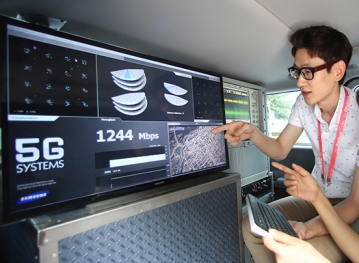
The Ministry of Science, ICT and Future Planning announced that Dr. Wi Gyu-jin from the Korea Information and Communications Technology Association (TTA) was elected as 'APG-19 Plenary Chair' and Kim Kyung-mi, Head of the Technical Standards Division at the National Radio Research Agency (RRA), was elected as 'WP2 (Mobile Communications Working Group) Chair' at the 1st APG-19 Plenary Meeting held in Chengdu, China from July 26-28. The WRC (World Radiocommunication Conference) is the highest decision-making conference in the radio spectrum field where government and private sector stakeholders from countries around the world convene every four years to decide major matters in the radio spectrum field, including international frequency allocation, global mobile communication frequency designation, and interference prevention standards between nations. APG-19 is the Asia-Pacific region's WRC preparatory meeting body established to coordinate and formulate common positions among Asia-Pacific countries to reflect the region's positions and interests to the maximum extent in WRC-19 (2019, Geneva, Switzerland).
2016.08.02by 신윤오 기자
SK Telecom Joins '5G Collaboration' of Major Global Companies to Discuss Standardization
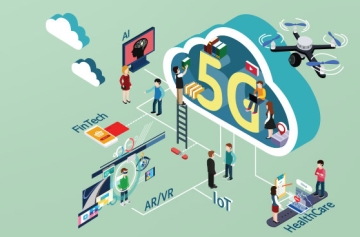
A consortium for joint cooperation on 5G standardization has been established with 15 major international telecom operators and manufacturers, while SK Telecom is the only domestic company participating, drawing attention to its leading role in future international 5G standardization cooperation processes. SK Telecom (CEO and President Jang Dong-hyun, www.sktelecom.com) announced that it will form a joint cooperation consortium for 5G standardization together with major global mobile carriers including AT&T, Deutsche Telekom, China Mobile, NTT DoCoMo, and Vodafone, as well as equipment manufacturers such as Ericsson, Nokia, Samsung, Huawei, Intel, Qualcomm, and LG.
2016.08.25by 신윤오 기자
Ericsson commercialized commercial 5G NR technology supporting Massive MIMO in 2017
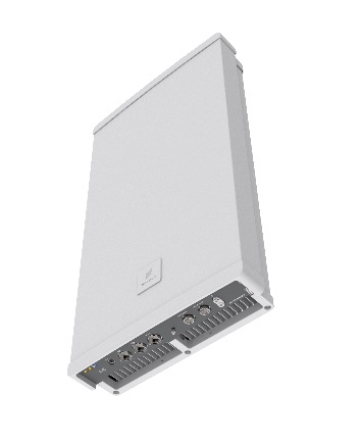
Ericsson is developing commercial 5G NR technology supporting Massive MIMO for the first time in the world, with commercialization scheduled for 2017. Together with the 5G plugin announced in June and the wireless system baseband 5216 currently being used in wireless testbeds, Ericsson presents all components of a 5G network for the first time. The AIR 6468 supports 5G technologies such as beamforming, Massive MIMO, and multi-user MIMO (MU-MIMO) based on these by connecting high-performance antennas with multiple operable ports. Through this technology, user experience can be improved, network capacity and coverage can be expanded, and interference can be further reduced. The New Radio introduced this time supports LTE technology, making it usable in current networks as well.
2016.09.06by 김수지 기자
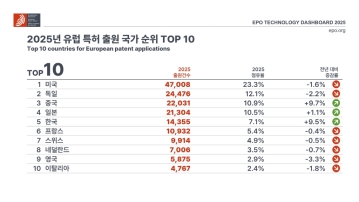
European Patent Applications Surpass 200,000 for the First Time… South Korea Maintains 5th Place, Led by Batteries and Telecommunications
According to the European Patent Office (EPO)'s 'Technology Dashboard 2025', European patent applications last year reached 201,974, surpassing 200,000 for the first time. Korean companies and inventors filed 14,355 applications, representing a 9.5% increase from the previous year and maintaining 5th place by country. Battery, digital communication, and semiconductor technologies led the growth, with Samsung ranking as the top EPO applicant for the second consecutive year and LG reaching 3rd place. The presence of major domestic cities such as Seoul, Suwon, and Yongin was also confirmed. It was also revealed that Korea's European patent strategy is expanding beyond individual technologies to span the entire industry.
2026.03.24by 명세환 기자

SK Telecom First Applies AI-Based Network Operations at Gwanghwamun K-Pop Concert
SK Telecom announced that it applied an AI-based network operation system for the first time at a large-scale K-pop concert held in the Gwanghwamun area of Seoul on March 21st, managing communication quality throughout the event. Mobile data usage during the three hours before and after the concert reached 12.15TB, approximately doubling compared to the same time slot the previous weekend. SK Telecom monitored traffic using the AI system 'A-One' in five-minute and 50-meter units to respond to potential overload situations, while also operating temporary communication facilities and on-site personnel in parallel. This case is interpreted as confirmation of the practical applicability of AI-based autonomous network operation in an environment where demand from dense events and foreign users increases simultaneously.
2026.03.23by 명세환 기자











