



Global IT spending increased by 2.9% in 2017, driven by software and IT services.
 Published2016.10.19 12:33
Explanation of the Next Generation Evolution of Digital Business at Gartner Symposium/IT Expo 2016
Gartner Inc., a global IT advisory firm, stated at the Gartner Symposium/ITxpo 2016 being held in Orlando that a new type of infrastructure must be built that not only reshapes businesses but also changes the way people live. Gartner refers to this as "civilization infrastructure," and the Chief Information Officer (CIO) is responsible for building such infrastructure.
Gartner projected that global IT spending in 2016 would reach $3.4 trillion, a 0.3% decrease from the previous year. Global IT spending is predicted to increase by 2.9% in 2017 to $3.5 trillion. Gartner forecasted that software and IT services would drive this growth. Global spending on software and IT services is projected to increase by 7.2% and 4.8%, respectively. Software and IT services will play a key role in the development of civilization infrastructure.

Peter Sondergaard, Senior Vice President and Global Head of Research at Gartner, stated at the Gartner Symposium/ITxpo, attended by nearly 8,000 global CIOs and IT leaders, that Civilized Infrastructure will be the greatest achievement in the IT sector over the next 10 years.
Peter Zondergaard, Senior Vice President, stated, “Civilization infrastructure will completely change the way people engage with society, the digital world, and the physical world through connected sensors and digital intelligence,” adding, “CIOs will participate in the process of building new digital platforms centered on intelligence technology. These platforms will build ecosystems, connect businesses, and break down boundaries between industries. Furthermore, they will transform society itself and change the way people live.”
Civilization infrastructure will establish itself as a new digital platform that transcends traditional IT infrastructure, and it will be based on new technologies unfamiliar to existing IT departments. "Through this new digital platform, you will participate in the evolution of corporate, government, and consumer ecosystems. This is because ecosystems represent the next stage of digital evolution. This is how to survive in economies of scale," said Peter Zondergaard, Senior Vice President.
The new digital platform consists of five areas: traditional IT systems, customer experience, the Internet of Things (IoT), intelligence, and ecosystem foundations. Senior Vice President Peter Zondergaard stated, “Each area represents a structure that is independent yet interconnected.” "Every field has a role to play, and no field is indispensable," he stated. Further details regarding the new digital platform are as follows.
We must make cloud, mobile, social, and data core competencies.
This system is a method for CIOs to execute tasks and scale as needed. It is based on existing resources. It involves modernizing existing high-performance IT systems, such as data centers and networks, and integrating them as part of a digital platform.
For example, leading companies have already reached the halfway point of their cloud transition. Cloud adoption, which began first in the sales and marketing sectors, now accounts for half of sales support capabilities. This transition will continue through 2020 and expand to sectors such as human resources, purchasing, and financial management.
Peter Zondergaard, Senior Vice President, said, “Enterprises must make cloud, mobile, social, and data their core competencies. At the same time, they must invest in resilience, business continuity, disaster recovery, insights, and other areas based on a hybrid approach.”
Research on how virtual reality (VR) and augmented reality (AR) are changing customer engagement methods
This is a new way for CIOs to connect and engage. Digital customer experience can be the only experience customers have. In other words, customer experience refers to the way companies communicate with customers in the digital world. Pioneers in the field are already studying how new experiences, such as virtual reality (VR) and augmented reality (AR), are changing the way customers engage.
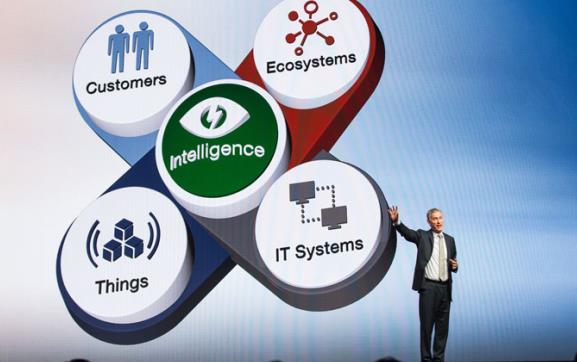
Peter Zondergaard, Senior Vice President, explained, “With the advent of the chatbot and Virtual Personal Assistant (VPA) era, the importance of using mobile apps and the web will significantly decrease.” He added, “Differentiated competitiveness comes from understanding customer intent by utilizing advanced algorithms and artificial intelligence (AI). In other words, it involves creating new experiences that solve problems customers were not even aware of.”
Innovation in the way you invest in the Internet of Things (IoT) and analytics
It refers to the way companies sense and respond in the physical world. It encompasses everything from the simple task of adding devices to the IoT domain to relatively complex areas such as processes, workflows, and data integration. In fact, it was found that two-thirds of companies need to reorganize their existing IT systems to adopt IoT.
Furthermore, as immediate decision-making becomes increasingly required, IoT is revolutionizing the way CIOs invest in analytics. Consequently, CIOs must formulate plans to shift their investments toward real-time analytics. By 2020, real-time analytics is projected to capture a 30% market share, outpacing traditional analytics by approximately three times.
Artificial intelligence (AI) is a new kind of intelligence based on machine learning
It refers to a method in which a system makes its own decisions through analysis and learning. CIOs start with traditional data management, data science, and data intelligence. Algorithms determine how things are executed. Artificial intelligence (AI) is a new kind of intelligence based on machine learning.
Peter Zondergaard, Senior Vice President, explained, “Companies are building systems that learn from experience and produce outcomes that designers had not yet specifically envisioned,” adding, “The result is a system that gains experience through collected data and applies it to the world.” He further added, “Machine learning and AI are driven by the speed of data, not the speed of code releases. Information is the very foundation of new code.”
Ecosystem Foundation, transforming into a networked digital ecosystem
This refers to the way companies interact as an organization in the digital world. Since the scope of an ecosystem extends beyond decision-making capabilities, CIOs must strengthen their ability to communicate with customers, partners, adjacent industries, and even competitors. Ecosystems transform traditional businesses with linear value supply chains into networked digital ecosystems.
Peter Zondergaard, Senior Vice President, stated, “Many industry models are expected to change alongside the digital ecosystem,” adding that “the trend is shifting from simple, intermediary-led relationships to decentralized partnerships managed by shared distributed ledgers such as blockchain.” He further predicted, “Building a robust ecosystem will contribute to an effective transition. In other words, the ecosystem is the future of digital.”
Comments
Related news
Mobile Security Industry Growth Outlook: Will Adoption of Cloud-Based EMM Solutions Increase?
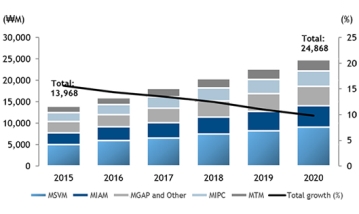
According to the "Domestic Enterprise Mobile Security Software Outlook Report 2016-2020" recently published by Korea IDC (CEO Hong Yu-suk), the domestic enterprise mobile security software market last year was estimated at approximately 14 billion won. Furthermore, this market is projected to grow at an average annual rate of 12.2% over the next five years, forming a market scale of 25 billion won by 2020. The report predicts that as smart work environments become more commonplace, enterprises will review various mobile security solutions to support company-wide mobile operations based on stronger security policies. With smart devices extending beyond PCs, smartphones, and tablets to include recently emerging wearable devices such as smartwatches, the range of smart device control has expanded, and the areas requiring management are growing accordingly. This situation calls for enterprise-level device management. Consequently, interest in the adoption and implementation of cloud-based EMM solutions is expected to increase progressively.
2016.06.14by 김수지 기자

Negative impact on overall IT spending due to weakening demand for smartphones, tablets, and PCs
According to this report (Worldwide Semiannual IT Spending Guide: Vertical and Company Size), investment in the third platform (The 3rd Platform: an IT platform based on cloud, mobility, big data, and social) is expected to continue as part of digital transformation efforts in major industries such as financial services and manufacturing. In the telecommunications industry, while investment is expected to gradually improve compared to the downturn in recent years, the extent of improvement is anticipated to be relatively modest. During the forecast period, IT spending in key industries—banking, manufacturing, and telecommunications—is projected to account for one-third of total IT revenues.
2016.09.01by 김수지 기자
Wafer shipments projected to record moderate annual growth through 2018
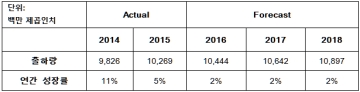
The Semiconductor Equipment and Materials International (SEMI) recently announced its annual silicon wafer shipment forecast for the semiconductor industry. The report contains forecasts for silicon demand between 2016 and 2018. According to SEMI's projections, the total area shipments of polished and epitaxial silicon wafers are forecast at 10.444 billion square inches in 2016, 10.642 billion square inches in 2017, and 10.897 billion square inches in 2018 (see table). Total wafer shipments this year are expected to exceed the record levels achieved in 2015, and this elevated level of shipments is projected to continue in 2017 and 2018 as well.
2016.10.14by 신윤오 기자
.jpg)
SalePoint Signs Multi-Year Partnership Agreement with AWS… Promoting Identity Security that Integrates Even AI Agents
Sailpoint has entered into a multi-year strategic partnership agreement with AWS and is moving forward with establishing an integrated governance system that manages both human and non-human identities together. The plan is to consistently manage access permissions in an environment where AI agents are increasing as work execution entities, while applying the principle of least privilege and automated policy enforcement. The two companies plan to jointly expand capabilities to manage the identities of various entities, including AI agents, within a single layer in the AWS environment. This collaboration is interpreted as a move to design security and governance together in corporate environments where AI adoption is expanding.
2026.03.26by 배종인 기자
.png)
Databricks Unveils Open AI Security Monitoring 'Lakewatch'
Databricks entered the security market on March 24 by unveiling LakeWatch, an open-source agentic SIEM. The core functionality of this product is to integrate and analyze security, IT, and business data in a single environment to support AI-based threat detection and investigation. The company explained that it reduces the limitations of existing security operations centers, which have had to forgo some data due to high cost structures, and enables large-scale data analysis and automation based on open formats and ecosystems. LakeWatch is currently offered as a private preview, with Adobe and Dropbox mentioned as early customers. Databricks also announced an expanded partnership with Anthropic as well as the acquisition of Antimatter and SiftD.ai.
2026.03.26by 배종인 기자











