



First service utilizing LoRa IoT dedicated network launched
 Published2016.11.07 15:55
SK Telecom has launched its first service utilizing the LoRa network, an IoT-dedicated network that is the only one in Korea to be built and operated nationwide.
SK Telecom has launched the LoRa-based location tracking terminal 'Gper' through Spacosa, a startup specializing in positioning services, and announced that it has almost sold out the first production run of 2,000 units and plans to move on to second production due to the enthusiastic response from B2B markets such as daycare centers and individual consumers.
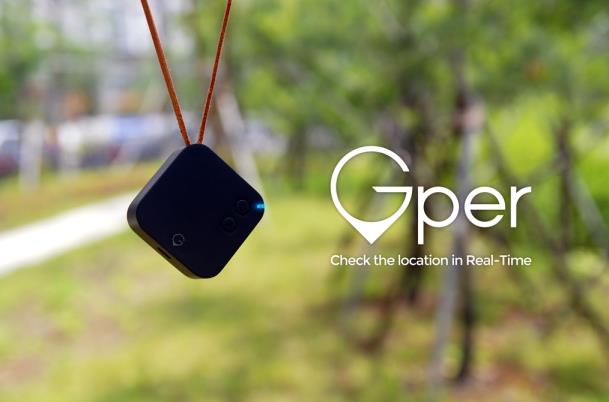
The zipper is a square design measuring 5cm in width and length, 1.6cm in thickness, and 48g in weight. If you install the dedicated app 'Fami' on your smartphone and register the zipper, you can track its location in real time. The zipper can be used as a safety service for children or elderly people with dementia, and if you are in danger, you can press the SOS button to ask for help from a guardian.
When attached to a school bus, the daycare center can check the information of all vehicles in operation in real time, and the guardians of children can check the location and arrival time of the vehicle in real time to protect the children more safely. In addition, it can be used not only for daily necessities such as bicycles, but also for the logistics industry such as container vehicles. A test terminal is being provided to a domestic logistics company for trial operation, and SK Telecom and Spacosa plan to expand the service in the future.
SK Telecom’s partner support program played a major role in the development of Zipper. SK Telecom’s support, including free support of LoRa modules for terminal development, preliminary testing in an open test bed, and support for connection with the IoT platform ThingPlug, led to the launch of the first service of the LoRa network.
Free module support for development, test space support, etc.
This process has also been very helpful in upgrading SK Telecom’s support process. As terminal authentication has been carried out up to the fifth stage, authentication items have been refined, and the know-how gained from the pilot number assignment and field test process is expected to contribute to making the development of LoRa-based services easier in the future.
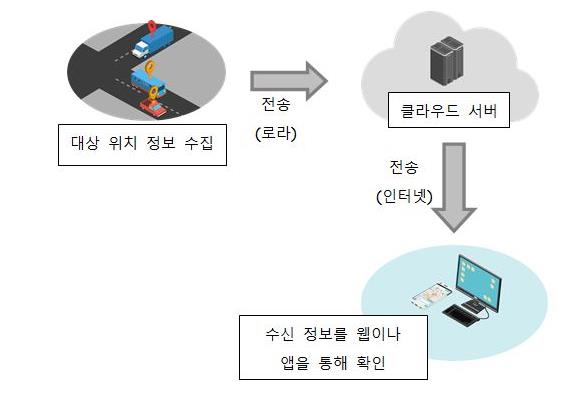
▲ Service concept diagram
The development of Zipper also saw the participation of ordinary people through social crowdfunding. Spacosa posted its service development plan on the crowdfunding site 'Wadiz' in the early stages of service development and succeeded in receiving funding from about 200 ordinary people.
The zipper sold through open markets such as 11st is priced at 49,800 won, and the monthly fee is 5,500 won. Due to the low power consumption of Lora, it can be used for about 5 days with a 90-minute charge (when transmitting location every 10 minutes). SK Telecom plans to continue launching various services, including tracking services such as Safe Watch and monitoring services such as portable wireless gas detectors, following the launch of this zipper, and plans to commercialize around 30 LoRa-based services within the year.
SK Telecom IoT Business Division Head Cha In-hyeok said, “Affordable and convenient lifestyle services based on a dedicated IoT network have begun in earnest,” and “We will continue to expand the IoT industry ecosystem utilizing LoRa through cooperation with small and medium-sized partners.”
Comments
Related news
LTE-M or LoRa? The War to Build 'Commercial Networks' for the Internet of Things Within the Year
As IoT dedicated networks specialized for Internet of small Things (IoST) are being rapidly built, related IoT services are expanding accordingly. Internet of small Things (IoST) is a transmission technology characterized by low cost, low power consumption, and low capacity, capable of operating on batteries alone without requiring small data transfers and constant power supply. This is because not all things exchanging data through the internet necessarily require expensive ultra-high-speed networks. Accordingly, major domestic telecommunications providers are expanding their IoST network construction and successively launching IoT services based on these networks. IoT dedicated networks specialized for IoST initially highlighted LTE-M technology utilizing existing networks, but low-power long-distance communication technology (LPWA) for the IoT field is also gaining attention. LPWA technologies such as LoRa, NB-IoT, and SigFox are competing in this space.
2016.06.21by 신윤오 기자
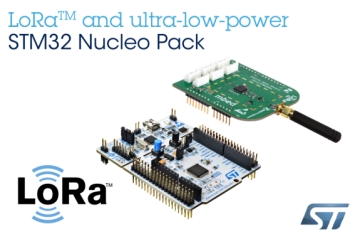
ST Launches Low-Cost Development Kit for LoRa WLPWAN-Based IoT Prototype Development
ST Microelectronics (hereinafter ST) has launched P-NUCLEO-LRWAN1, a low-cost development kit that enables developers to create Internet of Things prototypes based on LoRa™ WLPWAN (Wireless Low-Power Wide Area Network) connectivity by leveraging the STM32 microcontroller ecosystem. The P-NUCLEO-LRWAN1 kit is priced at approximately 40 dollars and is equipped with an ultra-low-power STM32L073 Nucleo (NUCLEO-L073RZ) board and an RF expansion board based on Semtech's LoRa transceiver SX1272 (I-NUCLEO-SX1272D).
2016.09.22by 김수지 기자

SK Telecom Shares LoRa Commercialization and Service Development Know-how with Global Companies
SK Telecom will host the 6th LoRa Alliance Global Conference for the first time in Asia at the Sheraton Seoul Palace Gangnam Hotel over three days (October 11-13). Under the theme "Enabling Things To Have A Global Voice (Things Connected Globally through LoRa)," the conference will feature main sessions showcasing SK Telecom's LoRa network commercialization status across the nation as of late June, as well as the development progress of products and services. Korea's advanced IoT technology capabilities will be presented to member companies worldwide.
2016.10.12by 신윤오 기자
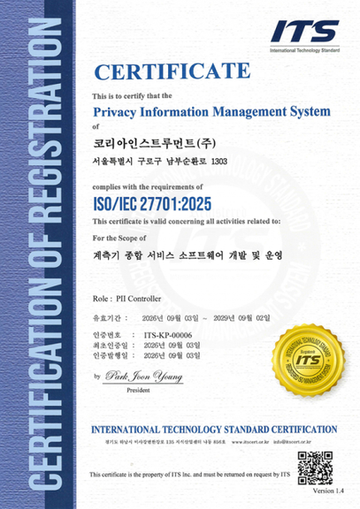
Korea Instrument, KOLAS Accredited Calibration Agency First to Simultaneously Acquire ISO/IEC 27,001·27,701
Korea Instrument has become the first among KOLAS accredited calibration agencies to simultaneously acquire ISO/IEC 27,001 and ISO/IEC 27,701 certifications. Through its proprietary platforms CWIZ Enterprise and CWIZ Partners, the company has embedded information security and personal data protection requirements across all business processes including customer information, equipment data, and calibration reports, with plans to continuously advance its management system through regular audits and security inspections.
2026.10.12by 배종인 기자
TeamViewer One, IT Incident Automation Workflow and Resolution Center Enhanced
TeamViewer has added IT incident automation capabilities and an advanced Resolution Center to its integrated digital workplace management platform 'TeamViewer ONE'. Recurrent service disruptions, configuration errors, and capacity shortages are automatically handled according to preset policies, and device status verification through script deployment can be managed in a unified interface, significantly reducing repetitive tasks for IT teams.
2026.10.12by 배종인 기자











