


Smart nanorobots remove cancerous tumors without surgery.
 Published2016.11.08 10:04
Tracking and treating cancer using ultrasound remote control.
The Ministry of Science, ICT and Future Planning (Minister Choi Yang-hee) and the Ministry of Health and Welfare (Minister Chung Jin-yeop) announced that “they have developed the world’s first ultrasound dynamic therapy technology that can treat tumors without surgical intervention using a smart nanorobot remotely controlled by ultrasound.”
Smart nanorobots are nano-sized gold/titanium-based robots that, when injected into the body, track tumors and generate excessive amounts of reactive oxygen species under remote ultrasound control.
Ultrasound dynamic therapy technology is a technology that uses an ultrasound-sensitive agent that reacts to ultrasound to generate reactive oxygen species, thereby treating tumors located in internal organs without surgical intervention.
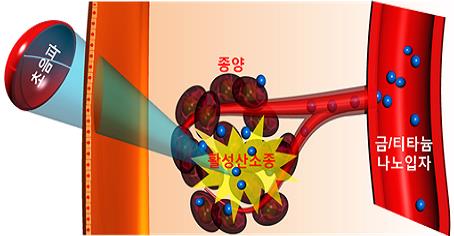
While various studies are being conducted to reduce the mortality rate from cancer, a new concept nano-medicine called a smart nanorobot has been developed that can treat tumors with almost no side effects by generating reactive oxygen species through remote ultrasound control, opening a new horizon in cancer treatment.
As molecules containing highly chemically reactive oxygen species, excessive amounts of reactive oxygen species kill cancer cells through oxidative stress.
In the first step, the research team synthesized a smart nanorobot based on biocompatible gold/titanium nanoparticles. This nanorobot is coated with carboxymethyl dextran, which has excellent biocompatibility, and has the ability to find tumor sites, and it was confirmed that it itself does not show toxicity to cells.
In the second stage, the research team successfully used a smart nanorobot, remotely controlled by ultrasound stimulation, to release excessive amounts of reactive oxygen species, which instantly kill cancer cells. Furthermore, they elucidated the mechanism by which the nanorobot releases these excess reactive oxygen species. The nanorobot, composed of gold/titanium nanoparticles, simultaneously acts as an antenna to receive ultrasound stimulation and generate excess reactive oxygen species, successfully establishing a remotely controlled system in response to ultrasound stimulation.
In the third phase, a therapeutic efficacy evaluation experiment was conducted in tumor-bearing animals for clinical application. The injected nanorobots found the tumor site and selectively accumulated there. The smart nanorobots were then remotely controlled by ultrasound to generate excessive amounts of reactive oxygen species that can kill cancer cells, successfully enhancing tumor treatment efficacy without surgical intervention.
Finally, it was confirmed that animals injected with nanorobots did not show any damage or toxicity to major organs in the body, such as the liver, lungs, spleen, kidneys, or heart.
Professor Park Jae-hyung explained the significance of the study, saying, "This research presents a new paradigm in tumor treatment by remotely controlling nanorobots with harmless ultrasound to treat cancer without the need for surgery or anticancer drugs. This technology is expected to overcome the limitations of existing tumor treatments and significantly contribute to reducing cancer mortality. Furthermore, if animal testing is successful and follow-up studies on the toxicity of nanorobots in the body are conducted, it could soon be applied to clinical trials."
Comments
Related news

Korea Instrument, KOLAS Accredited Calibration Agency First to Simultaneously Acquire ISO/IEC 27,001·27,701
Korea Instrument has become the first among KOLAS accredited calibration agencies to simultaneously acquire ISO/IEC 27,001 and ISO/IEC 27,701 certifications. Through its proprietary platforms CWIZ Enterprise and CWIZ Partners, the company has embedded information security and personal data protection requirements across all business processes including customer information, equipment data, and calibration reports, with plans to continuously advance its management system through regular audits and security inspections.
2026.10.12by 배종인 기자

TeamViewer One, IT Incident Automation Workflow and Resolution Center Enhanced
TeamViewer has added IT incident automation capabilities and an advanced Resolution Center to its integrated digital workplace management platform 'TeamViewer ONE'. Recurrent service disruptions, configuration errors, and capacity shortages are automatically handled according to preset policies, and device status verification through script deployment can be managed in a unified interface, significantly reducing repetitive tasks for IT teams.
2026.10.12by 배종인 기자
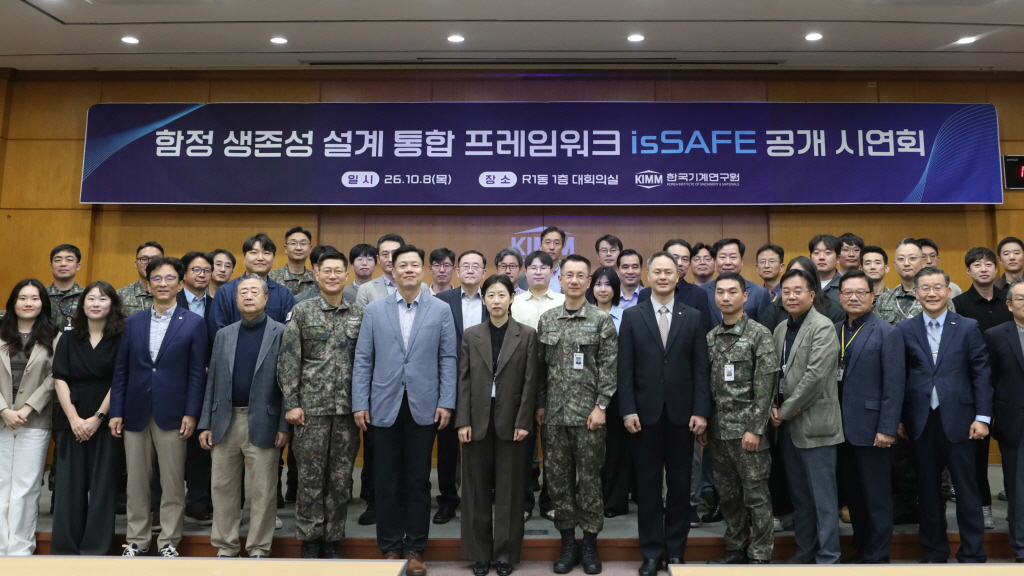
KAERI Develops Domestically-Produced SW 'isSAFE' for Integrated Warship Survivability Analysis
The Korea Institute of Machinery and Materials has developed domestically-produced software 'isSAFE' that comprehensively analyzes warship survivability. This design framework integrates the entire process—from warship modeling to hit scenario generation, vulnerability analysis, and results analysis—into a single platform, establishing an independent technology foundation in the defense technology sector that had previously relied on foreign software.
2026.10.08by 배종인 기자
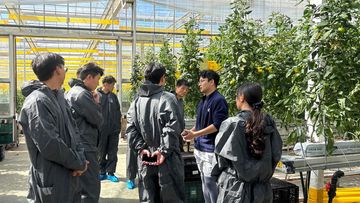
ioCrops Shares AI Smart Farm Operations Case Study
About 20 cultivators from the Agricultural Cooperative's Smart Agriculture Support Centers visited ioCrops' smart farm in Jincheon, North Chungcheong Province. They directly confirmed how data collected through substrate weight sensors, drainage weight sensors, and soil moisture sensors is applied to tomato cultivation, as well as the greenhouse pest control process using the AI-based autonomous spraying robot 'HERMAI'. By sharing on-site operational case studies combining data and automation technology, the adoption of smart farms in agricultural fields is being promoted.
2026.10.07by 배종인 기자

Rockwell, "90% Digital Transformation Essential in Life Sciences Manufacturing"
According to the digital transformation report for the life sciences manufacturing sector released by Rockwell Automation, 90% of responding companies recognized digital transformation as a business-critical element. Primary investment technologies include AI and machine learning (46%), process automation (44%), and cybersecurity (39%), with 64% of companies planning to expand AI utilization within the next year. However, only 32% of companies actually utilize more than half of the collected data, indicating an urgent need to strengthen data utilization capabilities.
2026.10.07by 배종인 기자











