



In case of fire, smartphone is immediately notified via the IoT 'LoRa' network
 Published2016.11.17 17:13
Honeywell LoRa Sensor Interfacing for Temperature/Hyper/Occupancy/Plumbing/Fire Detectors
As global companies adopt dedicated IoT networks (LoRa) to improve efficiency and reduce costs, the number of IoT connected devices is expected to expand dramatically.
SK Telecom announced that it is developing a product integrated with a hybrid IoT network in collaboration with Honeywell Korea, a leader in the automatic control sector, including its cutting-edge sensor business division.

On the 17th, the two companies signed a Memorandum of Understanding (MoU) for the interoperability of Honeywell sensors with the IoT dedicated network (LoRa) and plan to launch various sensors supplied to office and residential buildings using LoRa in the first half of 2017. In the future, they plan to apply LTE-M to sensors and control devices supplied to manufacturing industries, such as factories.
This is because the advantages of hybrid IoT can be leveraged by utilizing a LoRa network, which is characterized by low speed and low capacity, where periodic monitoring is required, and an LTE-M communication network where real-time control is required.
Through this agreement, Honeywell plans to apply wireless IoT sensors to HVAC-related temperature and humidity sensors, occupancy sensors, pipe sensors, and fire detectors scheduled for installation in new buildings, and to replace wired sensors in existing buildings with wireless ones.
Fire detectors are sensors that detect temperature or smoke, and by enabling immediate notification to family members or the fire department in the event of a fire, it is expected that losses will be significantly reduced through early fire suppression. In particular, with the amendment to the Act on Installation, Maintenance and Safety Management of Firefighting Facilities taking effect in February 2017, fire detectors must be installed in all homes. As the penetration rate for existing general homes remains in the 20% range, significant new demand is expected in the future.
Plan to apply LTE-M to sensors and control devices supplied to manufacturing industries, such as factories, in the future
If the sensor is equipped with a LoRa module and installed wirelessly, installation is easy, and it is expected that existing construction and labor costs will be significantly reduced. Additionally, there is the advantage of preventing damage to the building caused by wired construction when replacing sensors installed in existing buildings.
Honeywell expects that by introducing IoT technology to provide differentiated products, it will be able to strengthen its sustainable market dominance and enter the IoT-based smart home market.
Both companies also plan to expand new businesses in cooperation with construction companies and building management companies by utilizing various non-identifiable big data collected through sensors, and plan to pursue collaboration with Honeywell Asia and global headquarters based on success stories in Korea.
Kwon Song, Head of the IoT Solution Division at SK Telecom, said, “The meeting of SK Telecom’s IoT technology with a leading global company in the automatic control field has created an opportunity to dramatically expand the scope of IoT,” adding, “We will expand cooperation with Honeywell’s global headquarters in the future to strengthen the global competitiveness of new IoT industries based on hybrid IoT networks.”
Comments
Related news
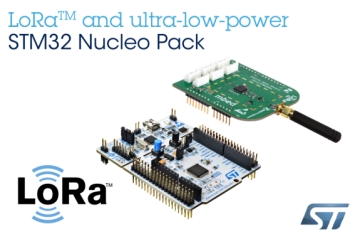
ST Launches Low-Cost Development Kit for LoRa WLPWAN-Based IoT Prototype Development
ST Microelectronics (hereinafter ST) has launched P-NUCLEO-LRWAN1, a low-cost development kit that enables developers to create Internet of Things prototypes based on LoRa™ WLPWAN (Wireless Low-Power Wide Area Network) connectivity by leveraging the STM32 microcontroller ecosystem. The P-NUCLEO-LRWAN1 kit is priced at approximately 40 dollars and is equipped with an ultra-low-power STM32L073 Nucleo (NUCLEO-L073RZ) board and an RF expansion board based on Semtech's LoRa transceiver SX1272 (I-NUCLEO-SX1272D).
2016.09.22by 김수지 기자

First service utilizing LoRa IoT dedicated network launched
SK Telecom has unveiled services utilizing its LoRa network, a dedicated IoT network that is uniquely constructed and operated as a nationwide network in Korea. SK Telecom has launched 'Gper,' a LoRa-based location tracking terminal, through Sparco, a positioning service startup. The company announced that the product has received strong response from both B2B markets such as daycare centers and individual consumers, nearly exhausting the first production batch of 2,000 units, and plans to move forward with second-round production.
2016.11.07by 김수지 기자
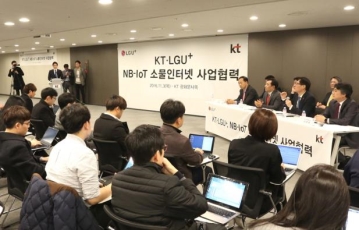
[Reporter's Notebook] What is 'Lora'? The war of nerves among the three telecommunications companies over the IoT communication network is accelerating
It appears that competition among telecommunications companies is heating up again over dedicated Internet of Things (IoT) network methods. KT and LG Uplus notified on the 3rd that they would jointly hold a press briefing regarding IoT strategy without advance notice. Although telecommunications companies have individually held IoT-related briefings in the past, it is uncommon for them to openly emphasize joint collaboration like this.
2016.11.07by 신윤오 기자
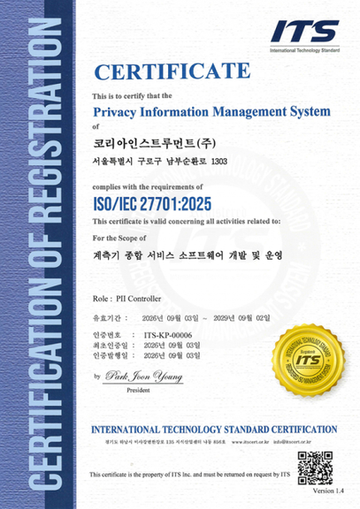
Korea Instrument, KOLAS Accredited Calibration Agency First to Simultaneously Acquire ISO/IEC 27,001·27,701
Korea Instrument has become the first among KOLAS accredited calibration agencies to simultaneously acquire ISO/IEC 27,001 and ISO/IEC 27,701 certifications. Through its proprietary platforms CWIZ Enterprise and CWIZ Partners, the company has embedded information security and personal data protection requirements across all business processes including customer information, equipment data, and calibration reports, with plans to continuously advance its management system through regular audits and security inspections.
2026.10.12by 배종인 기자

TeamViewer One, IT Incident Automation Workflow and Resolution Center Enhanced
TeamViewer has added IT incident automation capabilities and an advanced Resolution Center to its integrated digital workplace management platform 'TeamViewer ONE'. Recurrent service disruptions, configuration errors, and capacity shortages are automatically handled according to preset policies, and device status verification through script deployment can be managed in a unified interface, significantly reducing repetitive tasks for IT teams.
2026.10.12by 배종인 기자











