



[2017 Outlook] Leading the Way as a Smart Company by Leading IoT and Artificial Intelligence
 Published2016.12.05 11:58
IDC Korea (CEO Hong Yu-sook) introduced the major issues and trends expected in the domestic IT market in 2017, and 'IDC Korea's Top 10 Predictions for 2017'.
“While the traditional IT market is struggling to grow amidst the ongoing low-growth trend in the IT market, the market for third platform-based technologies (cloud, mobility, big data analysis, social, etc.) that are driving digital transformation is leading IT investment,” said Jang Soon-yeol, managing director in charge of the research group at IDC Korea. He added that digital transformation (DX) is having a huge impact on the macroeconomy through the digital economy (DX Economy).
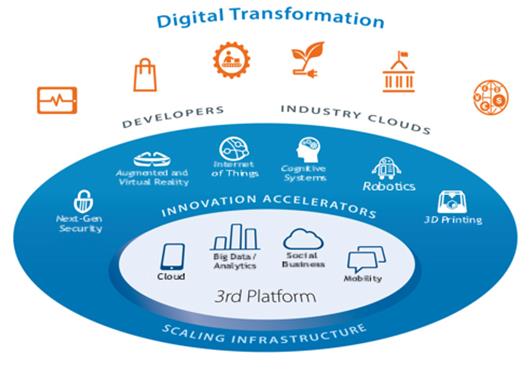
▲ Korea IDC emphasized the trinity of interdependence, the third platform, and IT leadership.
Next, Managing Director Jang emphasized, “In order to succeed in the DX economy, interdependence, the third platform, and IT leadership must be integrated, and above all, a customer-centric business strategy is very important.” He explained that in order to become a smart company, a competitive edge must be secured through digital mashups led by IoT, cognitive/AI, and AR/VR.
1. The IT market is also stuck in a low-growth trend.
The "New Normal" of the ICT industry: The "New Normal" of persistent low growth in the economic sector is now also affecting the IT market. With the domestic IT market projected to experience five consecutive years of negative growth through 2017, the IT market appears to have entered a "New Normal" of persistent low growth. With the smartphone market showing no signs of recovery, further growth in the tablet market is unlikely, and most hardware infrastructure markets, excluding storage, are facing ongoing difficulties. However, this low growth trend is also acting as a catalyst for accelerating the transition to a new IT environment.
2. Digital transformation is a key foundation of Industry 4.0.
Macroeconomic Change (Dawn of the DX Economy): Beyond implementing and attempting various digital transformation projects, companies are recognizing that digital transformation is essential for their survival and growth, and this awareness is expected to grow further. Companies will leverage various digital technologies to operate in a more agile and flexible "digitally native" manner. As this process expands to a macro scale, digital transformation will become a key foundation of Industry 4.0, driving change not only in the IT sector but also in the global economy.
3. Securing competitiveness in platform-based communities and ecosystems
Platform Economy: The Ecosystem Battle for Scale: Efforts to build dominant ecosystems through platforms across various sectors will mean securing competitiveness in new markets driven by digital transformation. Therefore, securing competitiveness in platform-based communities and ecosystems will likely lead to market dominance, and competition is expected to intensify. The platform market will require a new approach to market boundaries and the logic of value creation.
4. Expected generalization of hybrid cloud or multi-cloud environments
Cloud 2.0 (Enterprises are in the cloud); It appears we've already moved beyond the stage where the cloud was the primary choice when considering infrastructure architecture. Cloud is now seen as the only viable IT infrastructure model, and hybrid cloud or multi-cloud environments are expected to become increasingly common. Enterprise cloud capabilities will mean a further expansion of business needs, including big data and analytics.
5. Essential areas in the fields of advanced machine learning, cognitive and artificial intelligence
Cognitive/AI, Everywhere Featuring Advanced Machine Learning: Rather than establishing a standalone market, the cognitive/AI field is becoming a focal point for new value creation, intertwined with all other fields and technologies. In particular, cognitive and artificial intelligence, along with advanced machine learning, will become essential areas for projects and business areas related to digital transformation and the Internet of Things (IoT). This is expected to lead to the creation of new products and even new industries.
6. Big data technology is maturing and evolving.
From Data to Information Monetization, Capturing the Potential of Big Data: How data is used determines its value. As big data technologies mature and evolve, companies will strive to integrate these new technologies with their existing traditional analytics platforms, thereby providing new information services both internally and externally. These efforts will inevitably be driven by revenue, and business models that address questions, rather than simply processing and disseminating data or information, will likely emerge.
7. Building infrastructure and platforms for IoT, based on a realistic business foundation.
The Internet of Things (IoT) ecosystem, outlines leadership (IoT, Ecosystems begin to determine winners and losers): The complexity of the IoT market, where ecosystem building and partnerships are crucial, is expected to gradually take shape. The implementation of models that pursue profit within the ecosystem is expected to increase, rather than experimental approaches to business. Infrastructure and platform development for IoT will increasingly be based on realistic business models, and companies providing IoT-enabled devices and sensors will need to decide on the infrastructure and platforms they will work with. With the industry-specific IoT market expected to become more active, interest in the API sector for linking with business applications is expected to increase.
8. The development of VR/AR technology is leading to the realization of an immersive user experience.
NextGen UI (interworking with Everything): With the rise of digital usage, the importance of the "user interface" (UI) that connects the digital world to users is becoming more crucial than ever. Recent advancements in VR/AR technology are expected to usher in a full-blown immersive user experience. AR/AR technology will be integrated with various devices to enhance not only personal gaming and movie content, but also social networking, corporate work efficiency, information processing capabilities, and even marketing. In VR, the race for standards has begun, and voice recognition-based AI products are already readily available.
9. Cybersecurity threats and attacks targeting businesses are increasing.
New Threats Need New Defense: With the rise of mobile users, the proliferation of diverse devices and explosive growth in app usage, the application of IoT across various industries, and the active use of the cloud, the current IT environment is more vulnerable to new security threats than in the past. Cybersecurity threats are fundamentally driven by financial gain, utilizing diverse methods such as more sophisticated Advanced Threat Protection (ATP) and ransomware. As techniques become more sophisticated, attacks targeting businesses will increase. To defend against this, a security ecosystem in which various organizations collaborate and a preemptive response in the form of a cyber kill chain will be highlighted, going beyond simple perimeter defense and tracking-focused security, leveraging collective intelligence, cognitive computing, AI, and machine learning.
10. To provide better experiences and satisfaction to consumers.
Consumers become the center of IT strategies: One of the most important goals of a company's digital transformation strategy is to provide consumers with better experiences and satisfaction. Consumers are becoming accustomed to greater convenience, and ultimately, enhancing consumer satisfaction lies in leveraging appropriate digital technologies to deliver a better experience. The value of devices should not simply be about providing enhanced functionality, but rather about ensuring the scalability of the consumer experience. This will require proactive use of AR/VR, a deep understanding of usage patterns, and an ecosystem-wide approach that extends all the way to payment, the final stage of the consumption process.
Comments
Related news
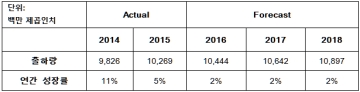
Wafer shipments projected to record moderate annual growth through 2018
The Semiconductor Equipment and Materials International (SEMI) recently announced its annual silicon wafer shipment forecast for the semiconductor industry. The report contains forecasts for silicon demand between 2016 and 2018. According to SEMI's projections, the total area shipments of polished and epitaxial silicon wafers are forecast at 10.444 billion square inches in 2016, 10.642 billion square inches in 2017, and 10.897 billion square inches in 2018 (see table). Total wafer shipments this year are expected to exceed the record levels achieved in 2015, and this elevated level of shipments is projected to continue in 2017 and 2018 as well.
2016.10.14by 신윤오 기자

What are the top 10 predictions to watch out for since 2017?
Gartner Inc., a leading global IT advisory firm, has announced its top 10 strategic predictions to watch beyond 2017. Gartner's key predictions for 2017 evaluate the fundamental impact of secondary effects resulting from three ongoing digital revolutions: ▲experience and engagement ▲business innovation ▲and digital capability enhancement. Daryl Plummer, Executive Vice President and Gartner Fellow and Chief Research Officer, stated, "Gartner's strategic technology predictions continue to provide provocative insights into emerging possibilities in the most critical areas of technology evolution. The concept of digital disruption, which has transformed into a wave of constant change that redefines markets and entire industries, is key to future performance." He added, "Last year, Gartner forecasted that digital change would arrive rapidly. This year, acceleration will continue, and secondary effects that broadly impact people and technology may occur."
2016.10.20by 김수지 기자
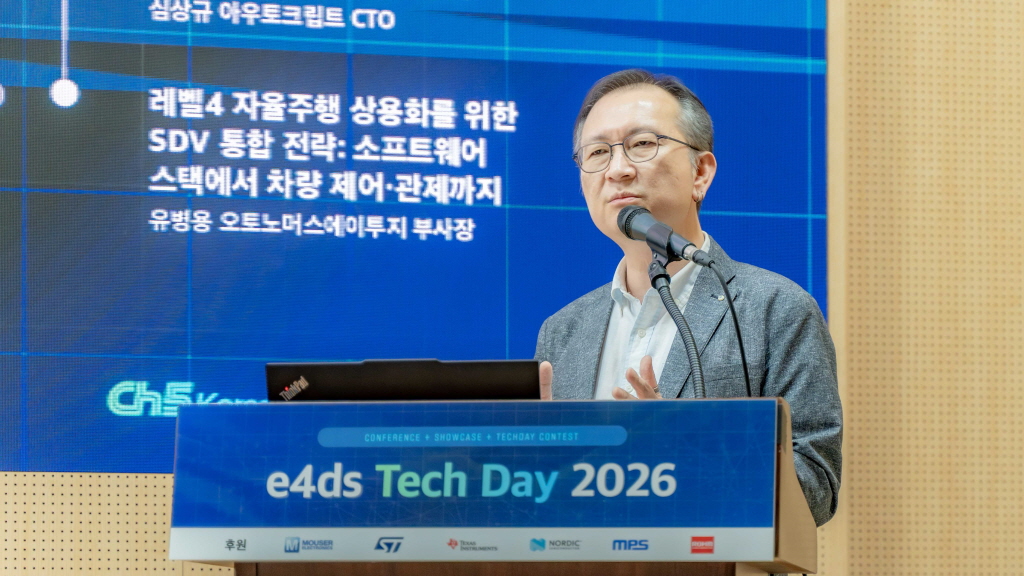
[e4ds Tech Day 2026 ⑨] Sim Sang-gyu, Autocrypt CTO: "In the Physical AI Era, Automotive Security Must Extend Beyond the Vehicle"
At e4ds Tech Day 2026, Sim Sang-gyu, CTO of Autocrypt, explained automotive cybersecurity strategies in the era of Physical AI and SDV (Software-Defined Vehicle). Automobiles are evolving as part of an ecosystem connected to AI, cloud, chargers, IoT, and robots, and he emphasized that the scope of security must expand beyond the vehicle interior to the entire connected environment. In particular, AI model tampering, adversarial attacks, OTA updates, and EV charger hacking were identified as major threats. He explained that response measures require zero trust, AI model integrity protection, intrusion detection, Security by Design and Default, and full lifecycle security management, and that proactive security system establishment beyond regulatory compliance is critical for securing future mobility competitiveness.
2026.10.12by 배종인 기자

NVIDIA to Invest $1 Billion in U.S. Science Over Next Five Years
NVIDIA has announced plans to invest $1 billion over the next five years to strengthen U.S. scientific and technological competitiveness. The company will enhance cutting-edge artificial intelligence research and development capabilities in key areas including quantum computing, healthcare, and energy security, while expanding support for higher education research institutions and cloud service providers. NVIDIA is participating as a major industry partner in the White House Office of Science and Technology Policy's Genesis Mission, and is promoting supercomputer construction in collaboration with national laboratories including Argonne and Los Alamos.
2026.10.12by 배종인 기자
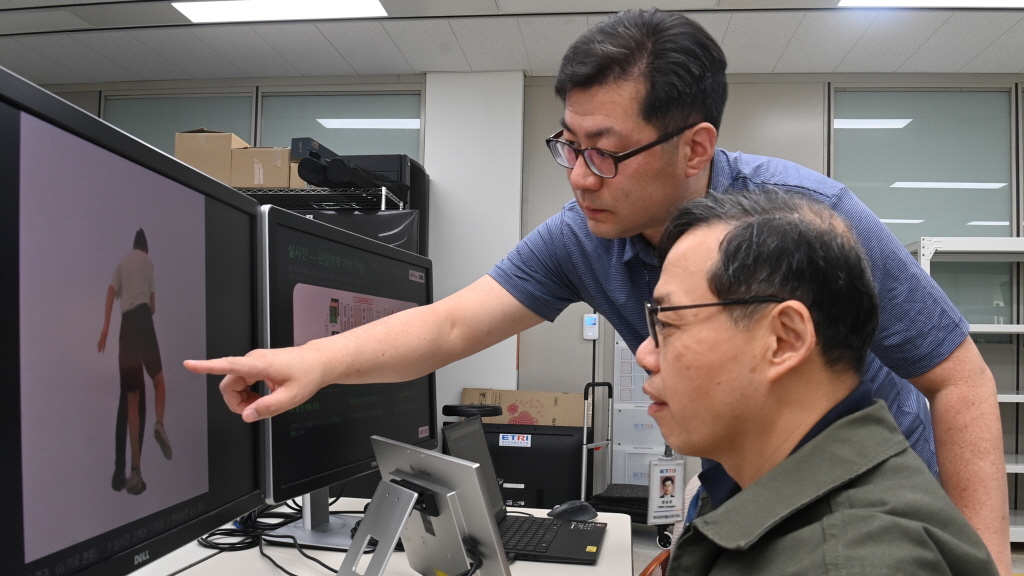
ETRI Unveils 3 Next-Generation Media Technologies Including AI-Dedicated Video Compression
ETRI has unveiled three next-generation media technologies optimized for AI. These include AI-based video encoding (VCM), 3D human generation based on sparse cameras, and generative AI-based pre-visualization technology. In environments where AI directly processes video such as autonomous vehicles, robots, and drones, these technologies enable efficient compression and transmission of large-scale data, and can be applied across various industrial sectors including smart cities, video security, and sports broadcasting.
2026.10.12by 배종인 기자











