


Maxim's integrated technology answers IoT design implementation questions.
 Published2017.01.12 12:07
Choi Heon-jeong, President / Maxim Integrated Korea
Maxim Integrated also provides robust security and data integrity.
A wearable reference board that accelerates prototype development is also receiving positive responses.
① Integrated ② Comprehensive ③ Fusion ④ Integrated ⑤ Inclusive
Whenever I encountered the semiconductor company Maxim Integrated, the word "integrated" always caught my eye. I wondered if there was another company that incorporated its expertise into its name.
Maxim Integrated, with its "Maxim" company name alone, was renowned for its ability to manufacture superior power components and integrate peripherals into them to deliver even greater power. Now, with the company emphasizing analog integration in its name, "Maxim" and "Integrated" have become synonymous with each other in the semiconductor industry.
However, this achievement doesn't seem to be solely due to the company's efforts. Today, customers in the analog semiconductor industry are demanding sophisticated analog integration from solution partners, not just from companies that simply supply components. Technological advancements are leading to increased and smaller electronic devices, but the space available for component placement within them is limited. Furthermore, because component count and reliability are inversely proportional, manufacturers are striving to reduce component count. This is why Maxim's "integration" technology, which allows for more functionality in smaller spaces, is highly regarded.
That made me even more curious. What does this company plan to do in the future, leveraging its strengths? Or, more importantly, what is it doing now that its competitors are curious about? I met with Choi Heon-jeong (pictured), the CEO of Maxim Integrated Korea, hoping he could provide some insight.
I think that integration is an increasingly required feature in the era of the Internet of Things (IoT). What changes and roles do you think semiconductors are beginning to assume in the IoT era?
To implement IoT , form factors are shrinking, and boards are increasingly being configured with fewer components within that space. This emphasizes integration. Furthermore, the increased temperature generated by smaller sizes and increased functionality can compromise system safety and reliability. Maximizing system efficiency is crucial to minimizing heat generation, and this can be achieved through power management. Robust security and data integrity are also crucial for IoT implementation. As IoT capabilities in industrial applications increase significantly, concerns about data integrity are growing due to deliberate corruption of critical sensor data between the source and the cloud. Semiconductor companies must be mindful of these challenges when providing semiconductor solutions.
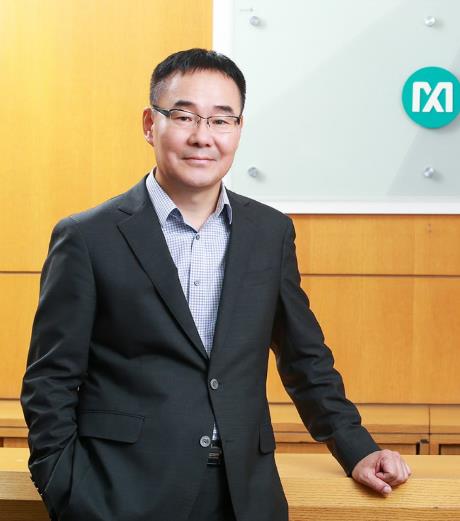
The increased temperature generated by devices ' shrinking size and increasing functionality can compromise system safety and reliability. To minimize heat generation, system efficiency must be maximized. This is possible through Maxim’s superior power management. ”
So , what products is Maxim developing and releasing to address the IoT era? Could you briefly introduce your key products?
Maxim has been continuously introducing security-related products for IoT systems. The DS28C36 DeepCover Authenticator, which protects and securely controls industrial, medical, and Internet of Things (IoT) systems, blocks piracy and counterfeiting with its secure authentication functions, allowing companies to protect their IP and ensure device integrity. Furthermore, the MAXQ1061 DeepCover Cryptographic Controller, which implements turnkey security for connected devices, enables the use of trusted devices that protect communications with comprehensive encryption functions. Companies can address security issues in industrial IoT systems with the embedded security reference design (MAXREFDES143#). You can easily test your design for security, starting from sensor input.
In addition to this , I understand that Maxim is investing a lot in the IoT field.
Answer Maxim is actively investing in the IoT sector as a partner of the ARM mbed IoT device platform. Maxim's mbed-enabled platforms and open technologies enable all developers and applications to leverage security, analog, and low-power technologies. Maxim has also long developed MCUs for specific markets. Maxim's secure, low-power mixed-signal MCUs simplify IoT product development. Maxim plans to continue supporting the mbed ecosystem for future MCU releases to help designers develop safe and low-power IoT applications.
Actively investing in the IoT field as a partner of ARM mbed IoT device platform.
Maxim recently announced its h-sensor platform for wearables. It seems like Maxim has been actively expanding its sensor business in recent years. What do you think differentiates Maxim in the sensor market?
Maxim offers a wide range of sensor products, including heart rate sensors, electrocardiogram sensors, and gas detection sensors. Maxim's sensors are even integrated into the latest smartphones. Developing a board with sensors is complex. Designers first develop custom hardware and firmware to verify the concept, then build a prototype before beginning field testing. This prototyping process requires considerable time to evaluate sensors and existing solutions. Maxim's h-sensor platform, announced this year, integrates all hardware components onto a printed circuit board (PCB) and allows immediate verification of hardware performance with the ARM mbed hardware development kit (HDK), shortening the prototype development period by 3 to 6 months.
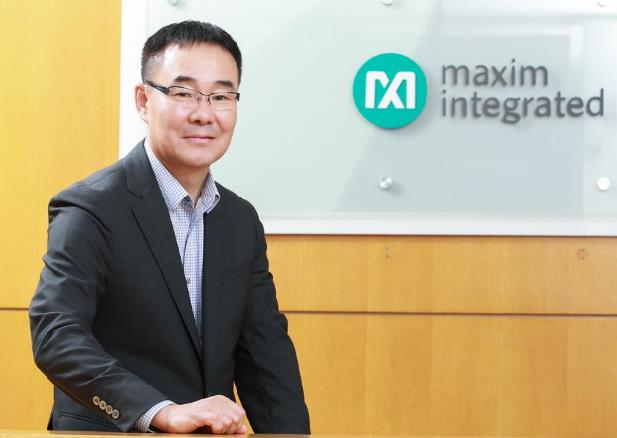
“ The automotive sector has seen significant growth in battery management systems (BMS).
Advanced driver assistance systems (ADAS) are also receiving positive reviews in the market.”
Maxim 's strength lies in its power solutions. Designs that minimize peripheral components and low-power consumption are seen as key differentiators. What are the latest trends and how is Maxim responding to them?
The power solutions segment is the largest and fastest-growing segment in the analog market, accounting for half of Maxim's business. Maxim's power management ICs extend battery life, provide fast charging, and accurate battery status reporting in a compact form factor. Maxim provides power solutions across all industries. Among them, the MAX14720 is a power management integrated circuit (PMIC) that optimizes power and battery life in wearables for medical and fitness applications, as well as the Internet of Things (IoT). This PMIC integrates the functionality of five devices: a power switch, a linear regulator, a buck regulator, a buck-boost regulator, and monitoring, reducing component count and enabling a much smaller form factor design.
Maximizing manufacturing productivity for Industry 4.0 applications in a compact form factor.
The industrial sector is experiencing a new wave of innovation, intertwined with Industry 4.0. I understand you're developing control and security products related to this trend. What are their unique characteristics?
Maxim has successfully supplied over 900 products in the industrial sector, including interface, signal chain, and power management products for factory automation. Maxim's Himalaya series helps realize smaller, simpler power supply solutions with lower heat generation. Also announced recently is the Pocket IO Programmable Logic Controller (PLC) development platform, which maximizes manufacturing productivity for Industry 4.0 applications by providing maximum power efficiency in the smallest form factor for next-generation PLC designs.
I understand that the automotive market has been one of Maxim's key areas of focus for several years. What are your expectations for the future and what have been your achievements so far?
The automotive sector is experiencing significant growth in battery management systems (BMS), and advanced driver assistance systems (ADAS) are also receiving positive market reviews. Maxim's battery monitoring ICs provide self-diagnostic capabilities and robust daisy-chain data communication, helping to create safer, smaller, and lighter, high-performance lithium-ion BMSs. Maxim's high-speed serial links are becoming increasingly important as the amount of data to be processed in vehicles increases. Maxim is working with its SOC partner, Nvidia, to deliver a solution that enables near-real-time, bidirectional transmission of large amounts of data to HD displays and safety devices without delays such as data compression.
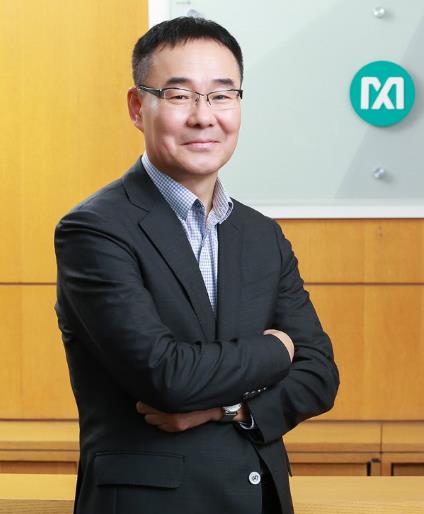
In 2017 , we plan to strengthen support for not only domestic large corporations but also small and medium-sized enterprises.
In an era where customer service is as important as selling products, what does Maxim emphasize in customer service beyond product sales for its domestic customers?
Maxim Korea boasts the highest level of development and technical support personnel among Maxim branches worldwide. In addition to online and offline technical seminars and product demonstrations led by in-house experts, we also offer training programs to keep customers updated on the latest technologies. Maxim also hosts an "Online EV (Evaluation) Kit" event to encourage domestic designers to create innovative system designs and experience the diverse applications of the EV (Evaluation) Kit. Maxim offers Korean language support through its Korean microsite and social media channels. It shares the latest technology trends with its Korean members through a monthly Korean newsletter, including videos and technical resources. By regularly hosting technical resource download events, video events, and social media events, Maxim develops marketing activities that reflect the needs and feedback of domestic customers.
I'd like to know Maxim 's roadmap. What is its vision and what kind of semiconductor company it envisions becoming?
Maxim 's core business, power solutions, is expected to continue growing in 2017 across all sectors, including mobile, automotive, industrial, and healthcare. In the mobile sector, audio and sensor functionality is expected to become more diverse and robust, further enhancing customer needs. The automotive market is a key focus for Maxim. Maxim plans to further focus on the ADAS and hybrid/electric vehicle (HEV/EV) electronic systems markets, which are experiencing high growth rates.
Maxim is also actively supporting the industrial market through domestic distributors such as Gilanix and WT. Specifically, to meet market changes driven by factory automation, Maxim will continue to offer smaller PLCs, robust interfaces, low-power solutions, and a variety of sensors. Finally, in 2017, Maxim plans to strengthen its support for not only large domestic companies but also SMEs.
▣ What kind of company is Maxim Integrated ?
Achieving new levels of analog integration in automotive, cloud data centers, mobile, and more.
Maxim Integrated, a leader in the analog mixed-signal semiconductor market, was founded in 1983 and is headquartered in San Jose, California. Maxim is driving new levels of analog integration in automotive, cloud data centers, mobile, and industrial applications. Maxim delivers smaller, smarter, and more energy-efficient analog semiconductor solutions tailored to customer needs.
Maxim boasts a portfolio of over 10,000 proven products. Our market-proven core products, including power products like buck, boost, and LDOs, as well as signal chain and data interfaces, can help companies shorten product development times and costs. We plan to continue introducing products that can be used in diverse industries, including wearables, automotive, industrial, and cable.
Comments
Related news
.png)
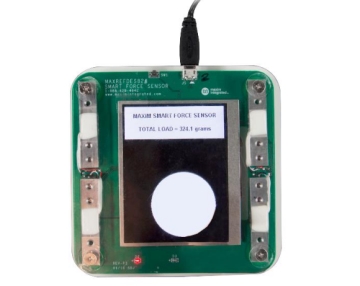
Element14 Announces Maxim Smart Force Sensor Reference Design
Online electronics shopping mall Element14 (http://kr.element14.com/) is adding reference design boards and evaluation kits to its Maxim product lineup. The newly launched products include the latest offering from Maxim Integrated Products, a Smart Force Sensor reference design board that is used in power management, interface, RF and wireless, and memory applications, and supports the existing broad range of data converters, amplifiers, clocks and timers, and microcontroller product families. The Maxim Smart Force Sensor reference design board (MAXREFDES82#) features a 24-bit, 6-channel, 64ksps delta-sigma MAX11254 ADC with SPI interface. Four load cells mounted in four quadrants detect touches applied to a flat plastic plate. Based on the force applied to each load cell, the system displays the magnitude of the total force and the center of force coordinates, with force magnitude and coordinates scanned approximately every 10 milliseconds.
2016.06.03by 명세환 기자
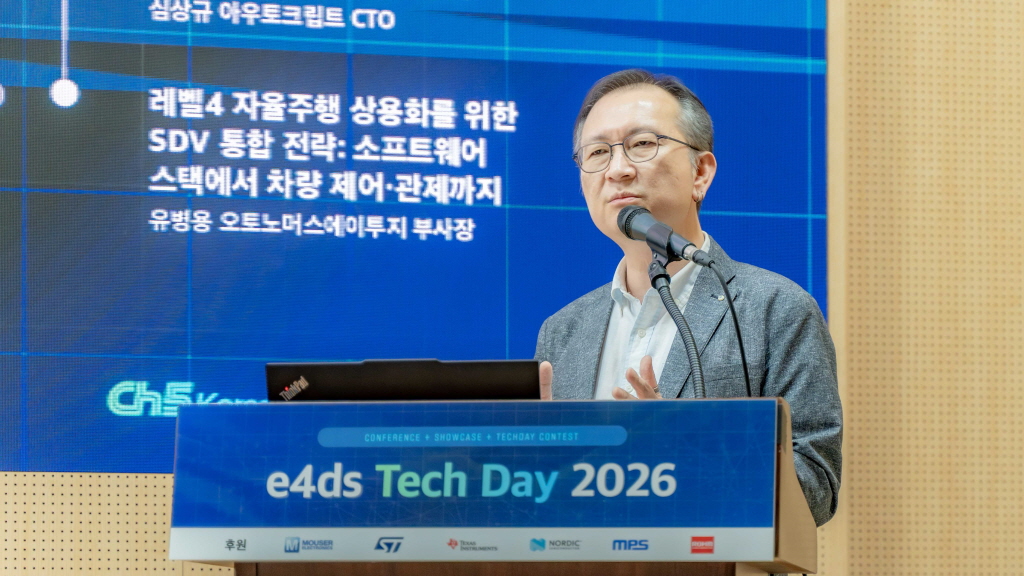
[e4ds Tech Day 2026 ⑨] Sim Sang-gyu, Autocrypt CTO: "In the Physical AI Era, Automotive Security Must Extend Beyond the Vehicle"
At e4ds Tech Day 2026, Sim Sang-gyu, CTO of Autocrypt, explained automotive cybersecurity strategies in the era of Physical AI and SDV (Software-Defined Vehicle). Automobiles are evolving as part of an ecosystem connected to AI, cloud, chargers, IoT, and robots, and he emphasized that the scope of security must expand beyond the vehicle interior to the entire connected environment. In particular, AI model tampering, adversarial attacks, OTA updates, and EV charger hacking were identified as major threats. He explained that response measures require zero trust, AI model integrity protection, intrusion detection, Security by Design and Default, and full lifecycle security management, and that proactive security system establishment beyond regulatory compliance is critical for securing future mobility competitiveness.
2026.10.12by 배종인 기자
Practical HIL Construction Strategy for Automotive and Off-Highway Controller Validation
As vehicle E/E architecture transitions to zonal structures and shifts to software-defined vehicles (SDV), the number of controllers (ECUs) requiring validation and software complexity are surging dramatically. Meanwhile, real vehicle testing cannot provide repeated verification under identical conditions and entails lead time and safety concerns. This white paper explains the principles of HIL (Hardware-in-the-Loop) validation and the structure of the NI platform composed of PXI, SLSC, and VeriStand, and through two actual implementation cases—Camera Record & Replay HIL for In-Cabin Monitoring Controller (ICMU) and Forklift Controller (VCU) HILS—describes how controller-level regression testing becomes possible. Additionally, it explicitly states application boundaries and limitations, such as lack of A2B support.
2026.10.12by 편집부











