



[Future Promising Technology ③] Digital Secretary, Will It Become an All-Purpose Problem Solver That Understands Language and Emotions?
 Published2017.01.16 06:35
Integration with Personal Service Robots, Smart Cars, Wearable Devices, etc.
# While K wakes up in bed in the morning, a digital assistant briefs the day's schedule through a screen installed on the ceiling and checks items that need to be prepared. As K heads out, a wearable device alerts him that he lacks walking exercise based on biorhythm analysis, and he decides to walk to work. The assistant displays key points of the morning meeting under his feet in sync with his walking. Upon arriving at the office, a digital assistant appears on the computer again to help him prepare for the meeting. During the meeting as well, it analyzes meeting materials through K's smart glasses. The reason he could easily analyze enormous data was all thanks to the assistant. Moreover, the assistant recognizes the faces of meeting participants through the smart glasses and reads their emotional states. This becomes important information for taking control of the meeting. K feels assured having this digital secretary that appears anywhere, anytime to help him.
In the not-too-distant future, we will each have a personal secretary. This refers to a digital personal secretary, called a Digital Assistant.
Software that performs various tasks needed in personal daily life, digital assistants are evolving in a direction to understand language and predict user patterns by combining with artificial intelligence technologies such as machine learning, voice recognition, and sentence analysis. Currently, smartphone-based voice recognition is the mainstream, but in the future, multi-device-based services will become possible with emotion recognition capabilities as well.
Before 2005, early digital assistant products such as 'Simsimi' and '1mm' were launched but did not achieve success. After 2011, when 'Siri' was installed on the iPhone smartphone and launched, digital assistant-related products and services increased. Digital assistants have expanded from smartphone-centric (mobile era) until the mid-2010s to various devices since the mid-2010s.
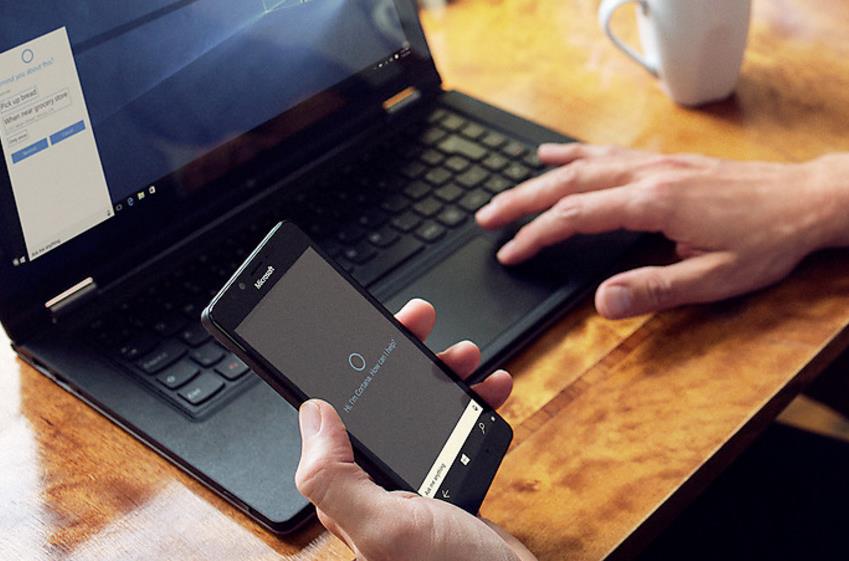
▲Microsoft's Cortana is a technology that provides digital assistant services based on a cloud environment, with a patent that outputs digital assistant information and control commands under the user's feet using wearable devices and receives input through this. (Cortana website screenshot)
Recently, with intensive investment and research in the artificial intelligence field, the digital assistant market related to it is expected to grow rapidly. In the artificial intelligence market, the digital assistant market is expected to grow from approximately $600 million in 2014 to approximately $8.1 billion in 2024. As such, even when examining market forecasts by artificial intelligence sub-sector, the digital assistant field is expected to show the fastest growth trend along with the autonomous robot field.
Apple provides voice agent services with deep learning technology applied through 'Siri' and is actively investing in artificial intelligence-related businesses to complement Siri's functions. Google is acquiring and merging companies that possess element technologies for implementing digital assistants. Following the acquisition of the calendar management service Planns in September 2010, it acquired the voice recognition technology company SayNow and facial recognition company Pittpatt in 2011. In 2014, it respectively acquired the artificial intelligence company DeepMind and Jetpac.
Samsung Electronics recently acquired 'VIV Labs,' a next-generation artificial intelligence platform company. Viv's artificial intelligence platform allows external service providers to freely participate and connect their services to natural language-based artificial intelligence interfaces. Samsung Electronics is expected to provide artificial intelligence-based services where all devices and services are connected as one.
Korea Holds Highest Patent Share in IoT Convergence Technology Among Related Patents, but Low in Data Processing Technology
Now let's examine the patent status of digital assistants. Digital assistants can be subdivided into IoT convergence, big data processing, intelligent interface, and intelligence technology, and patent applications related to these continue to show an increasing trend. Korea shows gradual increases in market share from Period 1 (1995-1998) to Period 5 (2011-2014), maintaining an average of 18.4%, and the United States also shows an increasing trend, while Japan is gradually decreasing. The overall patent trend and Korean patent trend are in the order of intelligent interface, IoT convergence, intelligence, and data processing.
Visual technology in the intelligent interface field and pattern recognition technology in the intelligence field have seen continuous substantial patent applications since the past, while IoT networking technology in the IoT convergence field and knowledge reasoning technology in the intelligence field have shown continuous applications since the mid-2000s. IoT device technology in the IoT convergence field and big data storage, processing, and management technology in the data processing field have shown continuous applications since the late 2000s.
Overall, Korea ranks second after the United States in patent share, and IoT convergence technology shows the highest patent share among digital assistant-related technologies. In contrast, data processing technology showed the lowest patent applications. In major market share acquisition, Korea ranks third after the United States and Japan. IoT convergence technology and intelligent interface technology show Korea's highest major market share acquisition rate. In the data processing technology field, Korea showed the lowest major market share acquisition rate and the lowest level compared to leading countries.
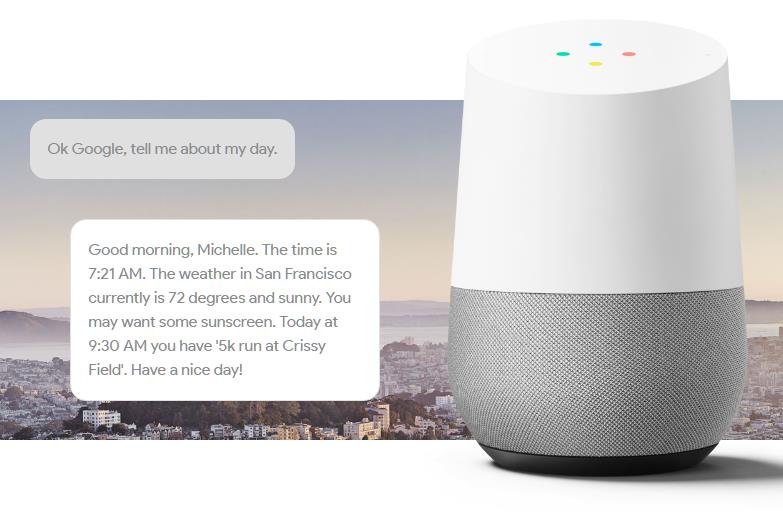
▲Google recently launched 'Google Assistant,' an upgraded version of Google Now. Google Home website with Google Assistant applied.
Regarding patent litigation, intelligent interface technology showed active litigation above average number of cases. In IoT convergence technology, 50% of current rights holders in litigation patents were NPE patents. Intelligent interface technology with litigation activity above average number of cases showed the highest ratio of patents acquired by NPEs.
IBM and Microsoft continue to maintain top positions as patent applicants, and Samsung Electronics and ETRI have been consistently included in the Top 10 applicants since Period 3 (2003-2006). Recently, smartphone-related companies such as Google, Apple, Qualcomm, and LG Electronics are filing many applications.
Promising Keywords Are Behavior Recognition and Big Data, Targeting Convergence Among Various IoT Equipment
Samsung Electronics shows active patent filing activities related to intelligent interfaces since the late 2000s and is recently filing many patents in IoT convergence technology as well. Regarding data processing or intelligence technology, though not in large numbers, continuous applications are being made. For example, Samsung currently provides a service (S Voice) that responds to user queries based on voice recognition, and based on owned patents, the following scenarios are possible. In the near term, by 2018, it may provide convenient interfaces using wearable devices, or by 2019, it may present a scenario where no specific device exists for a digital assistant and services are provided across various devices.
Promising keywords in the digital assistant field are behavior recognition and big data. Machine learning for virtual reality and situation awareness, and reliability calculations for judgments based on this are also important. The overall flow targets convergence among various IoT equipment to enhance interface convenience and expand application scope. It is expected to be applied across various industrial areas including personal service robots, smart cars, wearable device integration, smart healthcare, and smart space systems.
<This article is based on the Korea Institute of Intellectual Property Strategy (KISTA)'s analysis report on future promising products and services>
Comments
Related news
AI, a 'prelude' in the voice assistant market: Will 2017 become the元年 (first year) of mass adoption?
As competition in artificial intelligence (AI) technology intensifies with voice assistants and home robots at the forefront, it has emerged as a hot topic for the new year. According to market research organizations, the annual revenue of the global artificial intelligence industry is projected to reach 36.8 billion dollars (approximately 43 trillion Korean won) by 2025, and the domestic artificial intelligence market is expected to reach approximately 11.1 trillion won by 2020. The KT Economic and Management Research Institute ranked AI technology first among the top 10 ICT issues to watch in 2017, announced at the end of last year, and forecast that a wave of commercialization will sweep through this year. The research institute analyzed that voice assistants will be at the forefront of the commercialization wave, with subsequent development and launch of diverse convergence services such as smart health and autonomous vehicles.
2017.01.02by 신윤오 기자
NVIDIA CEO Jensen Huang to transform the vehicle into a single artificial intelligence
Nvidia CEO Jensen Huang delivered the opening keynote address at CES, highlighting Nvidia's leading capabilities in artificial intelligence, deep learning, gaming, and automotive sectors while presenting a vision for new innovations in gaming, TV, and automotive divisions. Jensen Huang, Nvidia's CEO who delivered the keynote speech, unveiled Nvidia's vision for AI-powered vehicles based on active collaboration with major automotive manufacturers. Additionally, he announced the expansion of Nvidia's GeForce NOW service to millions of PCs and Mac computers, and officially announced the launch of a new version of SHIELD, a state-of-the-art streaming device.
2017.01.06by 신윤오 기자
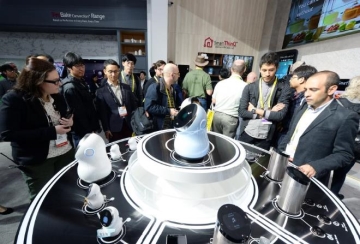
[CES 2017 Wrap-up] Home Appliances and Cars Are Now a Single AI Device
Last year's CES (the world's largest consumer electronics trade show) clearly demonstrated the IT transformation of automobiles, while this year's exhibition stood out for the evolution of artificial intelligence (AI) being applied to these consumer electronics and automobiles. In contrast to previous instances where certain home appliances and smartphones exchanged information and controlled operations with one another, AI-enabled home appliances connect all products to one another, enabling them to independently learn customers' product usage patterns and surrounding environments and provide optimized solutions. Additionally, this year's exhibition notably highlighted cooperation between IT companies and automobile manufacturers for the commercialization of autonomous vehicles more than ever before. Through major companies participating in CES, we examined prospects on how artificial intelligence will transform the concepts of home appliances and automobiles and reshape everyday life.
2017.01.09by 신윤오 기자
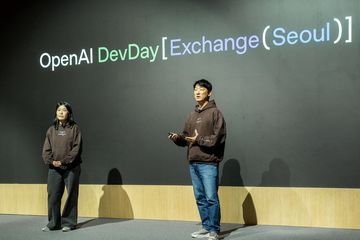
OpenAI Holds Developer Event 'DevDay Exchange' in Seoul
OpenAI held the 'DevDay Exchange' event in Seoul on the 22nd, with over 600 domestic developers in attendance. Korea currently ranks 3rd globally in weekly active users of dots and 5th in ChatGPT Pro usage, with discussions focused on agent-based work automation and enterprise AI transformation strategies. AWS and LG CNS shared phased implementation cases ranging from AI model adoption to integration with existing systems and establishment of security and governance frameworks.
2026.10.23by 배종인 기자
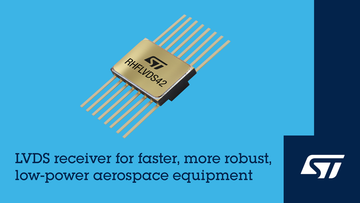
ST Launches RHFLVDS42 QML-V Certified Quad LVDS Receiver for Aerospace
STMicroelectronics has launched the RHFLVDS42, a QML-V certified quad LVDS receiver for aerospace applications. The device supports maximum 600Mbps data transmission, demonstrates radiation and ESD tolerance, and meets 300krad(Si) TID requirements, while satisfying EAR99 regulations for immediate deployment across global supply chains. It is manufactured using a validated 130nm CMOS process in France and is available in Flat-16 package and bare die form.
2026.10.23by 배종인 기자











