
LG Electronics Launches Stability-Focused Strategic Smartphone
 Published2017.01.16 17:36
Improved heat dissipation performance with copper heat pipes
LG Electronics is applying the highest level of safety design and testing to its strategic smartphones to be released this year.
Following the acclaimed 'LG V20' for its outstanding durability, LG Electronics plans to unveil a product focused on safety at the MWC in February, with ▲significantly improved heat dissipation performance, including the adoption of a heat pipe, and ▲'composite environmental testing' that simultaneously applies international standard battery tests and extreme conditions.
LG Electronics significantly improves smartphone heat dissipation performance from the design stage to prevent heat generated during smartphone operation from being transferred to the battery and affecting safety.
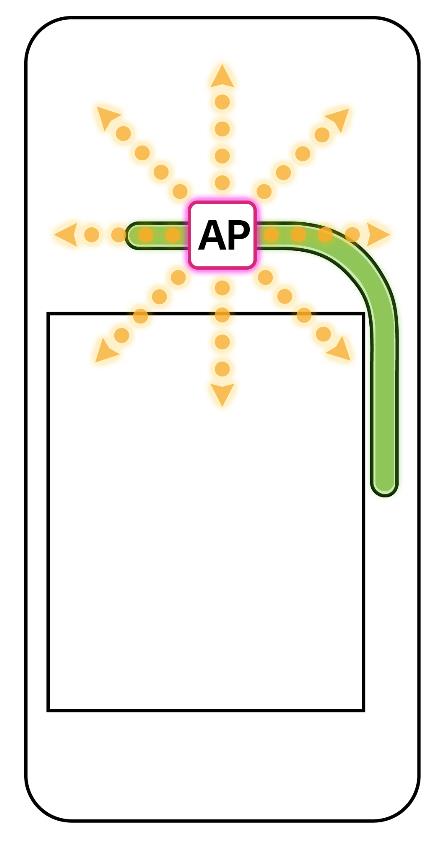
▲ Heat dissipation design and heat pipe concept diagram
LG Electronics is adopting a copper heat pipe, which excels in heat conduction and diffusion. Heat pipes, commonly used in laptops and PCs, effectively disperse internal smartphone heat, reducing the temperature of the application processor (AP), the primary source of heat generation, by approximately 6-10%.
We also strengthen safety testing of the batteries themselves, verifying battery quality with standards that are more stringent than international standards. We also conduct penetration tests, where we pierce the center of the battery with a nail, and impact tests, where we drop a heavy object from a certain height.
The complex environmental test is conducted by simultaneously applying conditions such as temperature, humidity, water and dust resistance, foreign substance ingress, shock, drop, and damage to extreme conditions, and tests various smartphone components such as the AP, display, camera, and fingerprint sensor.
Comments
Related news
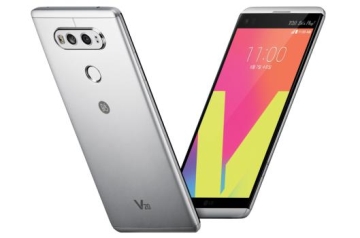
Based on major smartphone usage results, LG V20 camera features are the most outstanding
U.S. economic magazine 'Forbes' published an article on the 7th (local time) titled "3 Great Smartphone Cameras, 3 Continents, One Winner," in which it introduced that after using the LG V20, iPhone 7 Plus, and Google Pixel for 2 months, the LG V20's camera features were the most outstanding. The magazine praised it, stating that "the LG V20 can express more in photos compared to other smartphones, and because it is equipped with a wide-angle lens, it can capture a wide background." Additionally, it added, "From the perspective of capturing and sharing memories in photos, the LG V20 is unquestionably the best, and this is the true value of a camera."
2016.12.11by 신윤오 기자
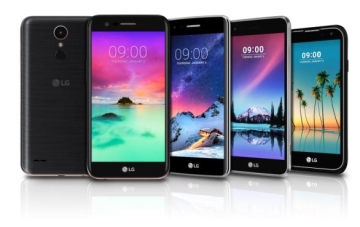
Expanding consumer choice with diverse value-oriented smartphones
LG Electronics is strengthening its global market strategy by introducing value-oriented smartphones equipped with various convenient features. LG Electronics plans to expand consumer choice in the smartphone market next year with the evolved 2017 'K series', 'Stylus 3' and other value-oriented products.
2016.12.26by 홍보라 기자
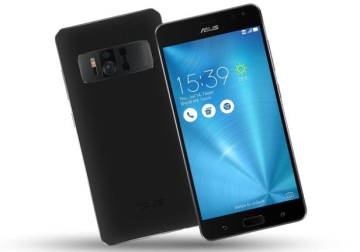
Infineon Supplies REAL3 Image Sensor Chips to ASUS Augmented Reality Smartphones
Infineon Technologies (Korea Representative Director Lee Seung-soo) announced that its REAL3 image sensor chip has been adopted in ASUS's augmented reality smartphone, which has recently garnered attention. The ASUS Zenfone AR smartphone, unveiled at the 2017 CES (Consumer Electronics Show) held in Las Vegas, is the world's thinnest smartphone and is equipped with a 3D ToF (time-of-flight) camera that enables real-time three-dimensional recognition of the surroundings. Augmented reality provides enhanced realism and supplementary information to the actual environment by inserting text and accurately scaled realistic virtual objects.
2017.01.10by 신윤오 기자
ESP32 Development Environment Selection and GPS Application Implementation
The ESP32 is a microcontroller that integrates Wi-Fi, Bluetooth, 12-bit ADC, capacitive touch, PWM, DAC, and UART in a single SoC. However, the abundance of features does not by itself solve the designer's problems. The real challenges lie in selecting the appropriate development environment, determining which pins can be used and which must be avoided, and converting raw data from modules into usable information. This document addresses ESP32 peripheral constraints (ADC2 and Wi-Fi coexistence limitation, UART1 occupancy, ADC non-linear regions), the trade-offs between Arduino IDE and ESP-IDF, and the process from connecting NEO-6M/NEO-M8N GPS modules to UART2, parsing NMEA sentences, and visualizing routes in Google Earth, all organized based on documented references.
2026.10.12by 편집부
MIPI CSI-2, DSI-2, C-PHY, D-PHY Test Solution Technical White Paper
The MIPI interface adopts a burst mode that transitions between low-power (LP) and high-speed (HS) states for low-power consumption, and in return, strict timing rules are imposed on state transitions. Additionally, the high-speed section operates as a packet-based protocol with headers, ECC, and CRC, so verification engineers must handle waveforms and protocols simultaneously. Traditional configurations combining general-purpose oscilloscopes and AWGs reveal limitations in setup complexity, measurement uncertainty, and lack of reproducibility when faced with these requirements. This white paper, based on webinar materials, organizes the structure of this problem and describes how the SV5C-DPTXCPTX generator for receiver testing and SV5C-DPRXCPRX analyzer for transmitter testing integrate state transition testing, stressed eye testing, and protocol analysis into a single bench, along with their application boundaries.
2026.10.12by 편집부