



[Interview] Will the path to mass production of the dream nanomaterial, graphene, open?
 Published2017.01.16 18:22
저가격, 고품질 그래핀 대량 제조 기술로 기존 기술의 문제점 극복
차세대 신소재로 각광받고 있는 그래핀을 저가격 고품질로 대량 생산할 수 있는 새로운 방법은 없는 것일까.
전자부품연구원(KETI) 그래핀 소재팀(책임연구원 양우석)이 개발한 고품질 그래핀 대량 생산 기술은 이러한 요구에 해결 방안을 제시해 준다. 그래핀 소재팀이 개발한 이 기술은 전단응력을 이용한 반응기를 통해 층간 삽입 속도를 제어하고 폭발 반응 제어, 연속 생산 등의 가능성을 보여 준다.
그래핀(graphene)은 육각형의 탄소로 이루어진 하나의 층으로 높은 강도, 전자이동도, 전기전도도 등 여러 특성이 현존물질 중 가장 뛰어난 신소재이다. 하지만 균일성을 갖는 단일 또는 수 층의 그래핀 양산기술이 세계적으로 아직 개발되지 않아 산업화의 어려움을 겪고 있다.
그래핀은 복합제, 바이오, 에너지 전극, 인쇄용 잉크, 가스 배리어, 방열 산업 부분에서 응용할 수 있다. 국내에서 빠른 시일 내에 응용될 분야는 복합제와 에너지 전극 부분으로 예상된다. 외국에서는 잉크에 대한 응용과 정전기 방지에 대한 응용이 이루어지고 있으며 에너지 분야로 확산되고 있다.
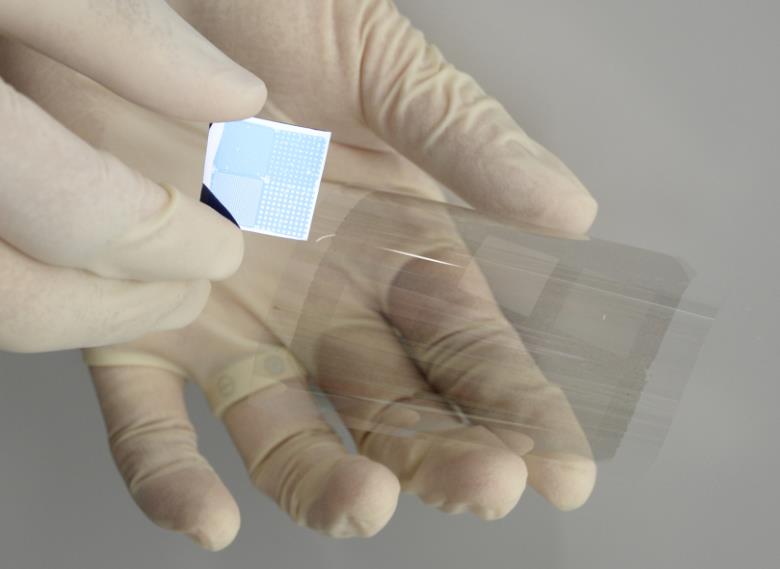
▲ 한국전자통신연구원(ETRI)에서 그래핀을 이용해 휘는 디스플레이 투명전극을 개발했다
그래핀을 상용화하기 위해서는 합성 시간 단축, 회수율, 순도/불순물 제어, 크기 제어, 친환경 제조 공정, 연속 생산 문제 등 6가지 문제를 해결해야 한다.
지난 10일 eewebinar에서 열린 KETI 양우석 책임연구원의 온라인 세미나에 따르면 그래핀은 박리하는 방법에 따라 다양한 특성이 나타난다고 한다. 그 중 화학적 박리법으로 널리 쓰이는 허머스 공법의 문제점을 그래핀 소재팀이 개선했다고 설명했다. 허머스 공법은 3가지 조건이 맞지 않아 대량생산에 적합하지 않다고 한다.
허머스 공법(Hummer's Method)의 대량 생산 문제점 해결에 초점
흑연(Graphite)에 산을 넣고 층간 분리가 되면 산화 그래핀(Graphene Oxide)이 되고 다시 환원시키면 그래핀이 된다. 허머스 공법은 이 과정에서 흑연과 산의 반응이 24시간 이상으로 합성 시간이 길고, 그래핀의 점도가 높아 산을 제거하기 어려워 다량의 폐수가 발생한다. 또, 용기 크기에 따라 생산량이 결정돼 공간과 시설 투자 비용이 많이 들어가 상용화 조건을 만족시키지 못한다.
KETI 그래핀 소재팀의 양우석 책임연구원은 "저희가 개발한 테일러 리액터는 회전축의 속도를 이용해 와류 층을 만들 수 있고 압력 조절을 할 수 있다. 이로 인해 흑연의 층간 분리는 15분이면 되고, 저농도의 그래핀을 만들 수 있어 폐수가 적게 발생하고 황산을 재사용 할 수 있어 제조단가를 낮출 수 있다"며 "이전 방법의 문제점을 개선하여 상용화 조건 6가지를 모두 만족한다"고 말했다.
기존의 방법과 차별화된 기술 선보여

박리과정 중 산화그래핀에서 황산을 세척하는 과정이 중요하다. 그래핀 위에 산과 같은 불순물이 남아 있으면 다양한 응용에 접목하는데 한계가 있기 때문이다. 그래핀 소재팀은 기존의 필터프레스를 사용하는 방법이 대용량 세척이 가능하나 필터가 막히는 점을 개선해 필터를 막지 않고 부유하는 부유세척법을 고안하였다.
양우석 책임연구원은 "비슷한 사이즈로 분리하는 것이 품질로 연결된다. 우리는 그래핀이 만들어진 후에 분리하기보다는 처음에 만들 때 크기를 설정하고, 공정 중에 원래 디자인된 크기를 유지하는 방법을 쓰고 있다"며 "테일러 리액터를 이용하면 전단응력을 줄 수 있어 균일한 크기에 많은 양의 그래핀 옥사이드를 만들 수 있다" 고 설명했다.
그래핀 응용한 유해 화학물질 감지 센서 개발 연구 진행
KETI는 그래핀과 고분자의 결합으로 페이스트(Paste)를 제조했고, 코팅을 거쳐 유해 화학물질 감지 센서를 만들어 테스트 중이다.
현재 공장 외부에 놓인 산, 알칼리, 오일류의 탱크들은 배관으로 연결되어 있어 누수 사고가 잦기 때문에 유해물질을 감지하기 위한 센서가 필요하다. 기존에는 포인, 밴드, 케이블, 필름 센서 등을 활용하고 있다. 하지만 이 센서들은 물에도 반응하는 문제점이 있다.
KETI는 물에도 반응하는 문제점을 해결하기 위해 소재부터 차별점을 두었다. 센서에 물이 닿으면 저항이 증가하는 반응이 일어나고, 산이 닿으면 저항이 감소하는 반응이 일어나도록 디자인하였다. 황산으로 테스트 했을 때 저농도에서 감지할 수 있었고 질산, 염산, 불산의 감지도 가능하다. 센서 침지 테스트, 온도 테스트 등도 거쳤다.
양우석 책임연구원은 "연구소에서는 그래핀을 만드는 테일러 리액터, 페이스트나 잉크를 만들 수 있는 분산 장비, 계측 장비를 보유하고 있어 소재 제조부터 응용까지 대응이 가능한 인프라를 구축하고 있다",며 "본 기술을 이용해서 기업들이 활용할 수 있는 그래핀 소재를 저가격, 고품질로 대량생산해 잉크, 페이스트, 마스터배치 등의 중간 재료를 만들어 다양한 애플리케이션에 접목될 수 있게 연구를 진행하고 있다."며 고품질 그래핀 대량 생산에 한 걸음 다가갔다고 밝혔다.
Comments
Related news
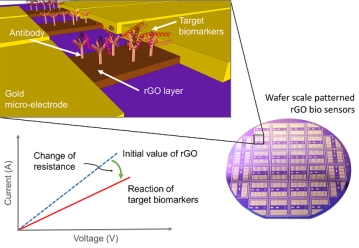
Diagnosing diseases with a single drop of blood: Development of high-sensitivity graphene biosensors takes a step closer
Recently, domestic researchers successfully implemented graphene, known as the 'dream material,' on a large-area panel (4-inch wafer) and developed a high-sensitivity biosensor fabrication technology capable of diagnosing various diseases and conditions. Dr. Hwang Gyo-seon's team at the Biomicrosystems Research Division of the Korea Institute of Science and Technology (KIST, President Lee Byung-kwon) fabricated a graphene biosensor with precisely implemented patterns of tens of micrometers (one hundred-thousandths to one millionth of a meter) by applying semiconductor processing technology.
2016.08.16by 신윤오 기자
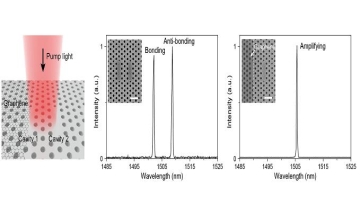
Implementing future optical computers using light-absorbing graphene properties
The Ministry of Science, ICT and Future Planning (Minister Choi Yang-hee) announced that "domestic researchers have developed technology that can freely change the color of nanolasers, which are small lasers in the nanometer size range, by utilizing graphene's light-absorbing properties." Graphene is a material with an atomic-scale honeycomb structure made of carbon atoms. It has excellent thermal conductivity, is transparent, and possesses excellent stretchability, making its application fields very diverse. However, it is known to be difficult to use in optical devices that utilize light due to its light-absorbing properties. Nanolasers are lasers that use light-confining devices in the tens to hundreds of nanometer size range.
2017.01.12by 신윤오 기자

Intel Unveils Next-Generation 'Core Ultra Series 3' and vPro Platform for Enterprise PCs
Intel has officially unveiled the "Intel Core Ultra Series 3" for next-generation enterprise PCs and the latest vPro platform, addressing a wide range of demands from enterprise notebooks to high-performance workstations.
2026.03.26by 배종인 기자

ROHM Launches ESD Protection Diode Compatible with High-Speed Interfaces of 10Gbps or Higher
Semiconductor specialist ROHM has developed the 'RESDxVx series' of ESD (electrostatic discharge) protection diodes capable of responding to next-generation high-speed data communication environments exceeding 10Gbps, simultaneously enhancing both signal quality maintenance required in high-speed interfaces and IC protection performance.
2026.03.26by 배종인 기자
ST Launches 75V Drive IC Targeting 48V Industrial Motor Driving
ST Microelectronics has unveiled the 'STSPIN9P' series of 75V motor drive ICs tailored for 48V-class industrial drive system design. The new product family is characterized by half-bridge and full-bridge configurations that enable design scalability according to motor type and output conditions. Power supply circuits, protection functions, and current sensing circuits are integrated on-chip to simplify system configuration, and the devices are designed to support applications up to 500W maximum. The company plans to provide reference designs and demo boards to support development and evaluation in industrial automation, robotics, pumps, fans, lighting, and textile machinery.
2026.03.26by 배종인 기자











