



More than half of robotics investment is in the manufacturing sector... $110 billion in 2020
 Published2017.01.26 06:12
Key robotics use cases in the assembly manufacturing sector are assembly, welding, and painting.
According to a recent study by IT market analysis firm IDC, global spending on robotics and related services is projected to more than double from $91.5 billion in 2016 to $188 billion in 2020.
The report (' Worldwide Commercial Robotics Spending Guide ') stated that the robotics market size includes data on robotics systems, system hardware, software, robotics-related services, and aftermarket robotics hardware sectors, as well as data on commercial purchases of drones and aftermarket drone hardware sectors.
John Santagate, a principal researcher in charge of supply chain research at IDC Manufacturing Insights, stated, "The robotics market is experiencing rapid growth," adding, "This growth is built upon a combination of technological advancements, expanded use cases, and increased adoption in the market." He went on to explain, “Innovators in the field of robotics are developing robots capable of performing a wider variety of tasks, which is providing a foundation for robotics to expand into a broader range of industries.”

▲Reference Photo: 'Universal Robots', a leader in collaborative robots, Universal Robots Plus
Last year, more than half of global robotics investment occurred in the manufacturing sector, with discrete manufacturing accounting for 31% and process manufacturing for 28%. This trend is expected to remain relatively stable throughout the forecast period, with robotics spending in these manufacturing sectors projected to reach $110 billion in 2020. Key robotics use cases in discrete manufacturing include assembly, welding, and painting, while the main use case in process manufacturing is mixing.
The sectors with the largest investments in robotics were the resource industry, consumer, and healthcare, in that order.
Last year, following manufacturing, the top three industries with the largest investments in robotics were resource industries ($8 billion), consumer ($6.5 billion), and healthcare ($4.5 billion). While the consumer sector is expected to narrow the gap with resource industries through 2020 due to high growth forecasts, these three industries are expected to maintain their rankings throughout the forecast period. Additionally, cross-industry robotics spending—specifically for use cases applicable across all industries such as warehouse outbound and packaging—is expected to remain in the top tier during the five-year forecast period. The sectors expected to show the fastest growth rates from 2015 to 2020 are the consumer, healthcare, and retail sectors.
"Robotics is now an indispensable element in industrial transformation and is having a massive impact on enhancing operational agility and efficiency in both developed and emerging markets," said Dr. Jing Bing Zhang, Research Director overseeing the robotics sector at IDC Manufacturing Insights. "The adoption of robotics is progressing rapidly in general industrial sectors, and some of the leading vendors surveyed by IDC have seen an average annual growth rate of more than double over the past few years targeting the automotive industry."
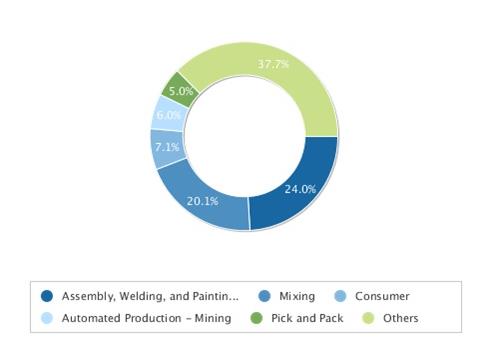
▲ 2016 Robotics Market Share by Sector (Source: IDC)
From a technological perspective, spending in the robotics systems sector, which includes consumer, industrial, and service robots and aftermarket robotics hardware, is expected to exceed $40 billion in 2016. Meanwhile, service-related investments, such as application management, education and training, hardware deployment, system integration, and consulting, were provisionally estimated to have surpassed $20 billion in 2016. The fastest-growing segment in the robotics market is the drone and aftermarket drone hardware sector, which is projected to reach $20 billion by 2020.
Regionally, the Asia-Pacific region, including Japan, is expected to account for more than two-thirds of the robotics market during the forecast period. The second largest region is Europe, the Middle East, and Africa (EMEA), which is projected to have reached $14.7 billion last year. Next is the Americas region, which is projected to reach $12.9 billion in 2016. The Asia-Pacific robotics market is expected to exhibit the fastest growth trend, with spending more than doubling during the forecast period from 2015 to 2020. The next fastest-growing region is the Americas, which is projected to become the second-largest market in the overall market by 2018.
Comments
Related news
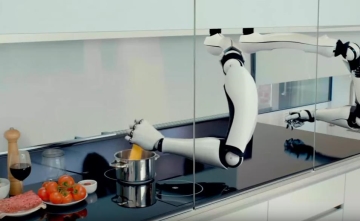
[Outlook] What would a dish made by a robot taste like?
2017 was expected to see ICT convergence services take off in earnest across healthcare, media, finance, robotics, and automotive sectors. The seven major ICT convergence trends for 2017 were identified as ▲smart healthcare ▲virtual reality ▲fintech ▲home IoT ▲drones ▲robotics ▲autonomous vehicles.
2016.12.12by 신윤오 기자
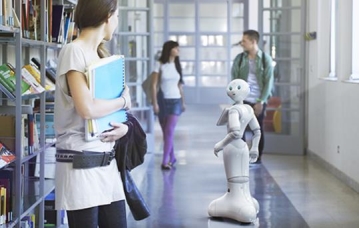
Future products and services found in smart car, drone, and robot patents
Analysis of patent application trends in representative future convergence industry sectors including smart cars, drones, and robots has revealed the emerging outline of products and services that will gain prominence in the future. Smart cars, which refer to vehicles that combine automotive and IT technologies and are continuously connected to networks, center on products and services that contribute to user safety and convenience through enhanced connectivity both inside and outside the vehicle. This includes autonomous driving systems, HMI (Human Machine Interface) systems, sensing/accident prevention/avoidance systems, and driving assistance/occupant support systems.
2016.12.19by 신윤오 기자

LG Electronics Vice Chairman Cho Sung-jin: "IoT and robotics are key pillars of our future businesses."
LG Electronics Vice Chairman Cho Sung-jin held his first press briefing since taking office as CEO on the 7th (Korean time) in Las Vegas, United States, and stated, "I will create a business structure where profitability and growth form a virtuous cycle in a progressive manner." Vice Chairman Cho remarked, "I feel a heavy sense of responsibility in taking on the role of CEO during a challenging business environment," and emphasized, "I will instill the DNA of being number one across all LG Electronics businesses and transform the LG brand into a truly leading brand that customers aspire to."
2017.01.09by 신윤오 기자
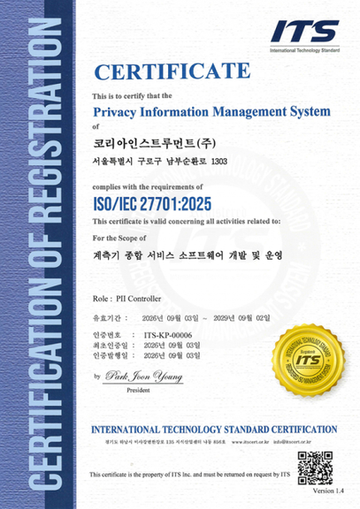
Korea Instrument, KOLAS Accredited Calibration Agency First to Simultaneously Acquire ISO/IEC 27,001·27,701
Korea Instrument has become the first among KOLAS accredited calibration agencies to simultaneously acquire ISO/IEC 27,001 and ISO/IEC 27,701 certifications. Through its proprietary platforms CWIZ Enterprise and CWIZ Partners, the company has embedded information security and personal data protection requirements across all business processes including customer information, equipment data, and calibration reports, with plans to continuously advance its management system through regular audits and security inspections.
2026.10.12by 배종인 기자
TeamViewer One, IT Incident Automation Workflow and Resolution Center Enhanced
TeamViewer has added IT incident automation capabilities and an advanced Resolution Center to its integrated digital workplace management platform 'TeamViewer ONE'. Recurrent service disruptions, configuration errors, and capacity shortages are automatically handled according to preset policies, and device status verification through script deployment can be managed in a unified interface, significantly reducing repetitive tasks for IT teams.
2026.10.12by 배종인 기자











