


Can Graphene Overcome the Limitations of Flexible Displays?
 Published2017.02.27 16:02
For OLED to become flexible, barrier is important, and customized synthesis of barrier is required.
With constant talk of foldable and bendable displays, why is the development of flexible displays so slow?
On the 17th, Dr. Myung-Jong Kim of the Korea Institute of Science and Technology (KIST) gave a presentation at the Flexible Display Technology Trends and Issues Seminar held at KINTEX in Ilsan. He said, “In the future, displays will be based on OLED and will become larger, more transparent, and flat.” He continued, “Large-area CVD graphene is applied in various fields, but since it is also used as a transparent electrode, it can also be utilized in flexible/transparent displays.”
He presented on the topic of 'Development of customized graphene using CVD that can be used in flexible displays', explaining how far the technology has been developed for graphene to be applied to displays and how it can be utilized.
In general, the touch panel of a mobile phone uses an ITO (indium tin oxide) film. This ITO film has several problems. Currently, our country imports indium from China, but since indium is not a substance that is naturally produced on Earth, its supply will be limited over time. In addition, the process temperature is high and it is difficult to apply to flexible substrates. Various controls are required when handling ITO, and it breaks easily, and when applied to OLED, there are problems such as indium diffusing into the organic layer, so a transparent electrode material of another type is needed to complement the shortcomings of ITO.
When it is time to find a material to solve the ITO film problem
To replace ITO, it must be electrically conductive and have good mechanical strength. Alternative materials include carbon nanotubes (CNT), silver nanowires, metal meshes, conductive polymers, and graphene. Although these materials have been prototyped and are in the mass production stage, they are difficult to use as transparent electrodes due to problems such as permeability, area, rough surface, and haze.
Graphene is a suitable alternative when considering conductivity and mobility. Graphene is obtained through chemical exfoliation and used as a transparent electrode, but this is sufficient as an energy electrode, but it is difficult to use it in a display. As a new method of obtaining graphene is used, the epitaxial growth method, and it has been discovered that CVD graphene can be grown on nickel films. The application of this method has proven that a single sheet of graphene can be grown on copper foil, making the synthesis of CVD graphene easier.
Research has shown that graphene can be grown on 30-inch copper foil and transferred to the desired PET material to a form that can actually be used. Sony has developed a manufacturing technology that performs the entire process from graphene synthesis to transfer using a roll-to-roll process, and Hanwha Techwin has developed a film coated with graphene that is tens of inches long. Haesung DS has developed a technology to mass-produce large-area graphene measuring 34 inches.
Developing a new way to use graphene as a barrier
Dr. Kim Myeong-jong's research team came up with a method to use graphene as a barrier. A barrier is important for OLEDs to become flexible. Currently, glass is the best barrier. If other materials are used instead of glass, a barrier is needed to protect OLEDs, which are vulnerable to oxygen and moisture.
The idea the research team came up with was to divide the growth of CVD graphene into two stages, by adding less oxygen in the first stage and more oxygen in the second stage, taking advantage of the fact that the growth rate is fast at the beginning but slows down over time, and reduce the crystals. When the crystals were reduced and the water vapor permeability (WVTR) was measured, it was found that 60% of water vapor could be blocked at 0.5 nm.
The barrier must block not only moisture but also oxygen. When silver nano-wide or hybrid electrodes are made, Ag (silver) oxidizes easily, so durability is poor. This drawback can be overcome by using graphene, which acts as a barrier to oxygen and prevents the crystal from changing over time.
Dr. Kim Myeong-jong said, “Research is continuing to synthesize customized barriers using CVD graphene that can be used on a large area,” and “The price is also coming down to the level of ITO film, so commercialization of large-area graphene is imminent.”
Comments
Related news
Implementing future optical computers using light-absorbing graphene properties
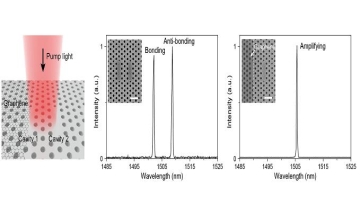
The Ministry of Science, ICT and Future Planning (Minister Choi Yang-hee) announced that "domestic researchers have developed technology that can freely change the color of nanolasers, which are small lasers in the nanometer size range, by utilizing graphene's light-absorbing properties." Graphene is a material with an atomic-scale honeycomb structure made of carbon atoms. It has excellent thermal conductivity, is transparent, and possesses excellent stretchability, making its application fields very diverse. However, it is known to be difficult to use in optical devices that utilize light due to its light-absorbing properties. Nanolasers are lasers that use light-confining devices in the tens to hundreds of nanometer size range.
2017.01.12by 신윤오 기자
[Interview] Will the path to mass production of the dream nanomaterial, graphene, open?
Is there no new method to mass-produce graphene, which is attracting attention as a next-generation advanced material, at low cost and high quality? The high-quality graphene mass production technology developed by the Graphene Materials Team (Principal Researcher Yang Woo-seok) at the Electronics and Telecommunications Research Institute (KETI) presents a solution to this demand. The technology developed by the Graphene Materials Team demonstrates the possibility of controlling interlayer insertion speed through a reactor utilizing shear stress, explosion reaction control, and continuous production. Graphene is a single layer composed of hexagonal carbon atoms and is an advanced material with superior properties—including high strength, electron mobility, and electrical conductivity—among all existing materials. However, mass production technology for single or few-layer graphene with uniformity has not yet been developed globally, presenting challenges for industrialization.
2017.01.16by 김지혜 기자
Samsung Electronics Develops Amorphous Graphene Technology Grown on Semiconductors
Professor Hwang Dong-mok from the Division of Materials Science and Engineering at Sungkyunkwan University's College of Engineering, Dr. Lee Jae-hyun, Executive Vice President Hwang Sung-woo from Samsung Electronics' Advanced Institute of Technology, and Dr. Ju Won-je, among others, jointly announced that they have developed the world's first groundbreaking technology for synthesizing large-area single-atomic-layer amorphous graphene on semiconductor wafers.
2017.02.13by 김지혜 기자

Intel Unveils Next-Generation 'Core Ultra Series 3' and vPro Platform for Enterprise PCs
Intel has officially unveiled the "Intel Core Ultra Series 3" for next-generation enterprise PCs and the latest vPro platform, addressing a wide range of demands from enterprise notebooks to high-performance workstations.
2026.03.26by 배종인 기자

ROHM Launches ESD Protection Diode Compatible with High-Speed Interfaces of 10Gbps or Higher
Semiconductor specialist ROHM has developed the 'RESDxVx series' of ESD (electrostatic discharge) protection diodes capable of responding to next-generation high-speed data communication environments exceeding 10Gbps, simultaneously enhancing both signal quality maintenance required in high-speed interfaces and IC protection performance.
2026.03.26by 배종인 기자











