



ON Semiconductor Unveils Automotive Imaging Platform Enabling Developers to Use Cameras
 Published2017.03.03 14:48
Reduced costs through shortened design cycles, supporting automotive design with mix-and-match solutions
ON Semiconductor introduced the Modular Automotive Reference System (MARS), which enables system and software developers to use cameras in research and development activities.
ON Semiconductor stated that the MARS platform enables engineers to perform rapid prototyping and experimentation using cameras, various lenses, image sensors, image signal processors (ISPs), and various communication options.
In addition, they added that due to its diverse and flexible functions, it can be used in various types of automotive camera applications, such as Advanced Driver Assistance Systems (ADAS), surrounding and rear camera systems, in-vehicle cameras (for motion recognition, driver eye monitoring, and light inspection, etc.), and autonomous driving.
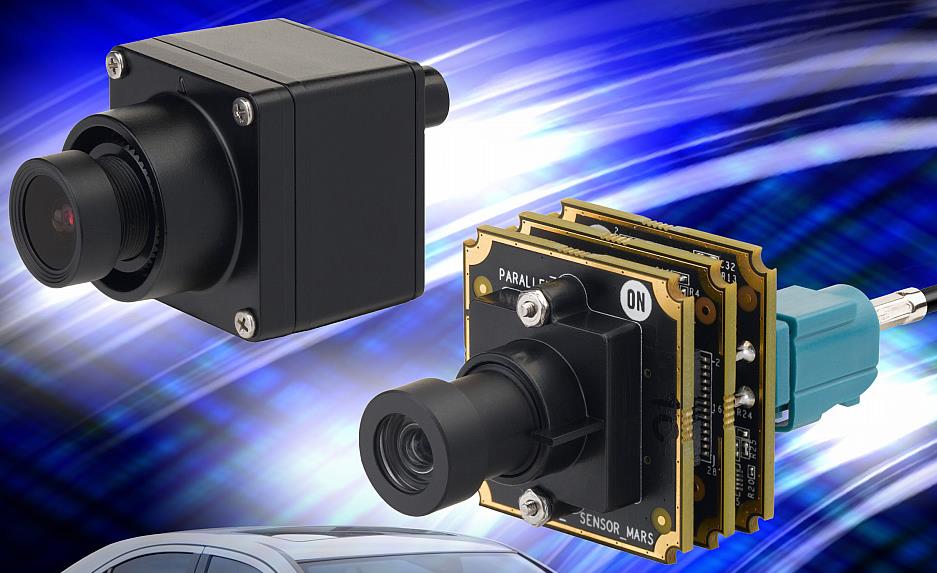
MARS not only reduces engineering costs by shortening design cycles but also supports automotive design teams through the implementation of imaging systems via unique mix-and-match solutions. This allows various hardware components to be adopted into robust and highly adaptable systems in a compact form factor.
Engineers can access ON Semiconductor’s diverse portfolio of image sensors and co-processors available in various board forms, as well as various automotive communication protocols from third-party supply partners.
This offers designers a very wide range of applications in terms of finding the optimal combination suitable for specific system requirements. Since various platforms provide consistent signaling and power to the interconnects used on each board, they can accommodate nearly infinite combinations.
MARS is supported by an ecosystem that includes software development tools, schematics, route Gerbers, bills of materials, etc., and a comprehensive user guide is also included in the attached documents.
Ross Jatou, Executive Vice President and General Manager of the Automotive Solutions Unit at ON Semiconductor’s Image Sensor Group, stated, “As image sensing capabilities become more widespread in automotive applications, MARS is significant as a high-value platform that simplifies design and development and enables rapid verification for system and software developers who need to translate concepts into high-reliability, real-world applications.” He explained that it provides scalability to generate diverse ideas, ranging from laboratory testing to real-world automotive testing.
Vice President Jatu also emphasized, “MARS’s flexibility shortens the component selection process by making sensors and coprocessors fully compatible, and this platform reduces engineering costs and shortens project development time by eliminating the need to build separate custom boards for various sensors.”
Comments
Related news
ON Semiconductor and Hexius Collaborate to Validate Analog IP Blocks
ON Semiconductor announced that it is collaborating with Hexius Semiconductor, a specialized IP development company for analog ICs, to validate various analog IP blocks in the ONC18 0.18 μm CMOS process.
2017.01.11by 김지혜 기자

ON Semiconductor Selects CEVA's Imaging Vision Platform to Bolster ADAS Products
CEVA announced that it is providing its imaging and vision platform to ON Semiconductor's Advanced Driver Assistance System (ADAS) product line for automobiles. ON Semiconductor stated that it will leverage new image processing capabilities of CEVA's vision processing IP to enhance the performance of its next-generation products and plans to integrate embedded intelligence and machine learning into its ADAS roadmap.
2017.01.12by 김지혜 기자
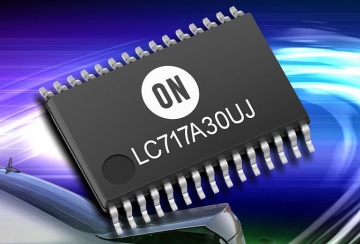
OnSemiconductor Delivers Gesture Sensing and Touch Performance with Capacitive Digital Converter
OnSemiconductor has introduced a new touch/proximity sensing solution integrated on a single chip. The LC717A30UJ is a wide-range capacitance-to-digital converter that uses mutual capacitance to detect changes down to the femtofarad (fF) level. The parasitic capacitance cancellation function raises the sensitivity of the noise rejection detector as the built-in noise elimination mechanism handles electrostatic interference (EMI) effects.
2017.01.18by 김지혜 기자
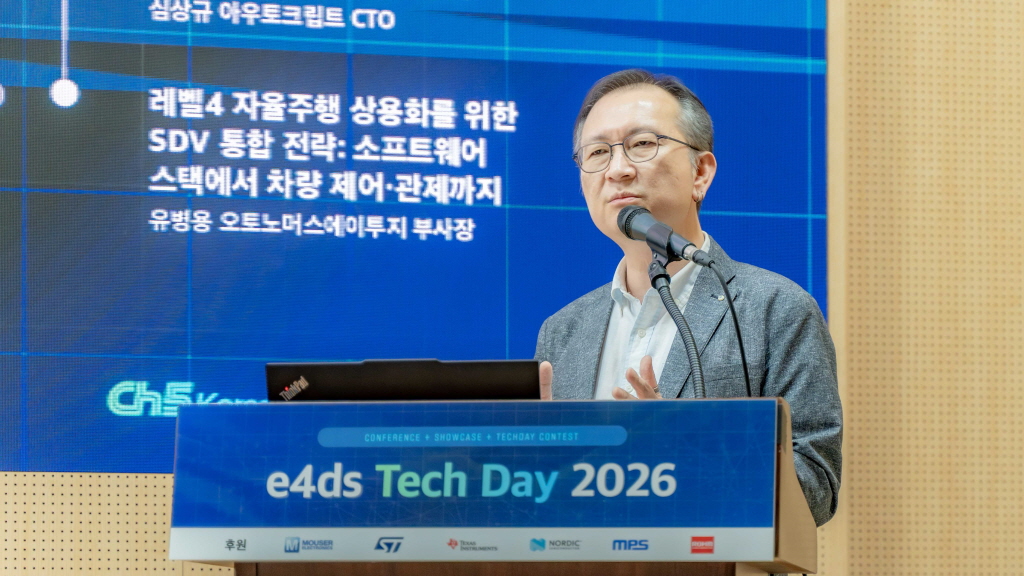
[e4ds Tech Day 2026 ⑨] Sim Sang-gyu, Autocrypt CTO: "In the Physical AI Era, Automotive Security Must Extend Beyond the Vehicle"
At e4ds Tech Day 2026, Sim Sang-gyu, CTO of Autocrypt, explained automotive cybersecurity strategies in the era of Physical AI and SDV (Software-Defined Vehicle). Automobiles are evolving as part of an ecosystem connected to AI, cloud, chargers, IoT, and robots, and he emphasized that the scope of security must expand beyond the vehicle interior to the entire connected environment. In particular, AI model tampering, adversarial attacks, OTA updates, and EV charger hacking were identified as major threats. He explained that response measures require zero trust, AI model integrity protection, intrusion detection, Security by Design and Default, and full lifecycle security management, and that proactive security system establishment beyond regulatory compliance is critical for securing future mobility competitiveness.
2026.10.12by 배종인 기자

Practical HIL Construction Strategy for Automotive and Off-Highway Controller Validation
As vehicle E/E architecture transitions to zonal structures and shifts to software-defined vehicles (SDV), the number of controllers (ECUs) requiring validation and software complexity are surging dramatically. Meanwhile, real vehicle testing cannot provide repeated verification under identical conditions and entails lead time and safety concerns. This white paper explains the principles of HIL (Hardware-in-the-Loop) validation and the structure of the NI platform composed of PXI, SLSC, and VeriStand, and through two actual implementation cases—Camera Record & Replay HIL for In-Cabin Monitoring Controller (ICMU) and Forklift Controller (VCU) HILS—describes how controller-level regression testing becomes possible. Additionally, it explicitly states application boundaries and limitations, such as lack of A2B support.
2026.10.12by 편집부











