


[Planning IIoT Interview] Mentor Graphics' IoT Multi-Platform Concerns: Embedded Software
 Published2017.03.15 16:59
We provide integrated solutions tailored to customer needs.
How is Mentor Graphics, a leader in the semiconductor design automation (EDA) market, preparing for Industry 4.0 in the industrial IoT market?
Smart IoT devices with diverse applications are proliferating, and the need to interact with cloud-based services is growing. Mentor Graphics continues to invest in embedded software and focuses on implementing integrated heterogeneous multi-core solutions to help embedded developers maximize the use of heterogeneous SoCs.
We spoke to Nam Young-kwan, Manager of Mentor Graphics Embedded Business Unit in Korea, about IIoT trends and requirements, and the challenges and solutions that arise as new features and existing technologies are integrated.
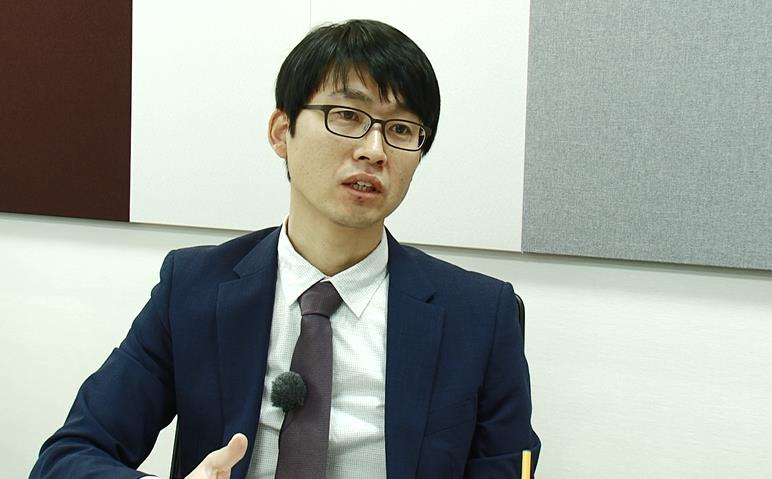
Q. As the industrial IoT market expands, requirements for IoT multi-platforms are also increasing. What is the industrial background that has driven these requirements?
In Industry 4.0, products must include a variety of elements, and as communication technologies advance, connectivity between products is added. As connectivity expands, there is a trend toward transitioning from centrally managed systems to decentralized management systems.
From a business perspective, what were once considered separate processes—manufacturing and logistics—now need to be integrated and managed in a unified manner. This necessitates more robust technology integration, such as connecting systems to the cloud or leveraging big data. Satisfying diverse requirements inevitably incurs significant costs, necessitating technologies that can reduce costs.
On the technical side, many open-source solutions are being adopted. Internally, we're integrating stable and secure technologies into open-source systems, and we're grappling with how to implement a stable system. This has led to a need for solutions that can meet these requirements.
Q. So, what are the elements needed to support IoT multi-platform requirements?
To build a multi-platform system, hardware performance must be supported to a certain degree. Many SoC vendors are already developing and releasing hardware chips that support multi-core solutions. Mentor Graphics also has secured performance in embedded CPUs and SoCs.
Compared to hardware, software technologies are not well-developed. Recognizing this, Mentor Embedded began developing a multi-core solution capable of universally supporting diverse hardware configurations. To support a solution, you have to consider whether to run operating systems such as Linux or Nucleus simultaneously, whether to ensure smooth communication between systems after booting, and whether it is efficient to install which OS on which core. We provide support to solve these concerns.
Q. What differentiates Mentor Graphics' heterogeneous multicore technology?
Mentor's heterogeneous multi-core solutions have a significant strategic role in embedded systems. We support both commercial Linux and Mentor Linux, and we support the application of multi-core solutions to them. There are various multi-core solutions, among which is the multi-core framework. The framework is the most fundamental tool for defining how software will be deployed on SoC chips and how software will communicate with each other.
Additionally, it supports Nucleus as a secure OS utilizing ARM Trust Zone technology, as well as hypervisor support. From a customer perspective, this provides options tailored to various stages and requirements. Mentor possesses the technology to provide turnkey solutions for each OS and integrated solutions.
Q. Does having an integrated solution differentiate you from competing products?
Customers face the hassle of having to separately transfer technology from each vendor or install each product separately. To address these issues, we offer an integrated solution. I think this is what makes a mentor different.
Ensure reliability with periodic security updates and OS-specific certifications.
Q. I understand that Mentor Graphics is investing heavily in embedded device software development to support security infrastructure for industrial applications. Could you share any specific technical elements?
Secure OS is supported to support hypervisors and ARM Trust Zones, and Nucleus also supports operating systems compliant with the IEC61508 industrial certification standard. Furthermore, it has received Level 1 and 2 certification from Achilles Communication Certification, a security certification body. Each OS receives certifications required by each industry, ensuring reliability.
We also provide regular security updates for all software provided by Mentor, including embedded Linux and Nucleus. Where existing solutions lack in terms of intrusion prevention and firewall collaboration, we provide third-party support, making them readily available.
Q. Last year, Yocto 2.0 was updated and expanded to include new security enhancements and additional industry protocols. What was the market response?
As industrial protocols expanded, there was resistance or concern in the industry about using existing open source. In this area, there have been efforts by Mentor to provide CANOpen, PTP (Precision Time Protocol), 6LoWPAN, XMPP, MQTT, etc. at a commercial level, and they have received a lot of attention as they provide protocols that can be used for industrial internet.
Q. Are there any new features being added this year?
This year marks the most significant strategic shift. We plan to offer cloud solutions integrated with Microsoft's Azure Device SDK and Gateway SDK. We're also preparing consulting services to leverage the cloud for specialized device features not available through the SDK.
Meanwhile , Nam Young-kwan, Manager of Mentor Graphics , will present this topic in more detail at the Industrial IoT Innovation Day seminar ( http://www.e4ds.com/seminar ) . Go to seminar registration -> http://wwwe4ds.com/seminar
Comments
Related news
[Planned IIoT Interview] Advantech: "Providing a One-Stop Solution for Industrial IoT, From Hardware to Software Platforms"
Advantech (www.advantech.com), which holds the top global market share in the industrial computer field, supplies more reliable and practical Industry 4.0 architecture based on its hardware development capabilities. Advantech's Industry 4.0 architecture is based on the major trend that constitutes 'Industrial IoT'. The company develops and manufactures products centered on embedded platforms or EIS (Edge Intelligent Server) that collect data from devices capable of accommodating not only traditional conventional sensors but also new types of connected sensors, and then convert or process the collected data according to application-specific protocols for transmission.
2017.02.24by 신윤오 기자
[Planned IIoT Interview] Moxa Enables Automation with Best-in-Class Industrial IoT Connectivity
MOXA (www.moxa.com) positions itself as a trusted partner in the automation sector. Founded in Taiwan in 1987, MOXA is marking its 30th anniversary this year as a company primarily engaged in the production and supply of industrial communication equipment. The company maintains headquarters in the United States and Taiwan, with approximately 35% of its entire workforce composed of R&D engineers. MOXA is the world's leading supplier in the Serial Device Server market.
2017.02.24by 신윤오 기자
[Planning IIoT Interview] Infineon: Smart Factory Security with Robust Hardware-Based Solutions
As smart factories evolve rapidly, the manufacturing industry faces new challenges. Distributed automation smart factories, which heavily depend on network technology, are constantly exposed to cyber threats. As systems become more vulnerable to external attacks, they require increasingly robust security measures. To address this, manufacturers must leverage the rich experience and expertise of specialized security companies. Hardware-based security solutions such as Infineon's OPTIGA TPM and OPTIGA Trust products provide optimal security for use in Industry 4.0 and smart factories. We spoke with Lee Sang-hoon, General Manager of Infineon Korea's Chip Card and Security Division, about the background and security principles of hardware-based security solutions.
2017.03.02by 신윤오 기자
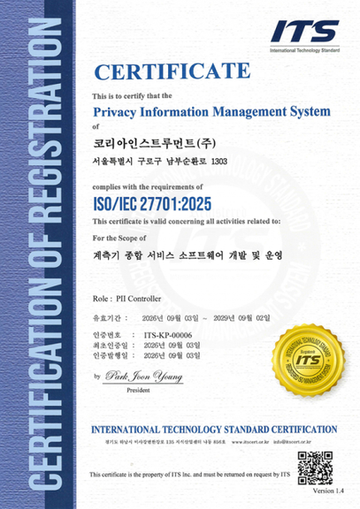
Korea Instrument, KOLAS Accredited Calibration Agency First to Simultaneously Acquire ISO/IEC 27,001·27,701
Korea Instrument has become the first among KOLAS accredited calibration agencies to simultaneously acquire ISO/IEC 27,001 and ISO/IEC 27,701 certifications. Through its proprietary platforms CWIZ Enterprise and CWIZ Partners, the company has embedded information security and personal data protection requirements across all business processes including customer information, equipment data, and calibration reports, with plans to continuously advance its management system through regular audits and security inspections.
2026.10.12by 배종인 기자
TeamViewer One, IT Incident Automation Workflow and Resolution Center Enhanced
TeamViewer has added IT incident automation capabilities and an advanced Resolution Center to its integrated digital workplace management platform 'TeamViewer ONE'. Recurrent service disruptions, configuration errors, and capacity shortages are automatically handled according to preset policies, and device status verification through script deployment can be managed in a unified interface, significantly reducing repetitive tasks for IT teams.
2026.10.12by 배종인 기자











