



[MAXIM Point!] Extend Battery Life: Consider Standby Current First
 Published2017.03.17 12:17
As smart and connected products continue to shrink in size, expectations for their functionality and performance are rising. Batteries are also trending toward smaller sizes but longer lifespans. Low standby current is crucial for effectively extending battery life.
Medical patches for measuring body temperature, administering insulin, and monitoring heart rate have recently been released. The most crucial requirement for these devices is long-term, stable operation. However, these devices are often left in supply closets and medicine cabinets for long periods before being used. Furthermore, smartwatches, earphones, and video game controllers must operate for extended periods after a quick charge.
For countless sensors used in the field, such as electricity meters, gas detectors, and building automation systems, charging and maintenance are challenging, making guaranteed operating time essential. Most IoT devices rely on batteries to ensure long-term, stable operation in a variety of environments. Battery life has reached a major turning point.

Factors affecting battery life
What are the key factors affecting battery life? System designers measure battery life based on the active, sleep, and hibernate currents of a central control unit, such as a microcontroller (MCU). Related sensors and wireless communication also operate alongside the MCU. Of course, the power supply, which supplies energy to all functional blocks in the system, is also crucial. Power supplies consist of regulators, such as step-down and step-up converters or low-dropout (LDO) converters. Some power supplies incorporate multiple power architectures or even power management integrated circuits (PMICs) that include a battery charger.
Operating current consumption is a critical factor in extending battery life, and battery runtime is ultimately affected by the time spent in each power mode. The standby current of each component becomes a critical factor when sleep and hibernation functions are in operation for extended periods. In this case, the standby current of the power supply is the largest contributor to the system's standby power consumption. Consider a system powered by a 40 mAh, 1.55 V silver oxide coin cell battery with a one-year lifespan. Assuming a current consumption of approximately 4 µA, reducing the current to 1 µA can extend the life of a wearable product by approximately three months.
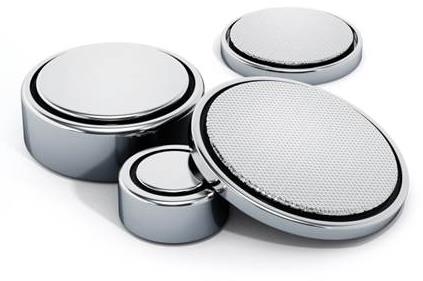
Standby current is important for extending battery life.
Standby current should never be underestimated. When a power supply is in standby mode, power consumption is determined by quiescent current (I Q ). This refers to the circuit's static state, when the circuit is not generating any load and the input is not circulating. While quiescent current is still nominally current, it significantly impacts the system's efficiency when operating under light loads.
Quiescent current is sometimes confused with shutdown current. In quiescent current, the system is idle but ready to wake up and operate at any time. This is the desired behavior of the device. Conversely, in shutdown current, the device is asleep. Designers use quiescent current to evaluate the power loss of the power supply under light load conditions. Shutdown current, on the other hand, is used to measure battery life when the device is powered off but the battery is connected to the regulator.
Devices are designed with components such as low-power MCUs, sensors, wireless communication, and efficient power supplies to extend battery life. Some designers opt for boost converters to extend battery life when the battery voltage drops to low levels. However, this method increases standby current and accelerates battery discharge unless the appropriate converter is selected.
The final product's form factor is also a key consideration. Consumers and designers prefer smaller, lighter products. The problem is that the battery is typically the largest and heaviest component on the entire board. While battery size can be reduced, this reduces capacity, which in turn shortens battery life. This challenge boils down to efficient power management techniques that balance capacity and size.
One way to extend battery life is to improve the system's power efficiency. Within a system, MCUs, sensors, analog front-ends (AFEs), and other load circuits must operate at voltages different from the battery voltage. Therefore, each circuit requires a dedicated DC-DC converter, which incurs efficiency losses. These circuits also require additional components, such as supervisory ICs supporting the MCU. "Protection" devices, such as current-sense amplifiers, temperature sensors, and comparators, help manage load and battery current for overall system management. Given the growing popularity of products that are not always on and remain passive, the standby current of the power supply, along with supporting components and protection devices, are key factors in extending battery life.
It's important to pay attention to the quiescent current specifications of power regulators, such as boost converters. Lower quiescent current can extend battery life. Considering today's ultra-compact designs, technology that not only reduces quiescent current but also achieves smaller form factors than existing products is crucial. Even milliamp-level currents aren't low enough to significantly impact battery life. Today's wearable, mobile, and IoT designs require nanoamp-level currents.
Comments
Related news
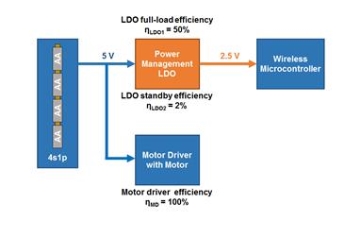
Smart door lock, how to use AA batteries for a long time
How should a smart door lock be designed with power device topology to maximize battery life? Generally, the power device topologies used in smart door locks include linear regulators, boost (step-up), and buck (step-down). The success of IoT (Internet of Things) devices depends on user convenience. Fundamentally, user convenience refers to easy connection and control of electronic devices. The less maintenance required for these connected electronic devices, the better. Would any user be willing to tolerate the inconvenience of having to stop electronic devices frequently for battery replacement?
2017.03.06by 김지혜 기자
ams announces battery-free noise-canceling headset technology
ams has announced implementation technology for noise-cancelling headsets that operate without batteries using a 4-pole 3.5mm audio jack. The new Accessory Communication Interface (ACI) developed by ams transmits power, bidirectional data, and digital audio signals at speeds up to 16Mbps using the microphone (MIC) line. Accordingly, manufacturers can achieve miniaturization of products and create accessory products using 3.5mm audio jacks with reduced material costs and weight by removing batteries and applying ACI.
2017.03.14by 김지혜 기자
Maxim Announces Nano Power Boost Regulator Providing Lowest Standby Current
Maxim Integrated Korea has announced the nanopower boost regulator 'MAX17222'. The MAX17222 achieves the longest battery life in ultra-compact form factors for wearable, consumer, and Internet of Things (IoT) product designs with a minimum standby current (IQ) of just 300nA.
2017.03.14by 김지혜 기자

Intel Unveils Next-Generation 'Core Ultra Series 3' and vPro Platform for Enterprise PCs
Intel has officially unveiled the "Intel Core Ultra Series 3" for next-generation enterprise PCs and the latest vPro platform, addressing a wide range of demands from enterprise notebooks to high-performance workstations.
2026.03.26by 배종인 기자

ROHM Launches ESD Protection Diode Compatible with High-Speed Interfaces of 10Gbps or Higher
Semiconductor specialist ROHM has developed the 'RESDxVx series' of ESD (electrostatic discharge) protection diodes capable of responding to next-generation high-speed data communication environments exceeding 10Gbps, simultaneously enhancing both signal quality maintenance required in high-speed interfaces and IC protection performance.
2026.03.26by 배종인 기자











