



NI and the University of Texas at Austin Partner on Autonomous Driving Research and Testing
 Published2017.03.24 11:44
ADAS technology provides communication tests in the 76-81GHz range.
National Instruments (NI) announced a partnership with the Situation-Aware Vehicular Engineering Systems (SAVES) initiative at the University of Texas at Austin.
NI is accelerating research on automated and autonomous vehicles by providing the mmWave real-time testbed. This testbed, focusing on ultra-low latency, novel radar waveforms, and data analytics, is expected to play a key role in the advancement of autonomous driving.
NI provides Advanced Driver Assistance Systems (ADAS) technology and communications test in the 76–81 GHz range based on its mmWave front-end technology and the recently launched PXIe-5840 second-generation vector signal transceiver (VST).

The testbed integrates NI's second-generation VST with frequency-specific upconverters and downconverters designed to test the 76–81 GHz radar bandwidth using 1 GHz of real-time bandwidth. Engineers can use this LabVIEW and PXI-based system for radar target emulation and hardware-in-the-loop (HIL) testing to determine the response of vehicle network links connecting vehicle sensors and the central processing unit.
“NI’s new ADAS test solution addresses radar characterization and test with a unique and scalable approach that delivers traceable RF measurements and system simulation,” said Stefano Concezzi, vice president of global automotive initiatives at NI. “NI’s open-platform approach to automotive electronics validation and test helps engineers quickly tune systems to address new radar scenarios and simplify the complexities of sensor fusion combined with deep learning-enabled ECUs. NI’s open, modular platform accelerates the development and validation of ADAS components and reduces capital equipment and total cost of ownership for ADAS HIL and test systems.”
The SAVES initiative, led by the Wireless Networking and Communications Group (WNCG) at UT Austin, works closely with the Center for Transportation Research (CTR) at UT Austin to overcome the limitations of vehicle engineering systems. This includes fusion of sensor data, relevance of data to safety and traffic management, and high-bandwidth communication of sensor data to base stations and cloud-based infrastructure.
Robert W. Heath, director of the SAVES initiative and professor of engineering at the University of Texas at Austin, said: “SAVES brings together companies working on wireless communications, sensors and automotive with outstanding faculty and students from UT Austin,” said Dr. Heath Jr. “NI’s new ADAS test solution will further enhance the capabilities of UT Austin’s existing equipment, including three test vehicles equipped with radar, lidar, cameras and DSRC radios, as well as the NI mmWave communications prototype.”
Comments
Related news
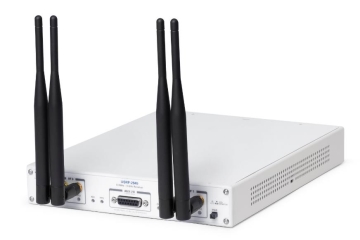
NI Announces Radio Solution with Wide Frequency and Bandwidth
National Instruments (hereinafter NI) announced the launch of the USRP-2945 Quad Receiver SDR and USRP-2944 high-performance 2x2 MIMO SDR devices. Both models deliver powerful performance and functionality, offering the widest frequency range, highest bandwidth, and best RF performance among the USRP (Universal Software Radio Peripheral) product family.
2017.03.16by 김지혜 기자
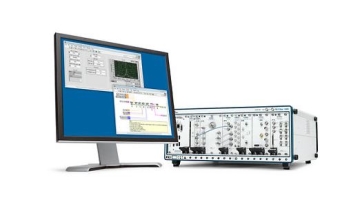
NI Releases Software to Speed PXI RF Tests by Up to 33%
National Instruments announced NI-RFmx 2.2, the latest version of advanced measurement software for PXI RF test systems. When used together with the second-generation PXI vector signal transceiver, this software enables testing of 4.5G/5G RF components such as transceivers and amplifiers by leveraging carrier aggregation architectures that utilize two frequencies or different networks.
2017.03.20by 김자영 기자
NI Unveils Integrated Smart Factory Solution at 'Automation World 2017'
National Instruments announced that it will participate in the automation industry exhibition 'Automation World 2017,' being held at COEX for four days from March 29 to 31, and will showcase integrated solutions and demonstrations for factory automation.
2017.03.22by 김자영 기자

[e4ds Tech Day 2026 ⑨] Sim Sang-gyu, Autocrypt CTO: "In the Physical AI Era, Automotive Security Must Extend Beyond the Vehicle"
At e4ds Tech Day 2026, Sim Sang-gyu, CTO of Autocrypt, explained automotive cybersecurity strategies in the era of Physical AI and SDV (Software-Defined Vehicle). Automobiles are evolving as part of an ecosystem connected to AI, cloud, chargers, IoT, and robots, and he emphasized that the scope of security must expand beyond the vehicle interior to the entire connected environment. In particular, AI model tampering, adversarial attacks, OTA updates, and EV charger hacking were identified as major threats. He explained that response measures require zero trust, AI model integrity protection, intrusion detection, Security by Design and Default, and full lifecycle security management, and that proactive security system establishment beyond regulatory compliance is critical for securing future mobility competitiveness.
2026.10.12by 배종인 기자

Practical HIL Construction Strategy for Automotive and Off-Highway Controller Validation
As vehicle E/E architecture transitions to zonal structures and shifts to software-defined vehicles (SDV), the number of controllers (ECUs) requiring validation and software complexity are surging dramatically. Meanwhile, real vehicle testing cannot provide repeated verification under identical conditions and entails lead time and safety concerns. This white paper explains the principles of HIL (Hardware-in-the-Loop) validation and the structure of the NI platform composed of PXI, SLSC, and VeriStand, and through two actual implementation cases—Camera Record & Replay HIL for In-Cabin Monitoring Controller (ICMU) and Forklift Controller (VCU) HILS—describes how controller-level regression testing becomes possible. Additionally, it explicitly states application boundaries and limitations, such as lack of A2B support.
2026.10.12by 편집부











